
Theresia Zhang: Between The Lines
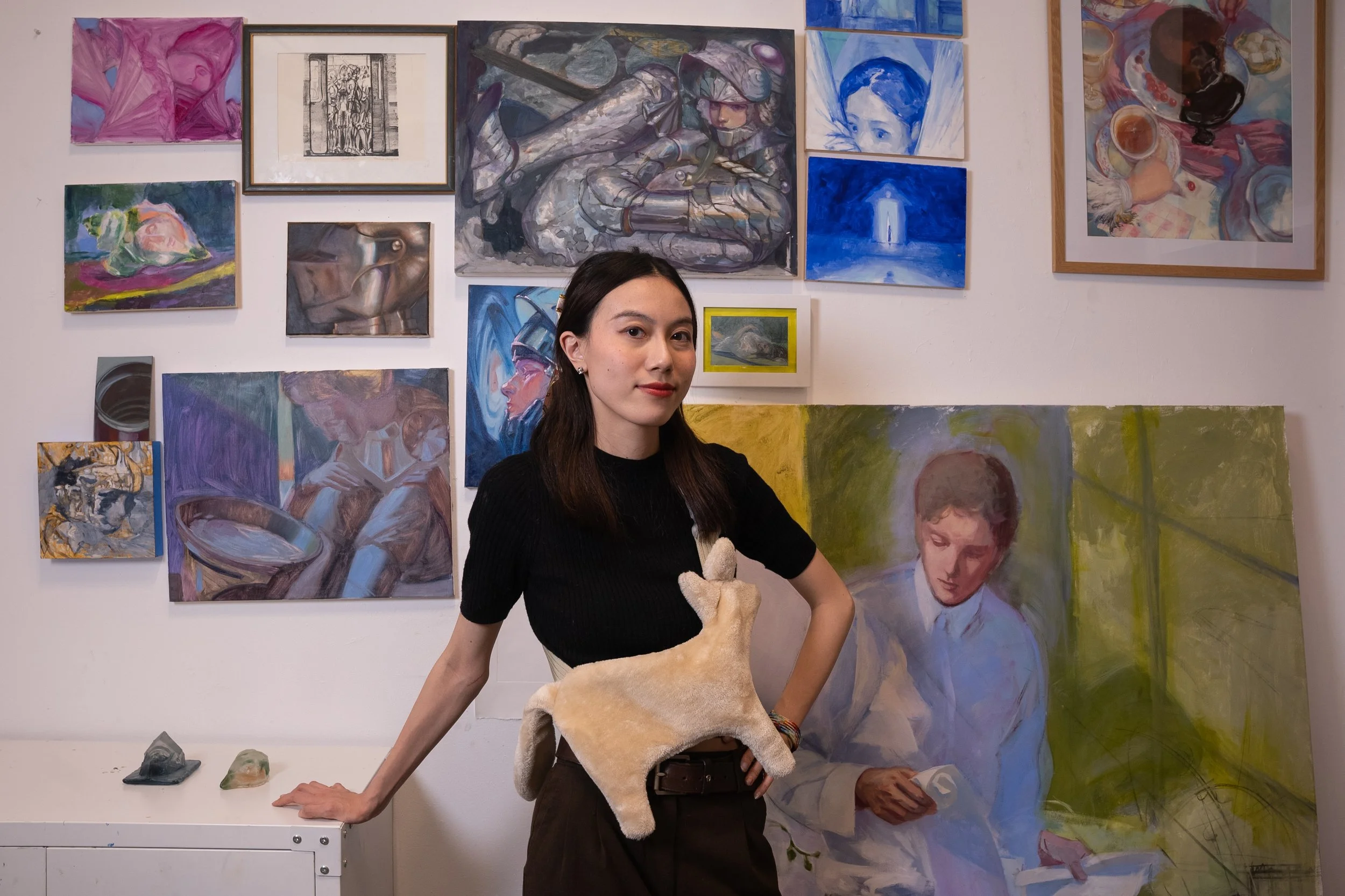
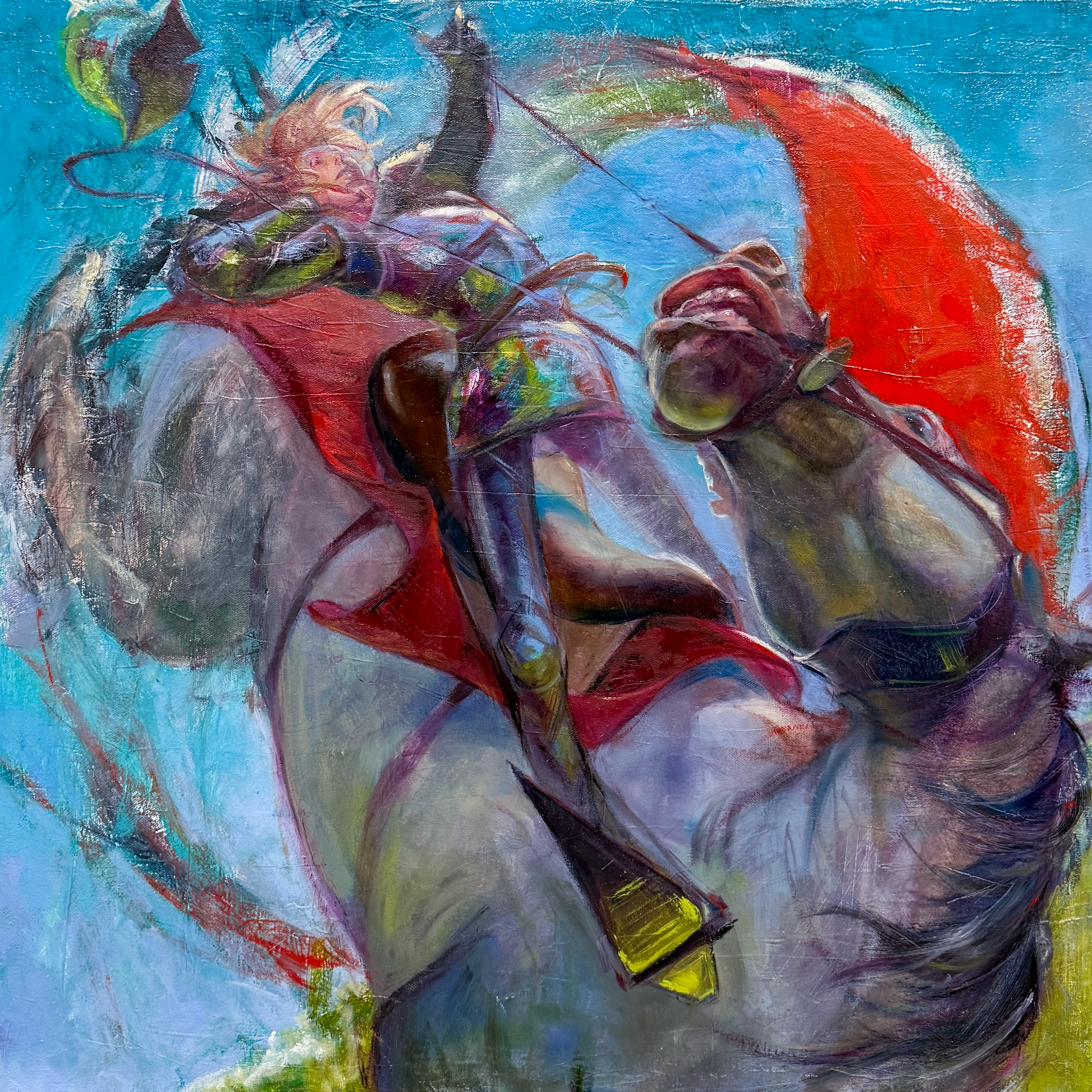
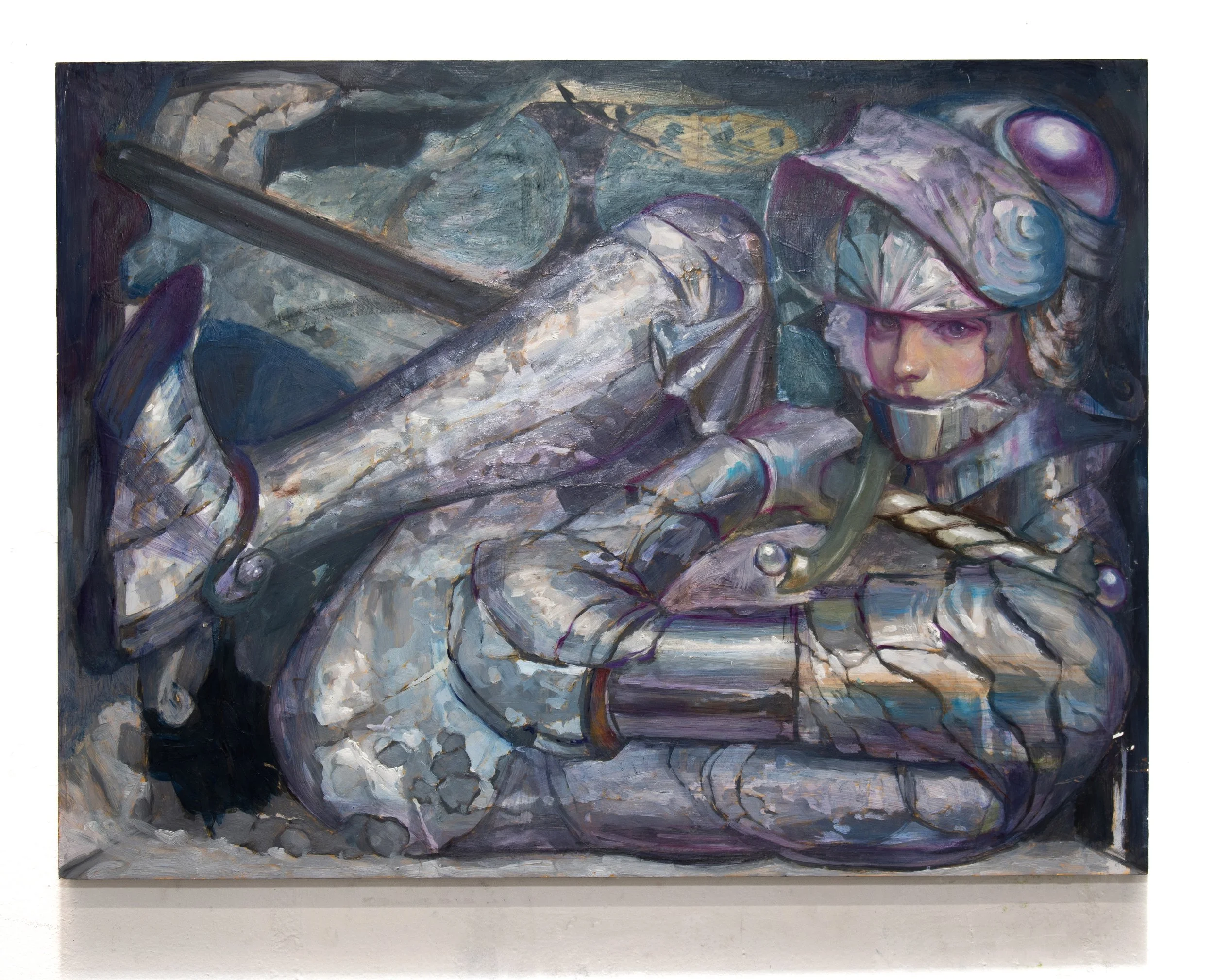
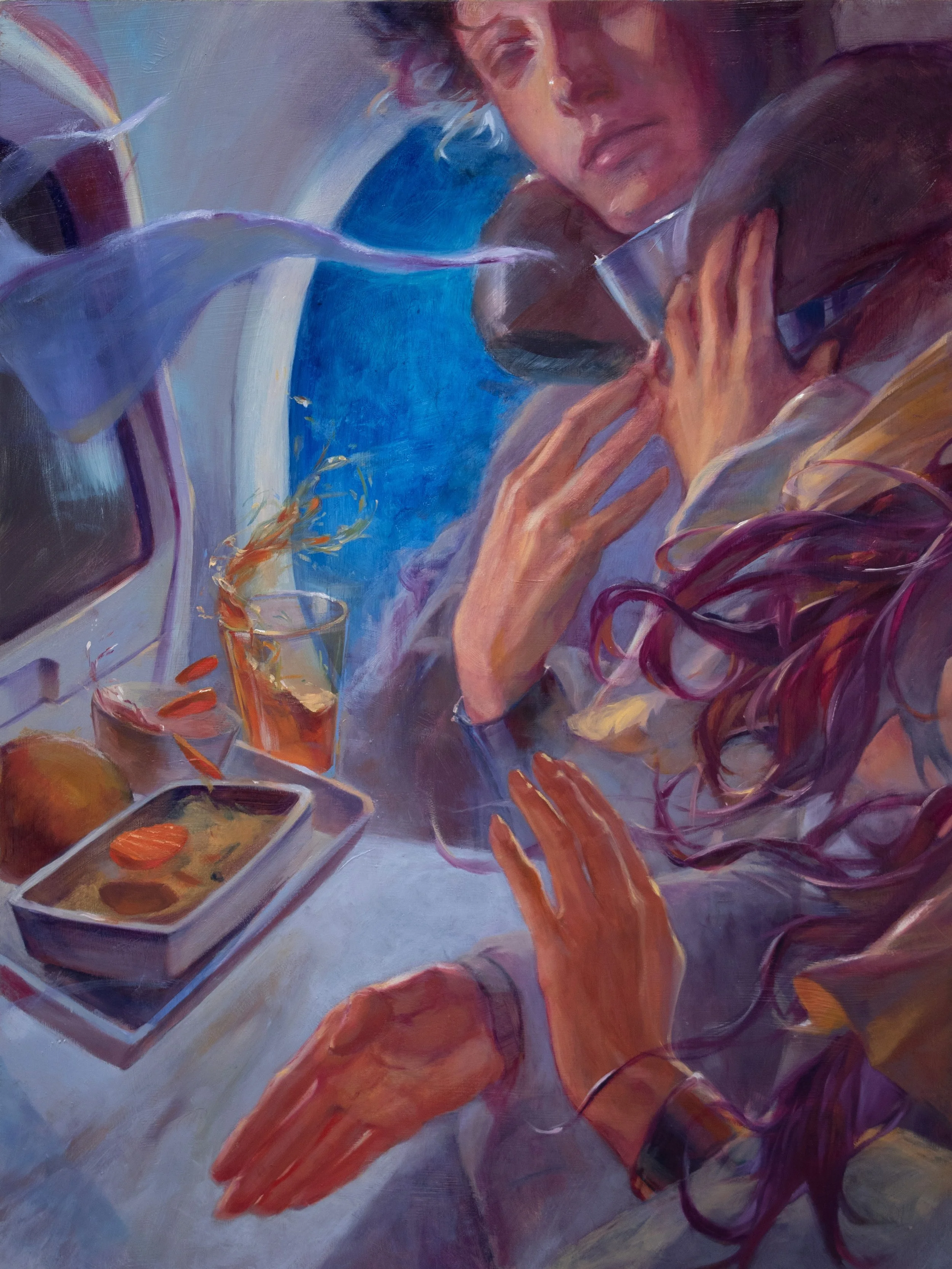
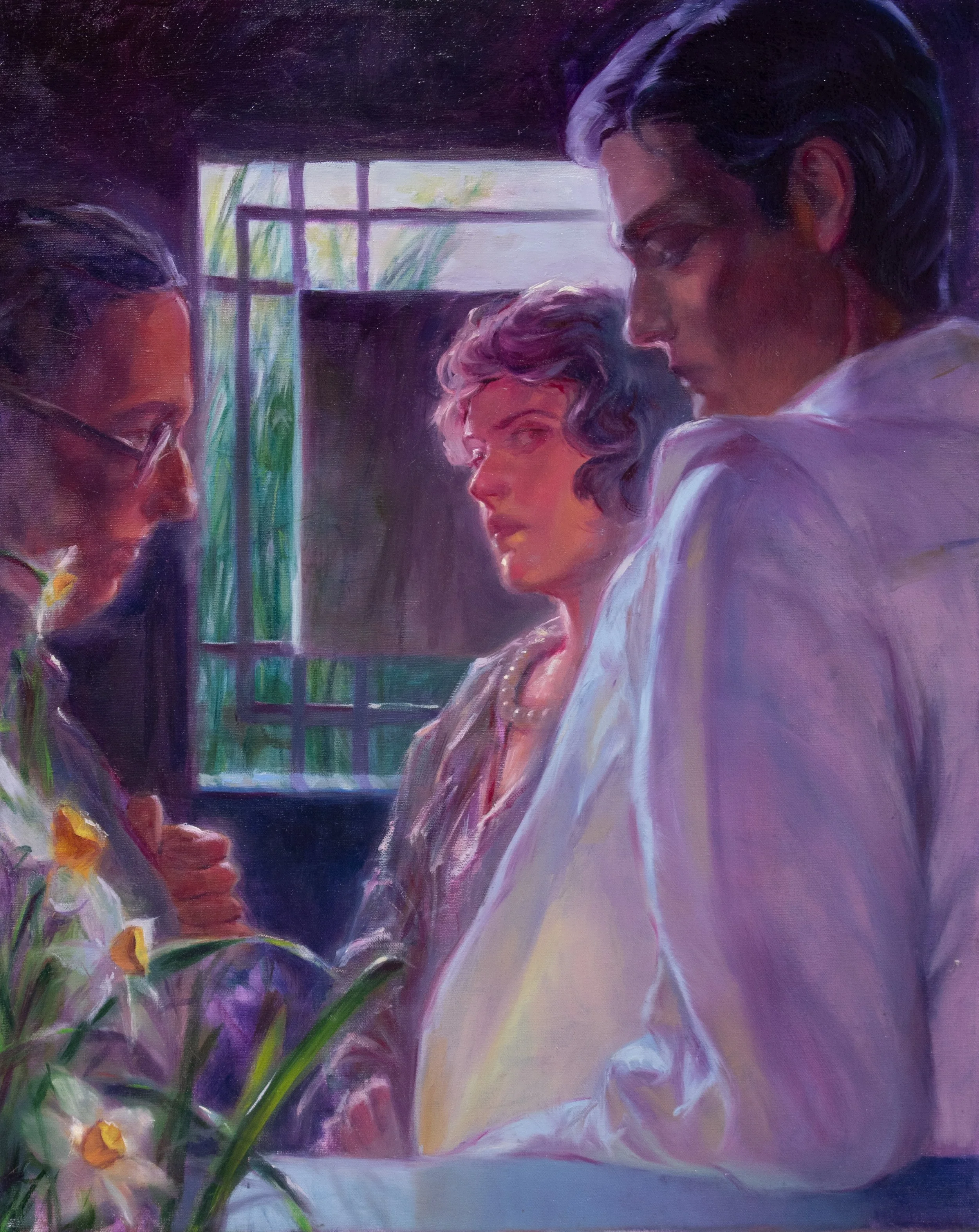
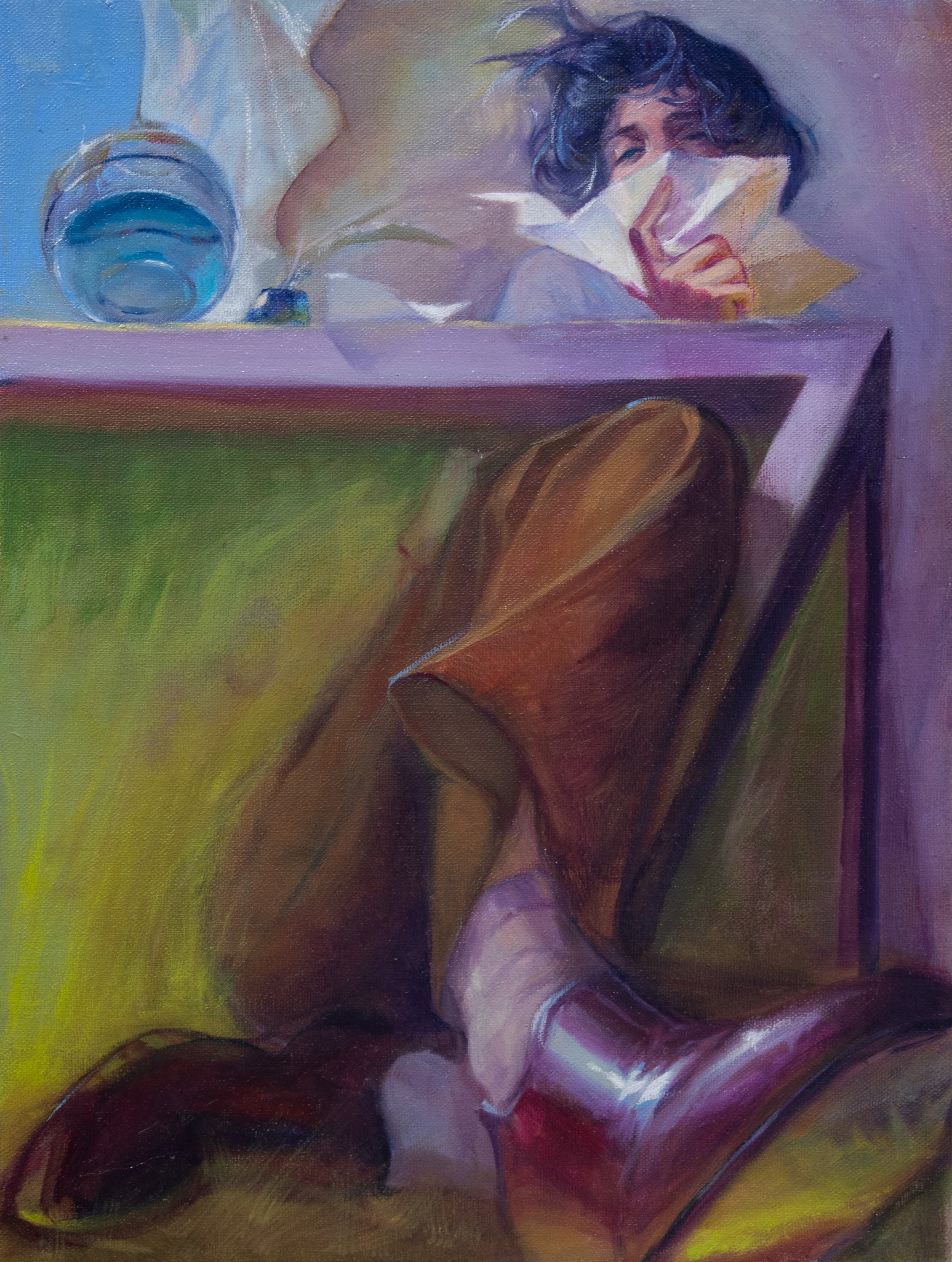
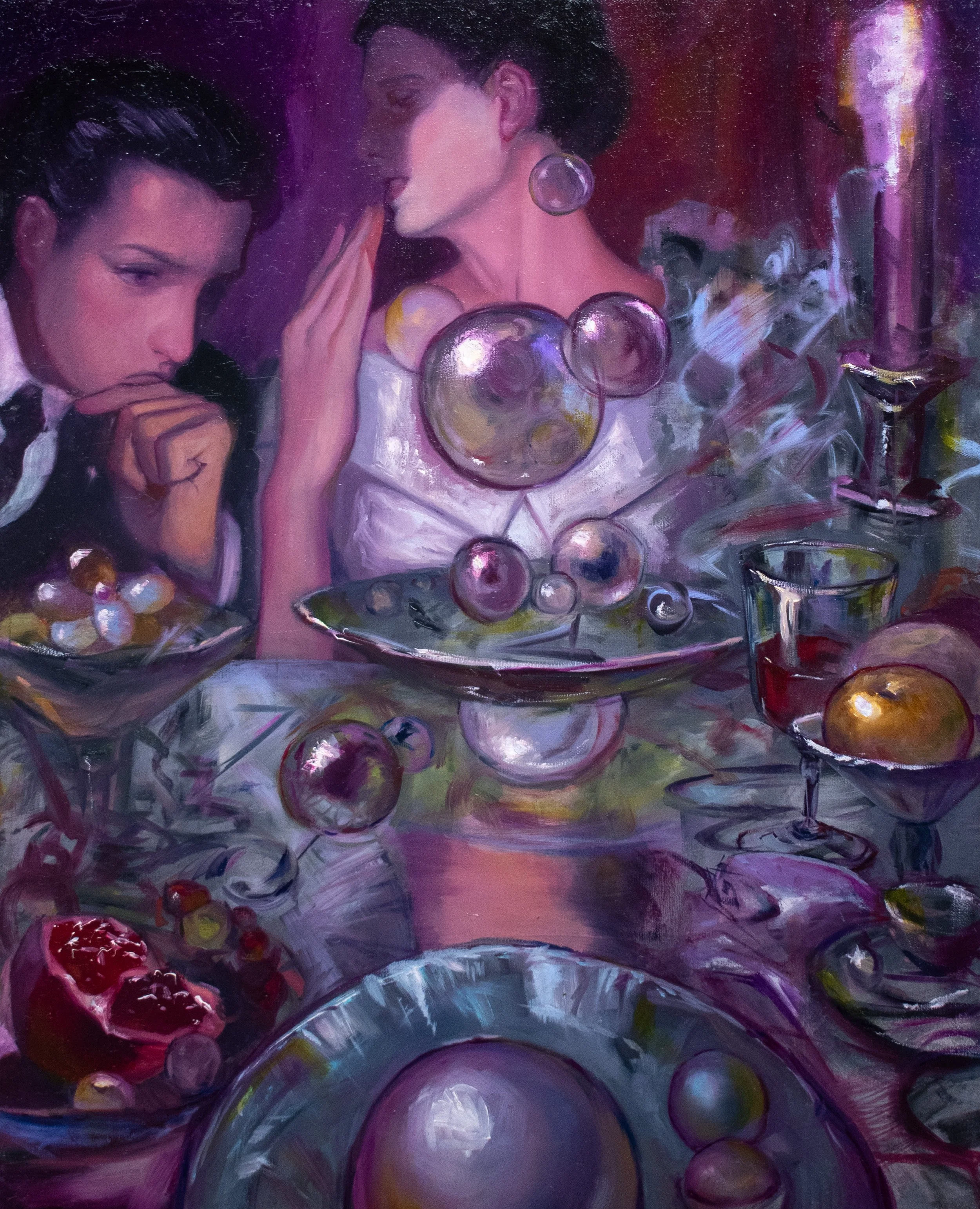
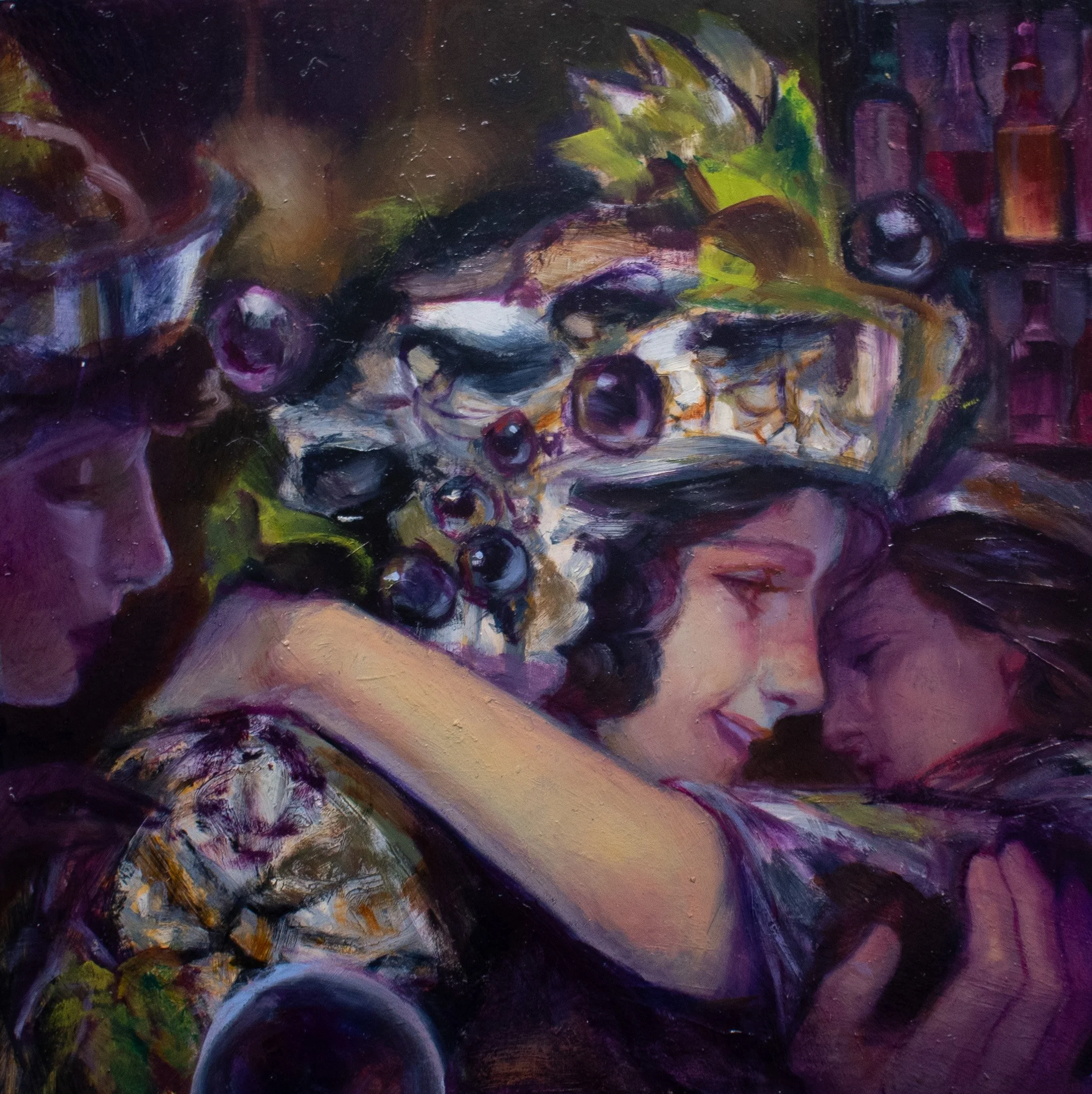
Theresia Zhang is a New York–based painter. Her work translates the emotional experiences of literature into staged, narrative paintings that draw from classical oil painting, theater, and historical imagination. She is interested in the shared emotional currents that emerge across texts from different cultures and contexts, searching for a common language of longing, tension, devotion, and transformation. Rather than illustrating specific stories, her paintings feel like fragments from unwritten narratives—moments suspended between memory and performance.
How did your creative journey begin?
I grew up surrounded by books. Because my family moved often, stories became a kind of constant companion for me. I read a lot as a child, and I would imagine my own characters setting out on journeys, almost like Tintin in The Adventures of Tintin.
I still remember making up stories with my friends in first grade, drawing stick figures on paper and inventing little worlds for them. Over time, those simple drawings grew into longer narratives.
I have always been drawn to the emotions beneath a story, the feelings that exist between the lines. In my work, I try to translate those invisible emotions into brushstrokes, colors, and figures on the canvas.
You mention classical painting and theater as sources of inspiration; are their any specific artists or performances that have influenced your work?
I would also consider early cinema part of my theatrical influences, because performance in early film was still visibly rooted in stage acting and theatrical staging.
One of the strongest influences for me is Citizen Kane. I think of it almost as a theatrical work translated into cinema. Its dramatic lighting, low angles, deep shadows, and carefully staged compositions feel deeply connected to the language of theater. Many of the people around Orson Welles came from a theatrical background, and you can sense that in the way the characters perform and occupy space.
That sense of staged perspective appears often in my paintings. The viewer is rarely placed at a neutral eye level. You are often looking up at a figure or looking down on them, almost like an audience member watching a stage from a specific seat. I am interested in how that shift in perspective can create emotional pressure, power, vulnerability, or distance.
My theatrical influence does not come from one specific play, but from many different forms of performance. Visually and narratively, I was strongly influenced by Peking Opera and modern drama, while my sense of spectacle, lighting, and atmosphere owes a lot to opera and musicals.
On a personal level, I have been involved with Peking Opera since I was twelve, and later began theater training in high school. Through working both on stage and behind the scenes, I started to understand how actors and stage crews use limited props, costumes, light, and gesture to create depth and infinite possibilities within a confined stage space.
Peking Opera has had a lasting impact on my sense of color and ornament. I have always been drawn to the shining headpieces, embroidered costumes, saturated colors, and the way a performer’s presence can reach all the way to the last row. The color codes of facial painting, where different colors suggest different characteristics, also shaped the way I think about color as a narrative language.
The Phantom of the Opera is another performance that made a strong impression on me. Its lighting, glittering sets, and elaborate costumes gave me a lasting fascination with theatrical illusion and visual excess. I also love the Metropolitan Opera for its extraordinary stage design. Last year, several productions stayed with me vividly: the vast blue world of Moby-Dick, the Gothic interpretation of Salome, the way an entire Paris seemed to appear on stage in La Bohème, and the gorgeous rotating latticework in the 1930s-themed Le nozze di Figaro.
All of these experiences taught me that a stage is never just a place where a story happens. It is a constructed world, where color, light, costume, and perspective all become part of the storytelling. That is very close to how I approach painting.
Does your cultural background influence your work or process?
Yes, but perhaps not in the most direct way. I have always found it difficult to make a self-portrait, not only in the literal sense, but also in the cultural sense. When something is too close to me, I find it harder to see it clearly.
I love reading stories from other cultures because that distance allows me to observe, imagine, and reinterpret more freely. There is a certain objectivity that comes from looking at something from the outside, but there is also more room for invention. I can approach those stories with curiosity, rather than with the pressure of representing them correctly.
I like to approach things indirectly and leave hints for the audiences. I find it more comfortable to hide myself in between the stroke and the story as the narrator, not as the performer, not using my face, but directed by my soul and using my movement.
How has social media impacted your work?
Social media has had a very important impact on my work. I love being able to connect with people around the world and to see my paintings resonate with viewers from different places.
Seeing people respond to my work gives me a lot of motivation. When someone tells me that my painting made them want to paint, or that they feel connected to one of my characters or stories, it reminds me that these images can continue living beyond my studio. Social media allows the work to become part of a larger conversation, and that conversation keeps pushing me to develop the stories further.
While making work with a strong narrative focus, how do you begin to tell a story? Do you write or create one first, or does the story emerge as you paint?
I usually begin with writing before I start sketching. It might be only one or two sentences at first, something that can have emotional weight. Sometimes it grows into a few pages, but I do not treat the text as a fixed script.
For me, writing is a way to locate the emotional core of the story. It gives me a place to begin, but I always leave room for the painting to discover something else. As I work, the figures, colors, gestures, and composition often change the direction of the narrative.
I am less interested in illustrating a complete story than in painting a moment that feels as if it belongs to a larger one. I want the viewer to sense that something happened before the image, and something may happen after it. In that way, the story begins with writing, but it continues to emerge through the act of painting.
What kind of emotional experience do you hope viewers carry with them after encountering your work?
It depends on the painting. I do not think of my work as carrying one fixed emotion or message. I would rather leave the viewer with questions, uncertainties, and sometimes even debates.
Some paintings may carry hope, some may carry sorrow, and some may carry desire, longing, or tension. I am interested in emotions that are not completely resolved. I want the viewer to feel that they have entered a moment that is still unfolding.
Rather than telling viewers exactly what to feel, I hope my paintings give them space to bring in their own memories, experiences, and stories.