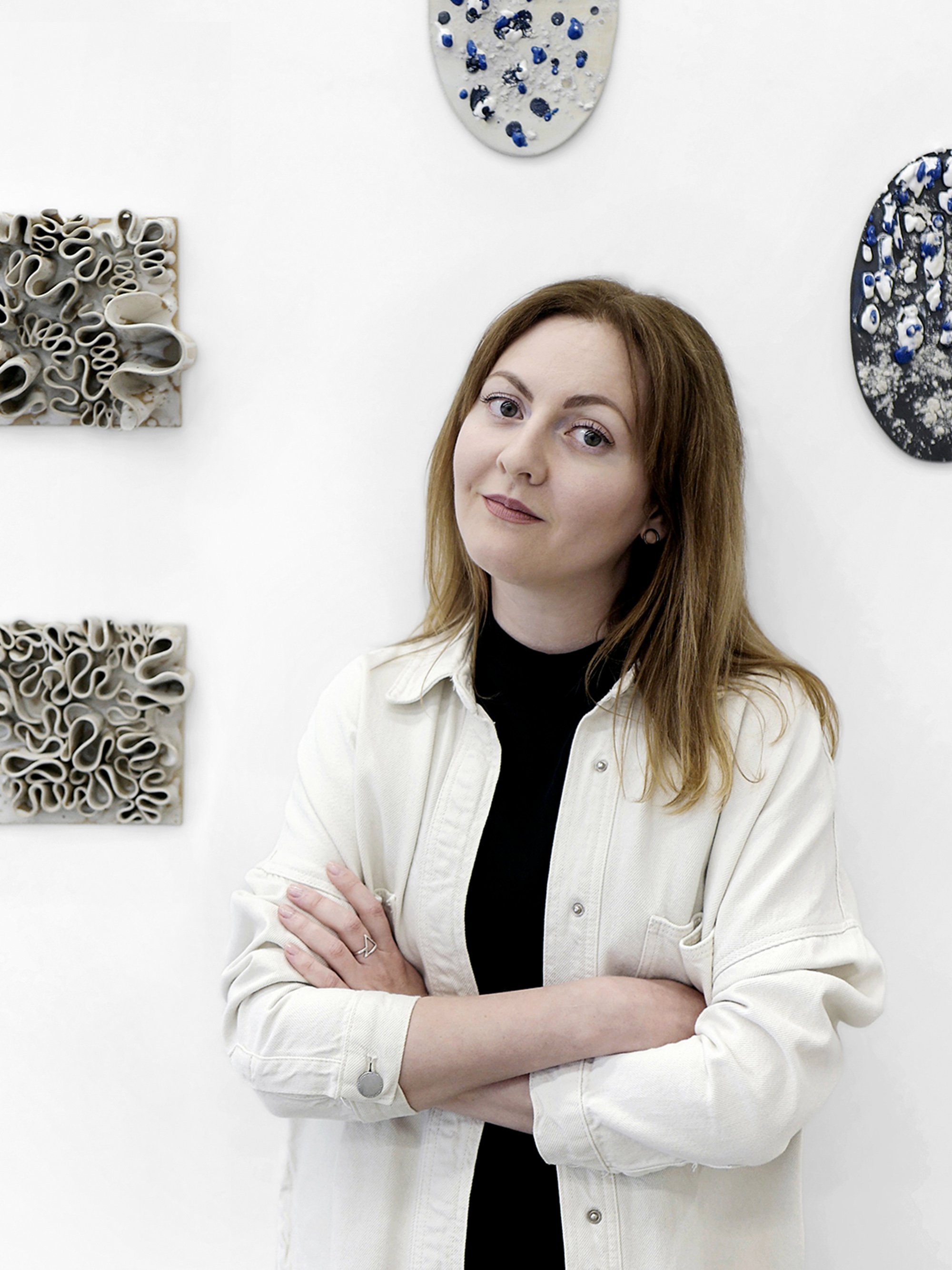
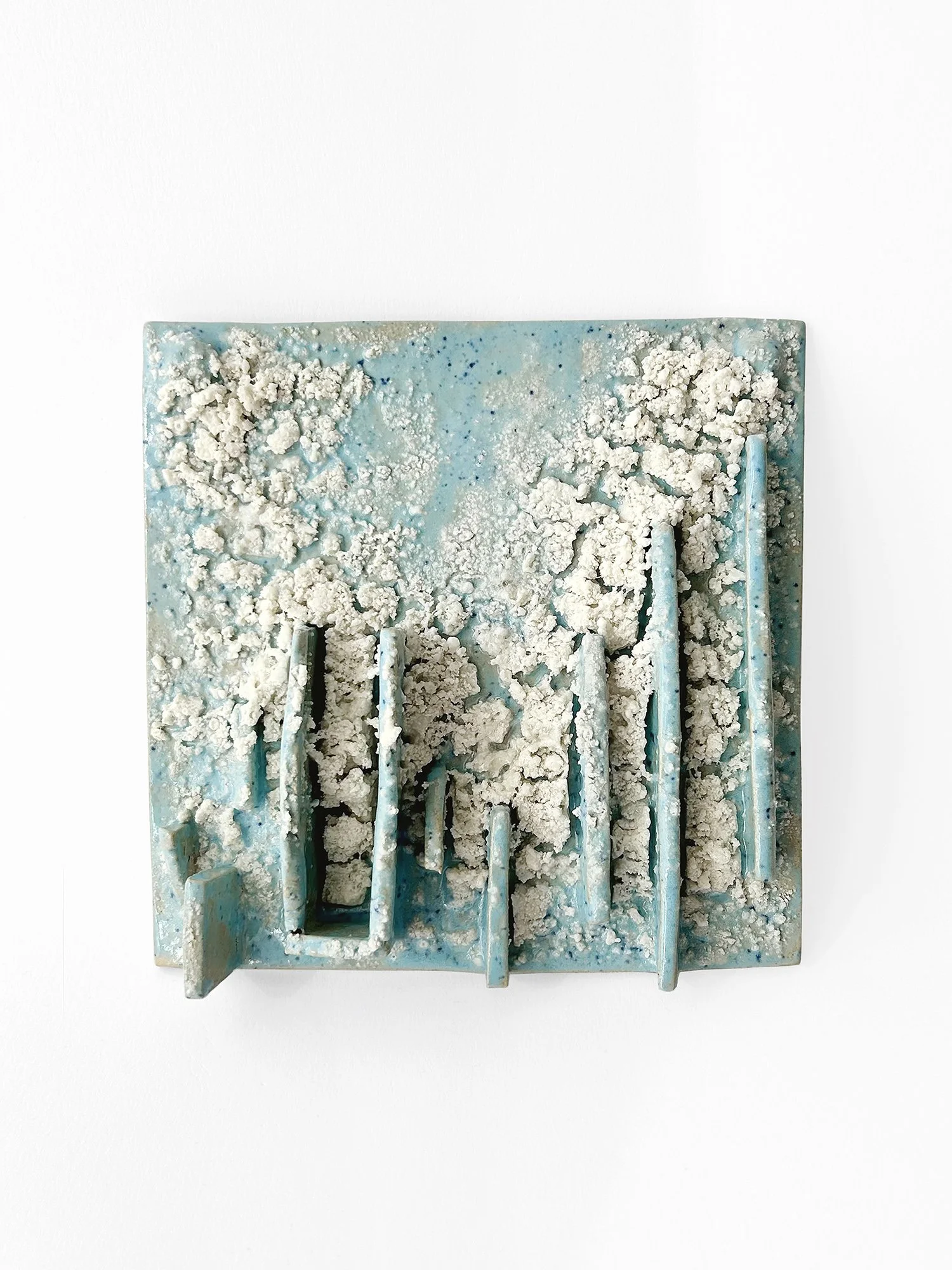
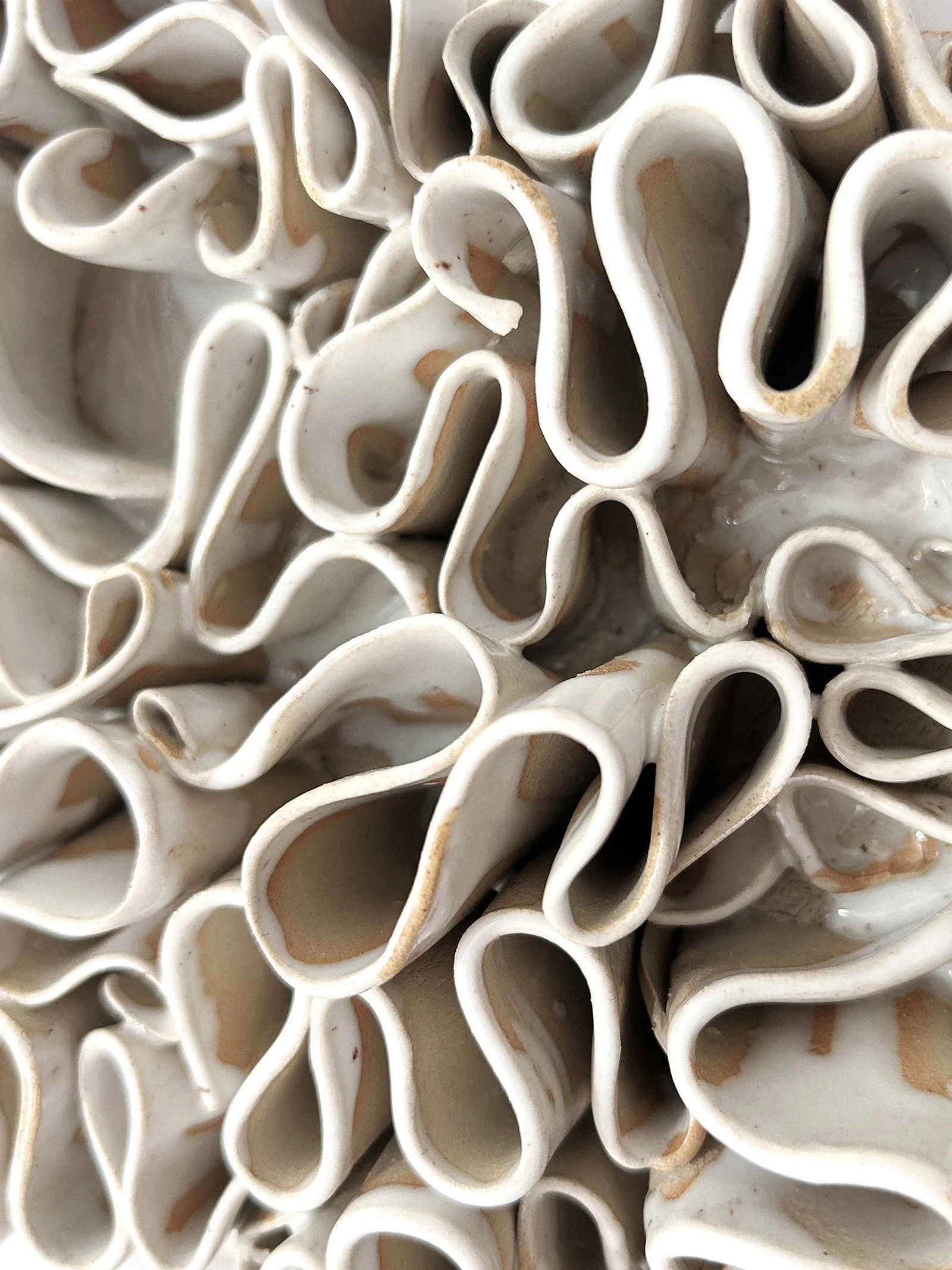
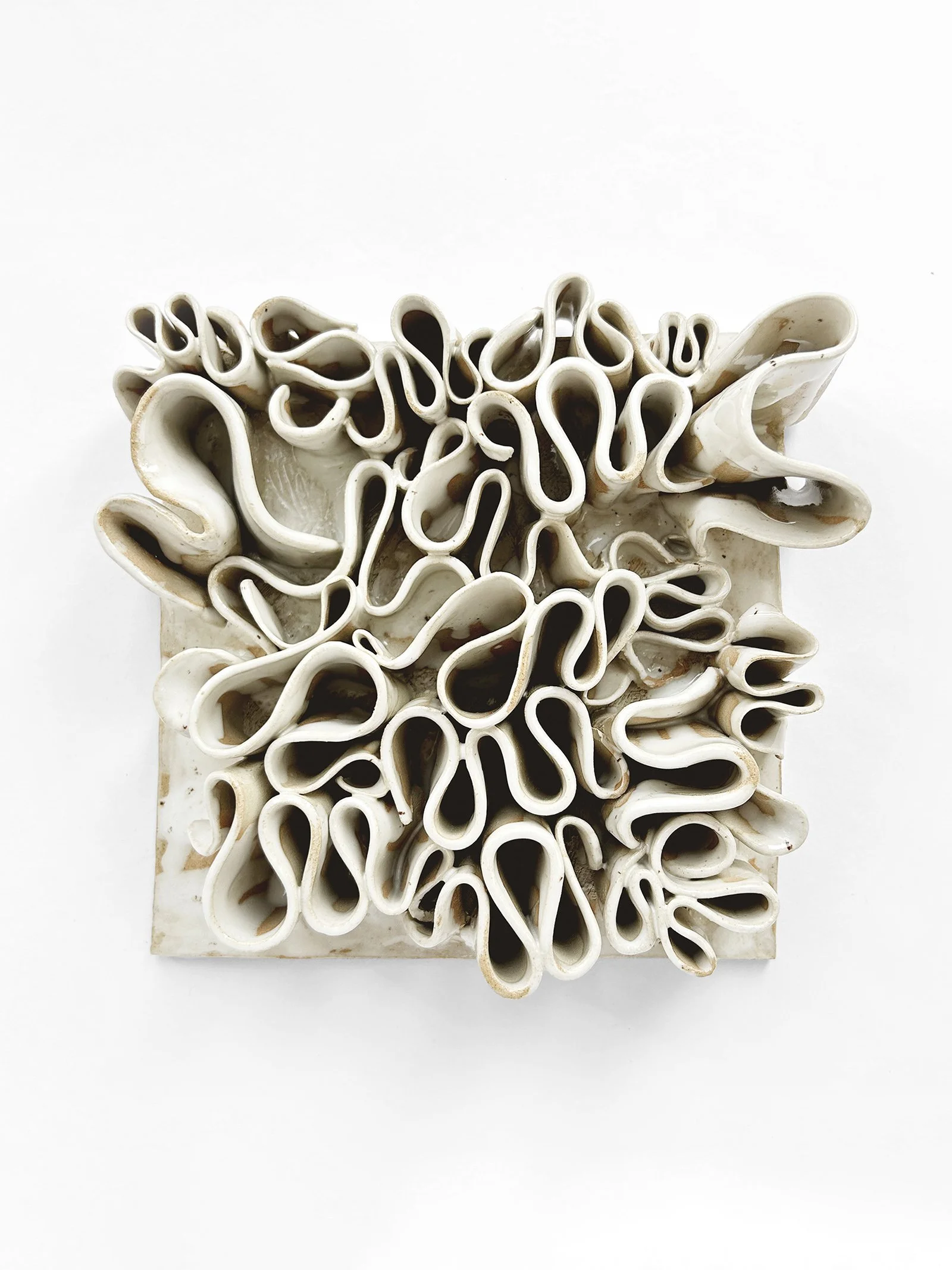
Julia Ost is a Berlin-based artist exploring traditionally feminine intangible qualities and hidden layers of our emotions through free-flowing, low-relief sculptures. Her work is guided by intuition and a deep connection to her matriarchal roots. Ost’s fascination with clay stems from her grandmother, who worked as a painter in a ceramic factory.
How did your creative journey begin?
Like many artists, I was always creative. I started drawing before I started walking, and my early years were filled with creativity. I loved daydreaming, looking at the sky and seeing images in the clouds, or looking at the grandparents' wall carpets, and searching for animals I could see in these patterns. Building houses in the garden from mud and stones, creating perfume from flowers and water, watching insects and animals, falling stars every year in August, drawing with colorful markers on photos, or writing poetry.
I am inspired by my family. They all had such wonderful gifts, even without realizing it. My grandfather was a self-taught musician. In his free time from work, he played the accordion, sang, created a wonderful garden with peony bushes, and wrote poetry letters to family members and friends. My grandmother worked as a painter in a ceramic factory for decades, and they had lots of ceramics at home. My mother drew beautifully. When I saw her drawings as a kid, I thought they were the most beautiful things I had ever seen. It all definitely had an impact on me.
Clay carries both softness and permanence. How does that duality relate to the emotional states you explore?
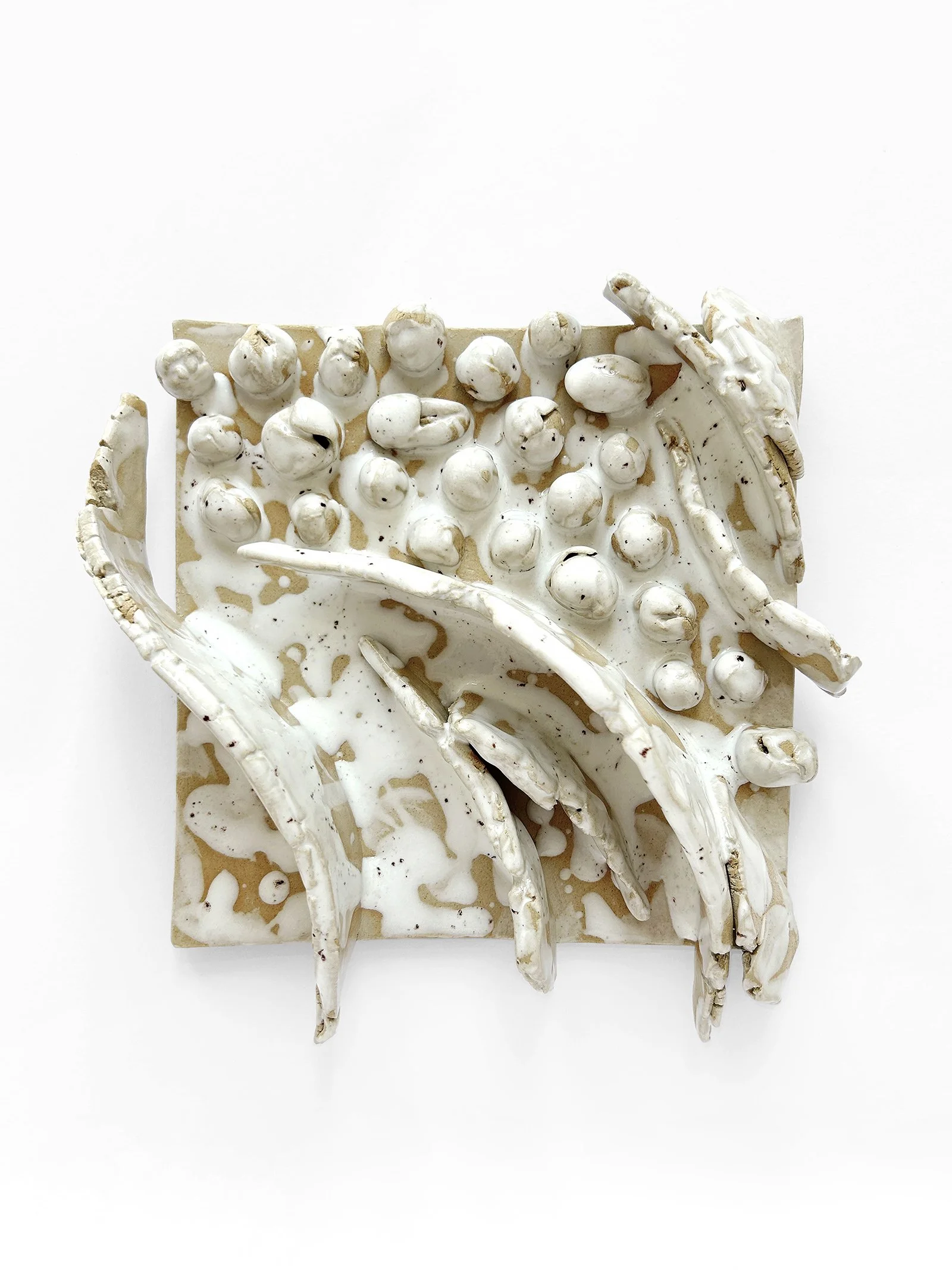
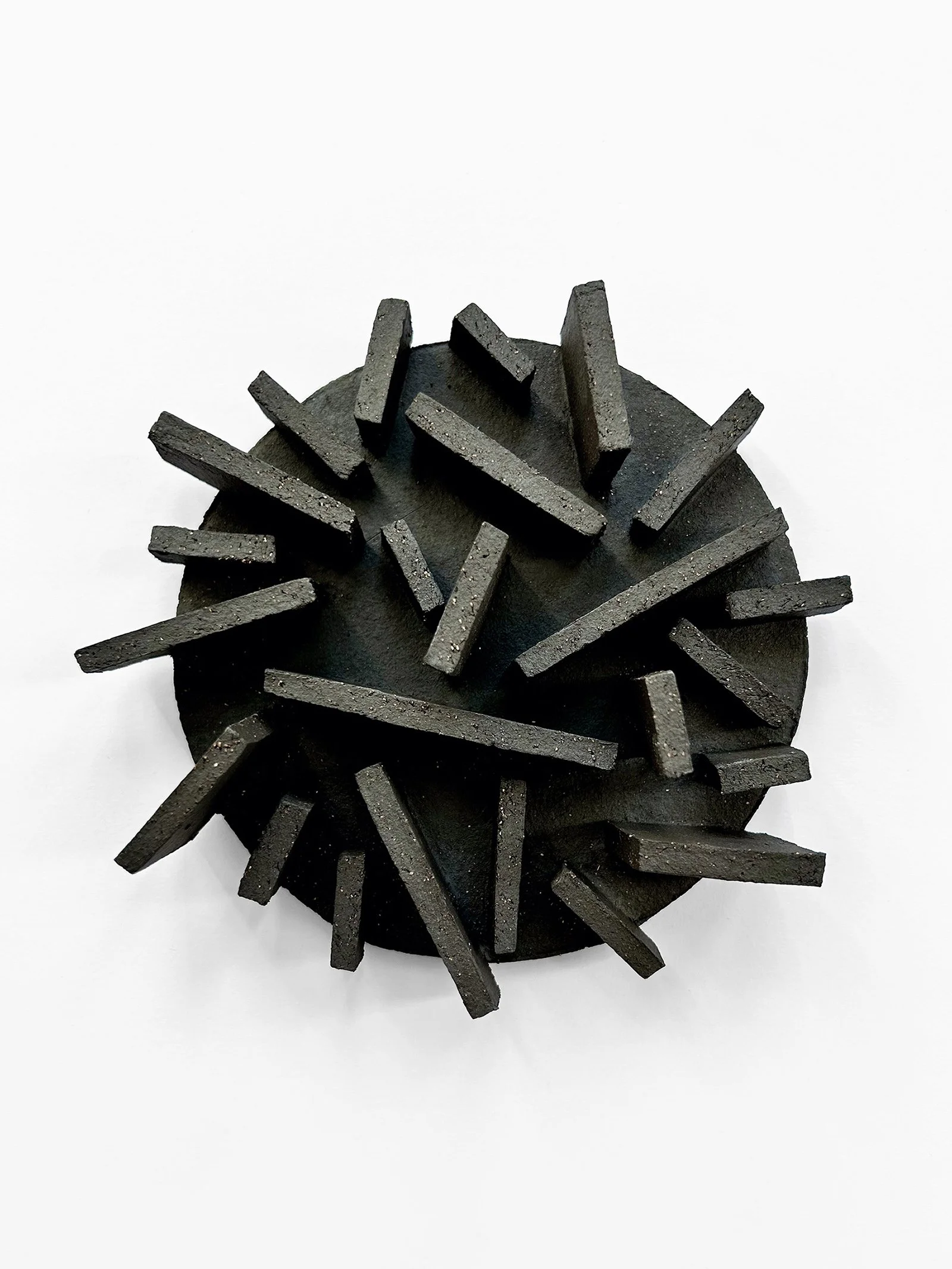
I admire this contrast of the material. My personal experience, family story, and inspiration from my grandmother, whom I was very close to, guide me through the process of creation and experimentation. These moments of flow and presence not only influenced my art but also provided insights into my personal life. The balance between strength and vulnerability is something I’m searching for. Clay is the medium through which I best communicate this message.
What does a typical day in the studio look like for you, and how has your art practice grown or changed?
Besides admin work and freelance projects, I try to block 1-2 days a week for pure creative time. I usually start these days slowly and finish them in the late evening. It works best for me, and I feel so privileged and happy to be able to build my own schedule now.
After some time, my work took an abstract direction. It wasn't a deliberate plan, rather, it naturally evolved. I studied academic drawing and painting for five years during my university time, and my current work is another chapter. My style has become raw and imperfect as I learn to let go. The last word is always on the kiln. I don’t have 100% control, it’s always a surprise what the result will be, and I really enjoy it.
After fourteen years in design, what shifted internally that led you back to visual art?
There was always this internal call to come back to visual art. It started as a silent whisper and, over the years, grew louder and more permanent. In 2020 and 2021, I experienced a chain of unexpected losses, and after some time, I needed a safe space to process the suppressed grief. In 2023, I started going to parks to sketch flowers and trees, and to the museum to draw there. I realized that in these moments, I felt alive and happy. Later, I tried working with clay, and this was a life-changing experience for me. Through art practice, I relearned to embrace quiet moments and stillness, and reconnected with myself and my emotions.
What role does touch play in your process, both physically and conceptually?
I feel a strong need to connect with material, to create with my hands, which is why working with clay fills my soul and my heart. During this sensory process of creating textures, applying pressure, and seeing how the skin's temperature affects and changes the materials, I feel emotionally moved. The softness and comfortable sensation are everything, it gives me a feeling of safety, calmness, and the possibility to be in the present moment.
Many of your works exist between painting and sculpture. How do you think about dimensionality in your practice?
They speak and interact with each other. I like working with charcoal or ink, as there is less control, the process is immediate, no time to overthink. When I work on flat surfaces with color right now, I can’t completely switch off. I think about proportions, color combinations, and which story I’d like to tell at the end. I assume that working in design for a long time influenced this process. It might change with time. With sculptures, it’s complete freedom for me. I have no idea where I'm going or what I’ll have at the end. I take a piece of clay, and I’m away from the whole world, in a place of mind I can’t really put into words.
How do you know when a piece is finished, especially when working intuitively?
While I have numerous ideas to explore, I refrain from making concrete plans to leave room for inspiration to guide me. I've found that when I trust in the process, something magical happens. The piece knows when it’s done, my intuition tells me to stop. I have this moment, an internal feeling that’s hard to explain, when I just can’t add anything or work further.