Haifa Melliti: Goddesses & Guardians
Haifa Melliti is a contemporary artist whose practice explores memory, identity, and the emotional landscapes that shape our relationship to place. Working through layered compositions that balance abstraction and representation, her work reflects on personal and collective histories, inviting viewers to consider themes of belonging, transformation, and resilience. Drawing from her multicultural experiences, Melliti creates evocative paintings that merge intuitive mark-making with thoughtful symbolism, resulting in works that are both deeply personal and universally resonant.
How did your creative journey begin?
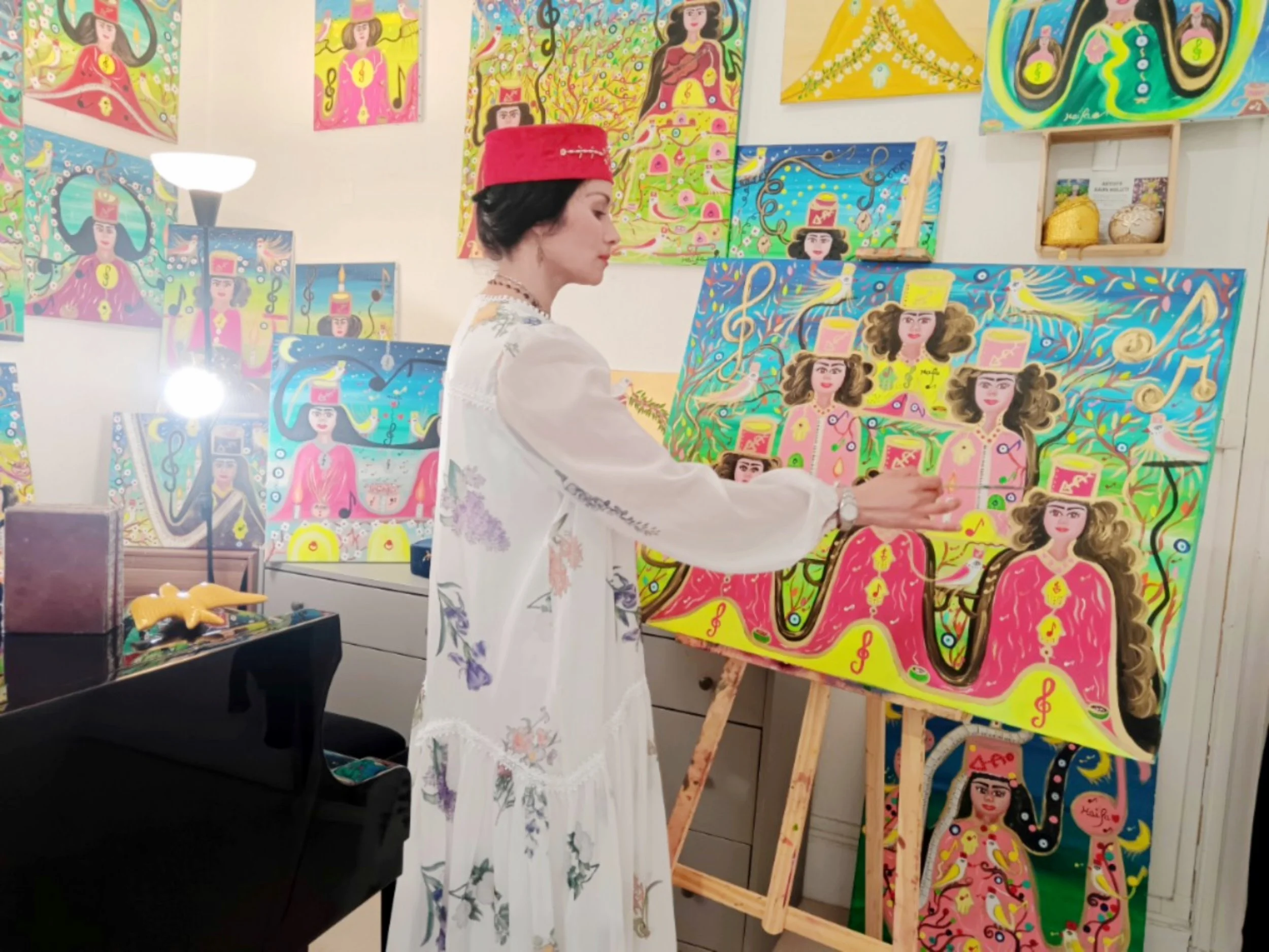
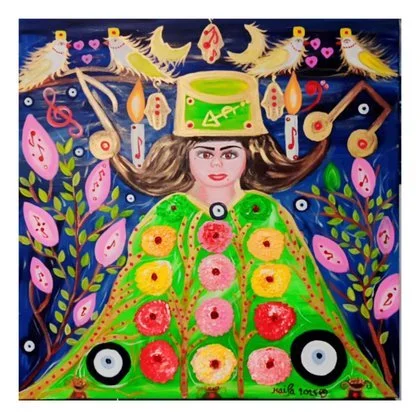
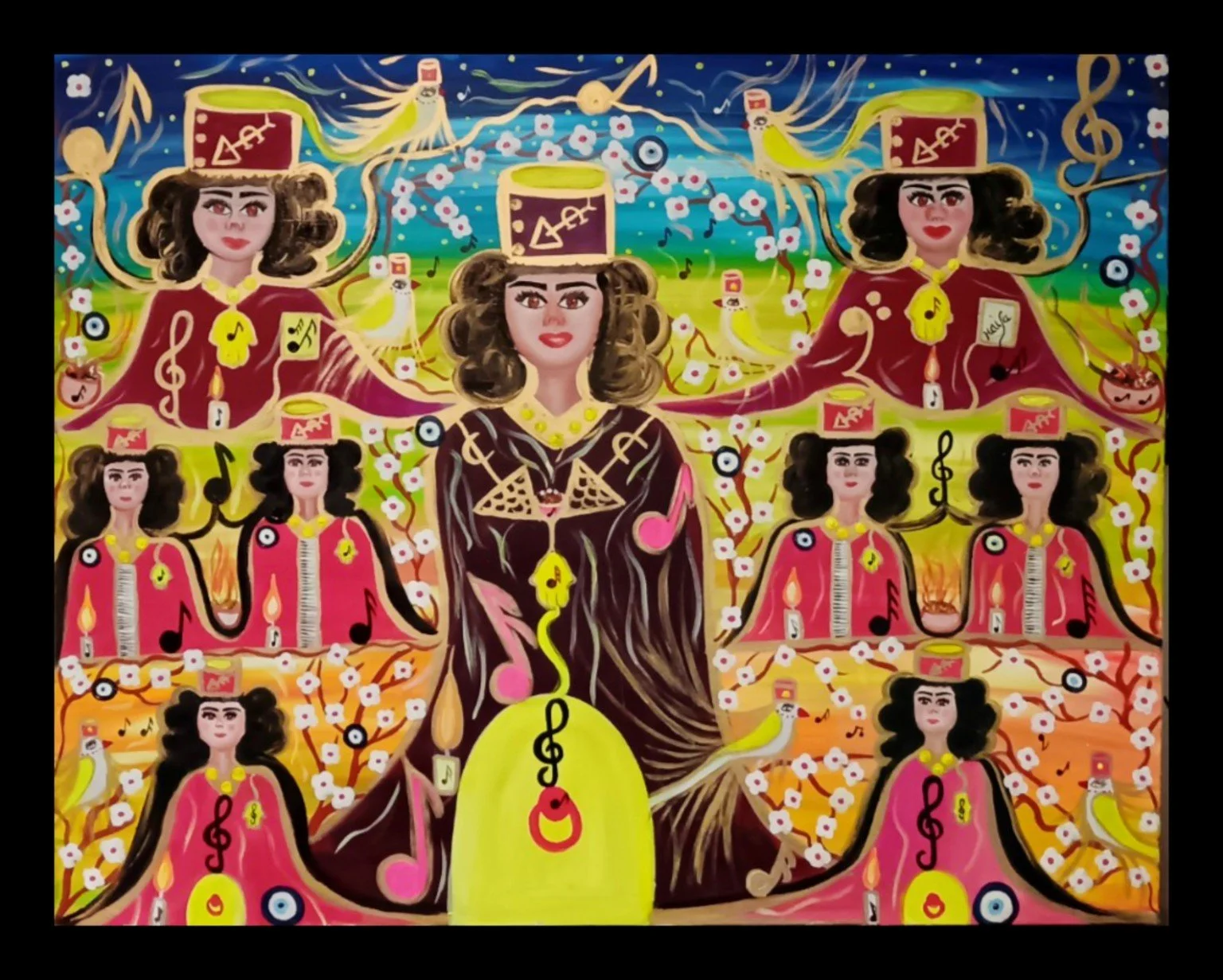
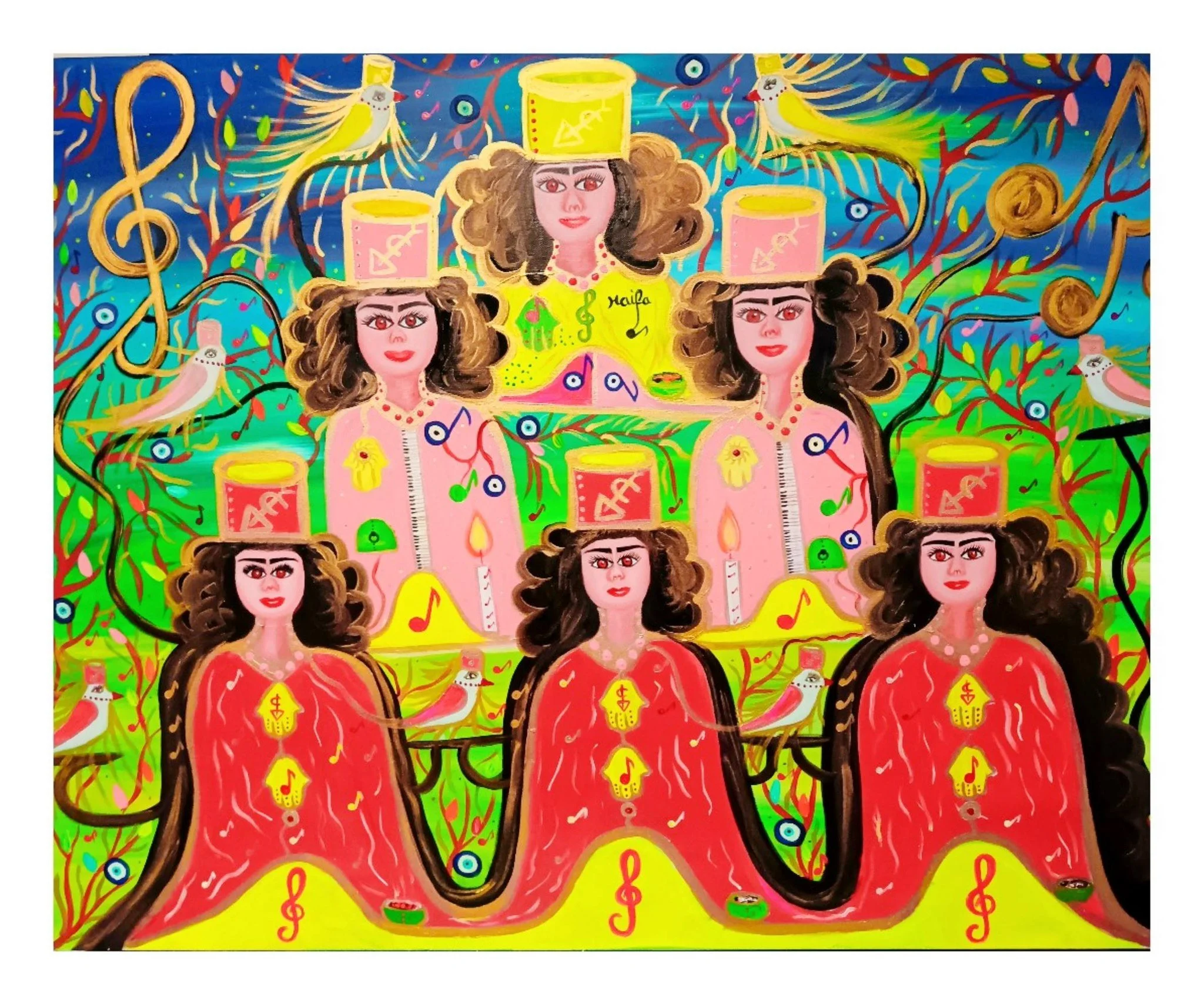
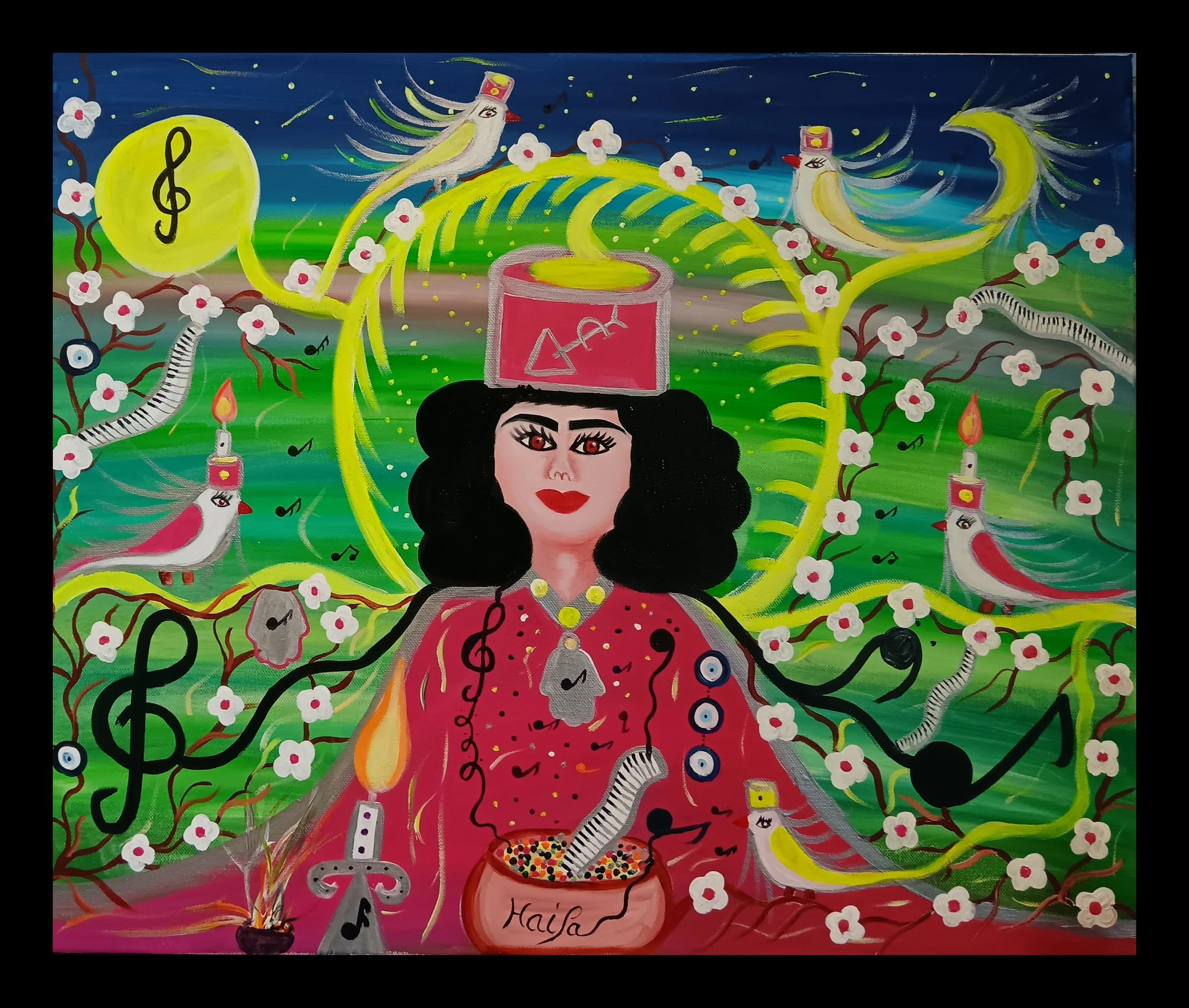
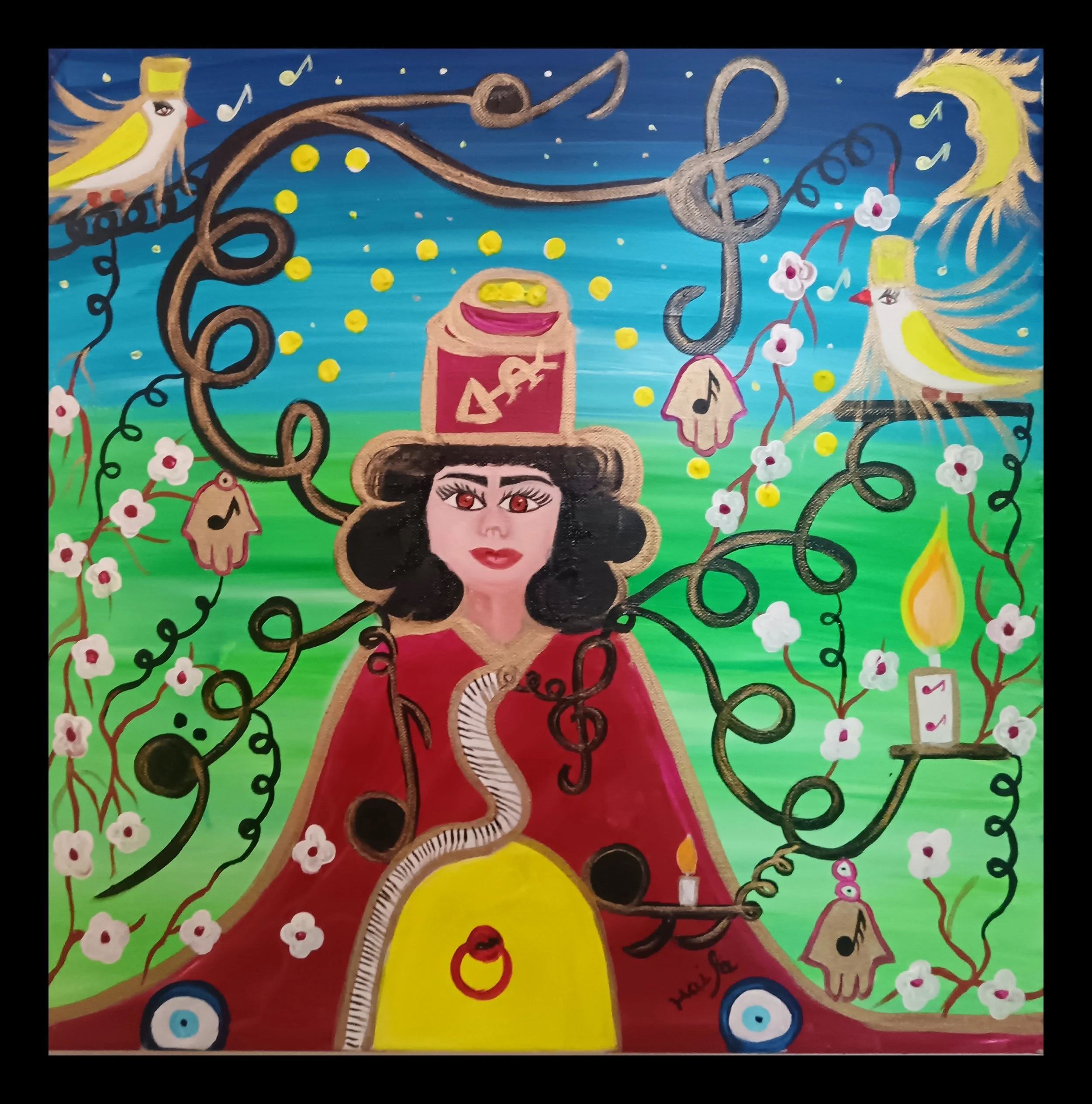
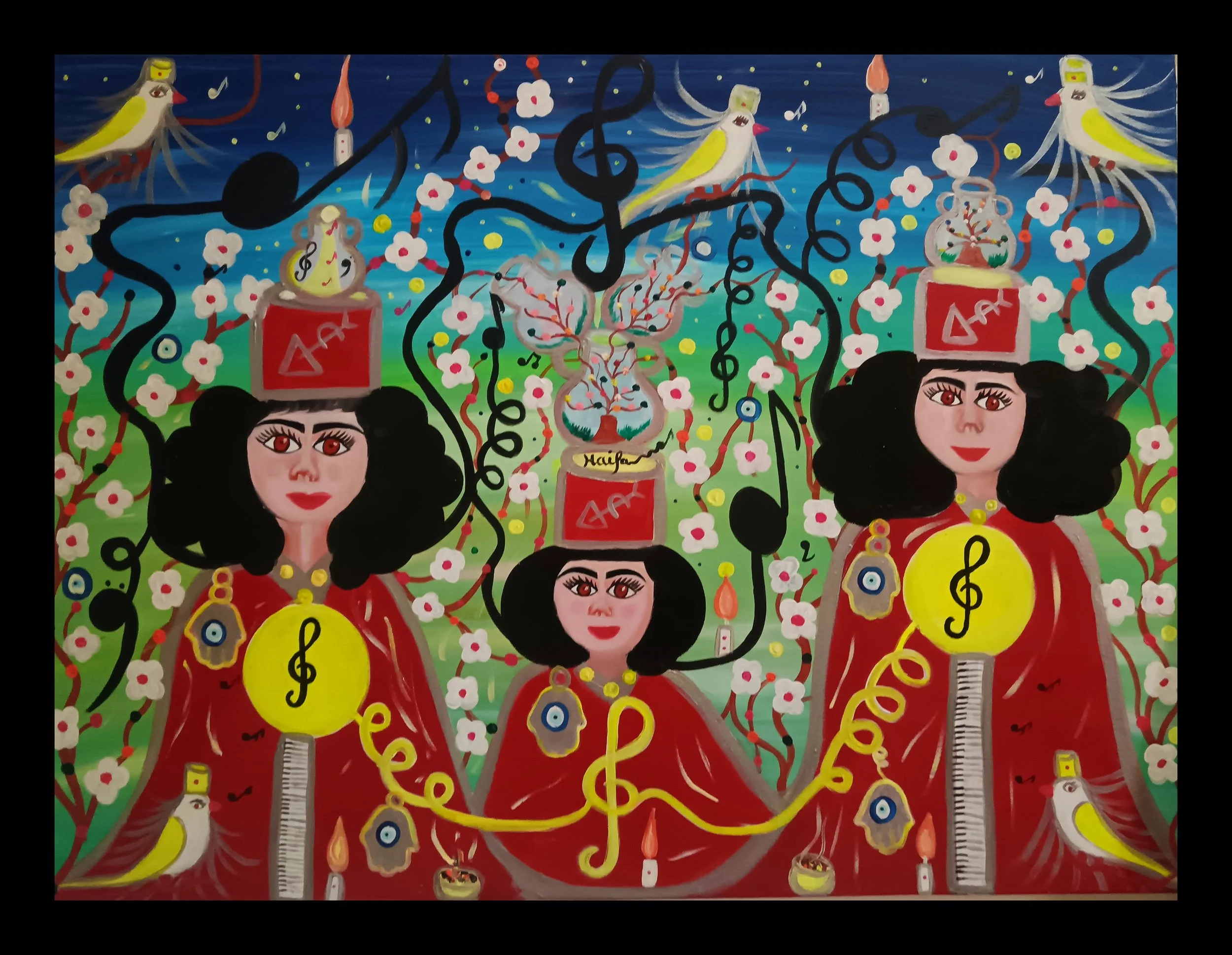
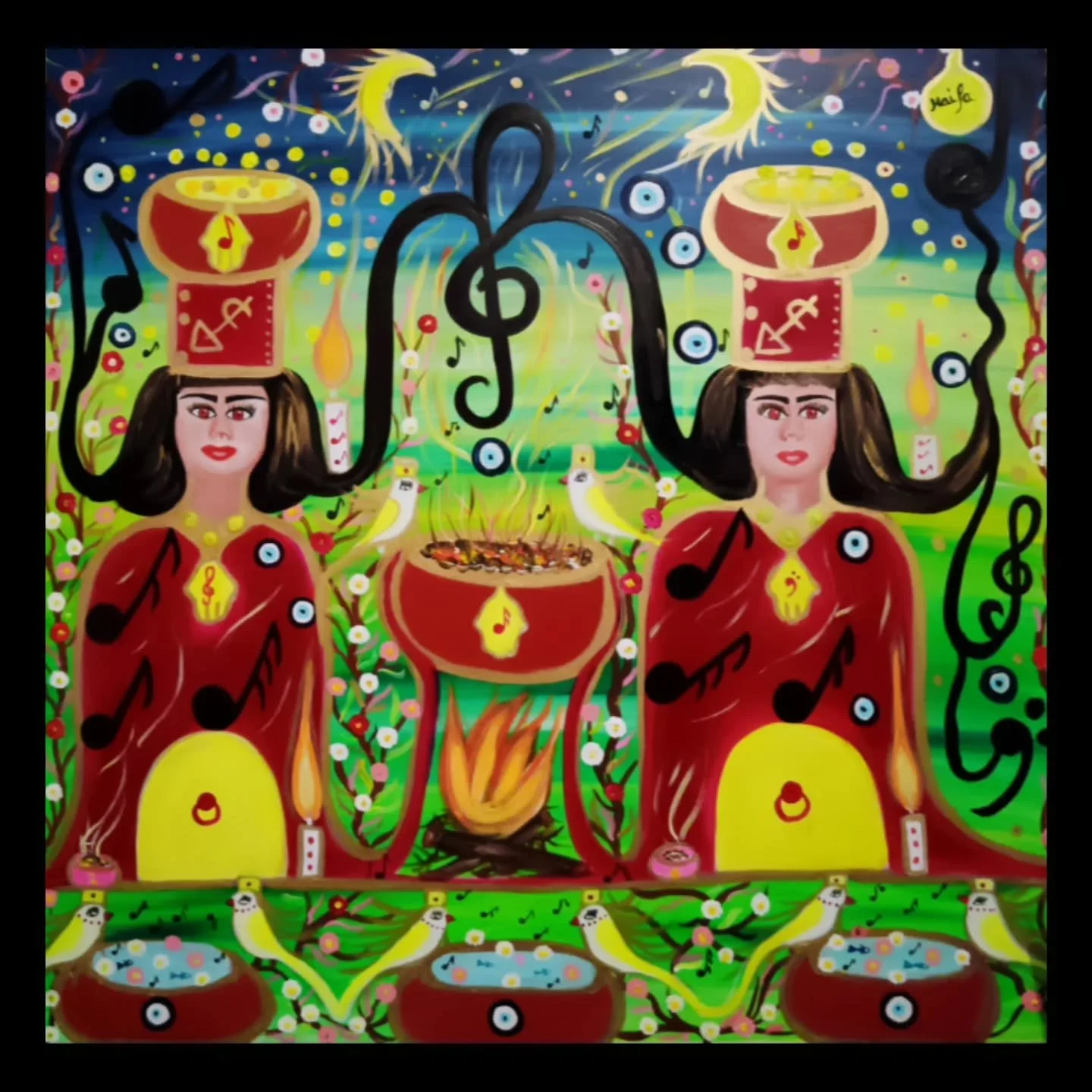
My creative journey began in a space that words could not yet reach a space of deep sensitivity, silent listening, and inner perception. As a child, I was already attuned to what is invisible to atmospheres, to emotions, to subtle presences that cannot always be explained. I did not yet have the language, but I could feel everything. The piano became my first language. When I touched the keys, something opened within me. It was not about playing music it was about entering a sacred space where emotions could breathe freely. Each note felt like a breath, a whisper of the soul, a prayer. Painting came later as a natural continuation of that vibration. What I felt through sound began to take form through color, through gaze, through feminine presences that appeared on the canvas. I do not invent them I meet them. They are goddesses, guardians, reflections of the feminine soul. Along this path, my doctorate in naturopathy opened the door to another world a subtle dimension where the body, energy, and soul are deeply interconnected. It allowed me to understand creation as a form of care, as a space of healing and alignment. My journey is not about becoming an artist it is about remembering. Remembering a sacred language where art becomes presence, vibration, and prayer.
What signals to you that it’s time to begin a new piece?
It begins with a vibration. Sometimes I sit at the piano, and without intention, my hands begin to move. The melody emerges as if it already exists somewhere beyond me. I do not compose I listen. That music creates an inner landscape. Within that space, a presence appears. Often, it is a feminine figure a goddess, a silent being carrying a message of softness, strength, and beauty. There is a moment when the silence becomes full, almost luminous. When something can no longer remain unseen. That is when I begin or rather, when I allow the work to reveal itself.
What does a typical day in the studio look like for you, and how has your art practice grown or changed?
My studio is not only a physical space it is a state of presence. I begin by reconnecting with silence, sometimes through stillness, sometimes through piano improvisation. The piano opens the inner door, aligns my energy, and brings me back to what is essential. Then I approach the canvas as a meeting, not as something to control. My gestures are slow, intentional, almost meditative. Each movement carries breath, attention, and care. Over time, my practice has deeply evolved. In the beginning, I was searching. Today, I am listening. My work has expanded beyond disciplines. Painting, music, and care have become one. My background in naturopathy has guided me to create immersive spaces where art becomes a form of healing where the body relaxes, the heart opens, and the soul reconnects. In my work, I paint goddesses not as figures to be admired, but as living presences. They embody the beauty of the feminine, its depth, its softness, its sacred power. My universe is deeply inspired by a Sufi sensibility a path of love, of inner listening, of connection to the divine through beauty, silence, and vibration. I am not only creating artworks I am creating spaces where women can feel, remember, and return to themselves.
How has moving between North Africa and Europe influenced your visual language and sense of spiritual identity?
Moving between North Africa and Europe has shaped my identity as a living bridge. North Africa lives within me as memory, warmth, and sacred inheritance. It is the land of symbols, of ancestral feminine presence, of invisible rituals carried through generations. It is where I feel the depth of the soul and a deep connection to the land both outer and inner. Europe has offered me space to express, to structure, and to bring visibility to what I carry within. It has allowed me to embody my vision in a contemporary language. Between these two worlds, I did not divide myself I expanded. My visual language was born from this union, where tradition meets modernity, where the sacred meets the visible. My identity is fluid, rooted, and open at the same time.
You describe visibility as a responsibility. What does it mean to protect intimacy as your audience grows?
Visibility, for me, is sacred. It is not about being seen it is about staying aligned. As my audience grows, I feel an even deeper responsibility to remain connected to my inner space, because this is where the truth of my work lives. Intimacy is the source of creation. It is where the feminine speaks in its most subtle and authentic form. To protect intimacy is to allow mystery to exist. It is to not give everything away. It is to create from truth, not from expectation. In a world that asks for constant exposure, I choose conscious presence. I share what is aligned, what carries light and I protect what is sacred.
Your practice emphasizes slowness and silence. How do you maintain that pace in a fast-moving art world?
Slowness is both my resistance and my devotion. We live in a world that moves fast, but the soul does not move at that rhythm. True creation cannot be rushed. Silence is my foundation. It is not empty it is full. It is where everything begins. When I return to silence, I reconnect to something timeless and true. Maintaining this pace requires discipline, but also trust. Trust that what is created slowly carries a deeper vibration. I don’t follow the rhythm of the world I follow the rhythm of the heart. And I believe that people feel that difference. They recognize the truth within it.
Symbols like birds, moons, and eyes recur in your work. Do they arrive intuitively, or have they developed specific meanings over time?
They arrive like memories. At first, they came intuitively, as if they were already part of my language. Over time, they revealed deeper meanings. Birds embody the soul in movement freedom, elevation, the ability to travel between worlds. Moons carry the rhythm of the feminine cycles, transformation, the invisible becoming visible. Eyes are guardians they protect, they witness, they see beyond appearances. But beyond their meaning, they are living presences. Each symbol holds a vibration, an energy that speaks directly to the heart and the subconscious. My work is not meant to be only understood it is meant to be felt, like a melody that resonates within.
In the end, my art is a prayer a living vibration where silence becomes sound, where the
invisible takes form, and where the soul remembers its light.