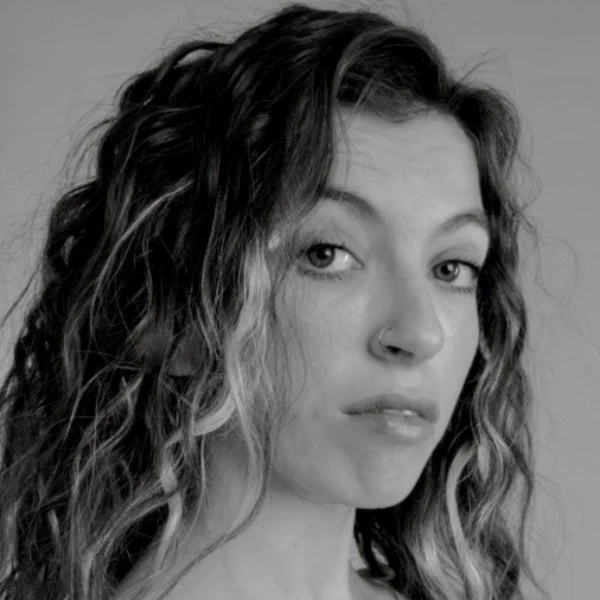
Brianna McQuade is a ceramic artist whose research focuses on the intersection between comedy and pain. She works with distorted sculptures that reference the psychology of anxiety and executive dysfunction. McQuade studied Ceramic Design at the University of the Arts London, Central Saint Martins in 2022 and was an MFA candidate and an Instructor of Record at The State University of New York at New Paltz, where she graduated in 2024. Currently, she teaches at Suffolk County Community College. In her work, clay becomes a still of the internal struggle McQuade is entangled in. Her research is deeply personal, rooted in her experiences with obsessive-compulsive disorder, dissociation, and anxieties surrounding harm and control. While investigating psychological clichés, she transforms them into tangible objects to challenge their implications and meanings.
How did your creative journey begin?
My creative journey started less as a decision and more as a necessity. I’ve always had a really active internal world, especially shaped by obsessive thinking and intrusive thoughts. I didn’t have a clear way to articulate that verbally. Making things became a way to move those experiences outside of myself, to give them form so they weren’t just looping internally.
Early on, I was drawn to materials that felt responsive and physical. Clay in particular stuck because it holds touch in a really immediate way—it records pressure, hesitation, repetition. It felt like a material that could carry something psychological without needing to explain it outright. Over time, what began as a kind of private processing evolved into a more intentional practice. I started to recognize patterns in the forms I was making, and realized I was building a visual language that reflects how I experience anxiety, memory, and humor in tandem.
Humor plays a central role in your work. Is it a coping mechanism, a critique, or something else entirely?
It’s definitely rooted in coping, but it’s not purely protective. Humor is how I get close to things that would otherwise feel unbearable or too exposing. It softens the entry point, both for myself and for the viewer, but it also allows me to approach difficult material without flattening it or making it overly didactic.
At the same time, I think humor complicates the work more than it resolves it. I’m interested in that unstable space where something feels funny and uncomfortable at once, and there’s a slippage between sincerity and deflection. In that way, it becomes a quiet critique of how we deflect or disguise vulnerability, especially through self-deprecating or deflective humor. It’s more about using humor as a structure that holds tension, where the work can oscillate between absurdity and something more unsettling without settling into either.
What does a typical day in the studio look like for you, and how has your art practice grown or changed?
A typical day is pretty physical and repetitive. I spend a lot of time building forms through coils, revisiting the same shapes and symbols over and over. There’s a rhythm to it that lets me drop into the work without overthinking every decision. I’ll usually move between making and refining first, then thinking about how the object holds itself visually. That stage feels different—more controlled, more deliberate, but still tied to the earlier gestures.
My practice has become more focused over time, as I have less dedicated studio time than I did while I was an MFA candidate. Throughout graduate school, I was trying to figure out what language felt honest to me. I knew that I was drawn to a very specific kind of aesthetic, but it was difficult for me to articulate why the work I was making was more uncanny and distorted than the references I found in text, films, or cartoons.
Now I trust the repetition more and let the work shift incrementally rather than trying to invent something entirely new each time. I’m less concerned with explaining everything and more interested in letting the work hold contradictions—humor and discomfort, control and excess—without needing to resolve them.
It’s funny that I am now so unafraid to be perceived as “cringe” or “embarrassing” through my work. As I have become more confident in my making, I lean into those two ideas much more often. Because nothing is that serious, is it?
All this is to say that I have grown to be comfortable with making weird choices. They feel right, authentic to me, and filled with curiosity and play. Ultimately, that curiosity has been the largest catalyst for the development of my work and has pushed me to be a better craftsperson and educator.
There’s a push and pull between control and chaos in your process. How does that tension show up in the act of making?
Through repetition in symbols and forms, I find visual avenues to articulate the unspoken nuances of psychological research inquiries related to my personal psyche, transcending the limitations of verbal communication and offering a specific perspective on intrusive and transgressive ruminations that are often considered taboo.
Repetition permits me to work unapologetically. It also allows me to approach elements of my work in an extremely controlled, didactic way.
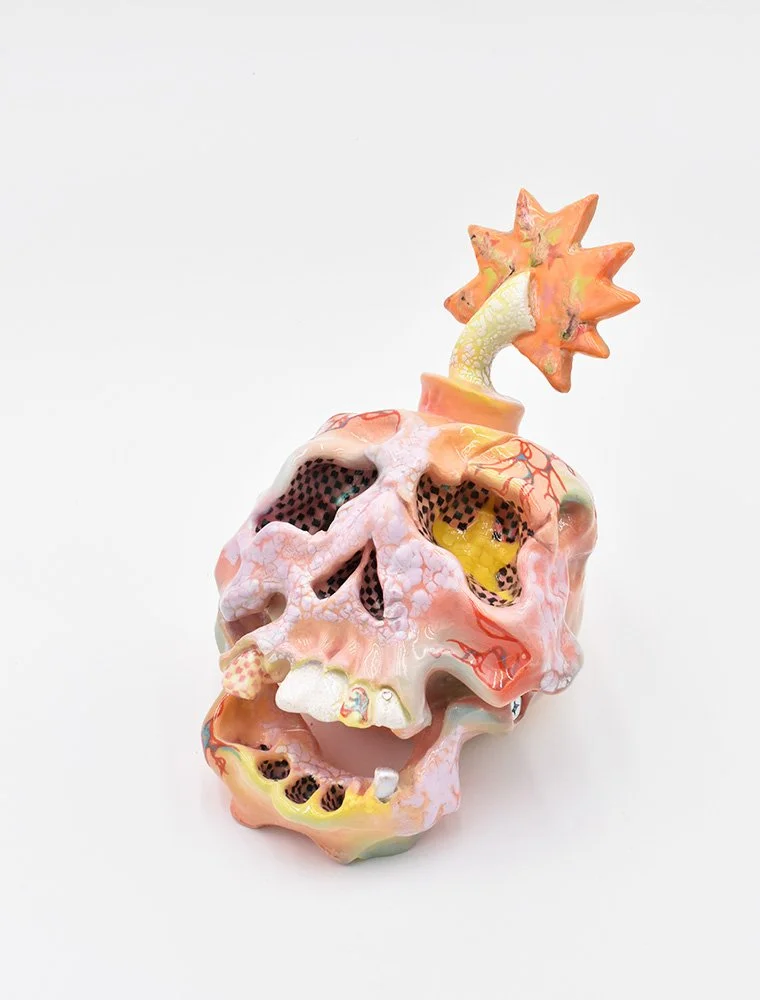
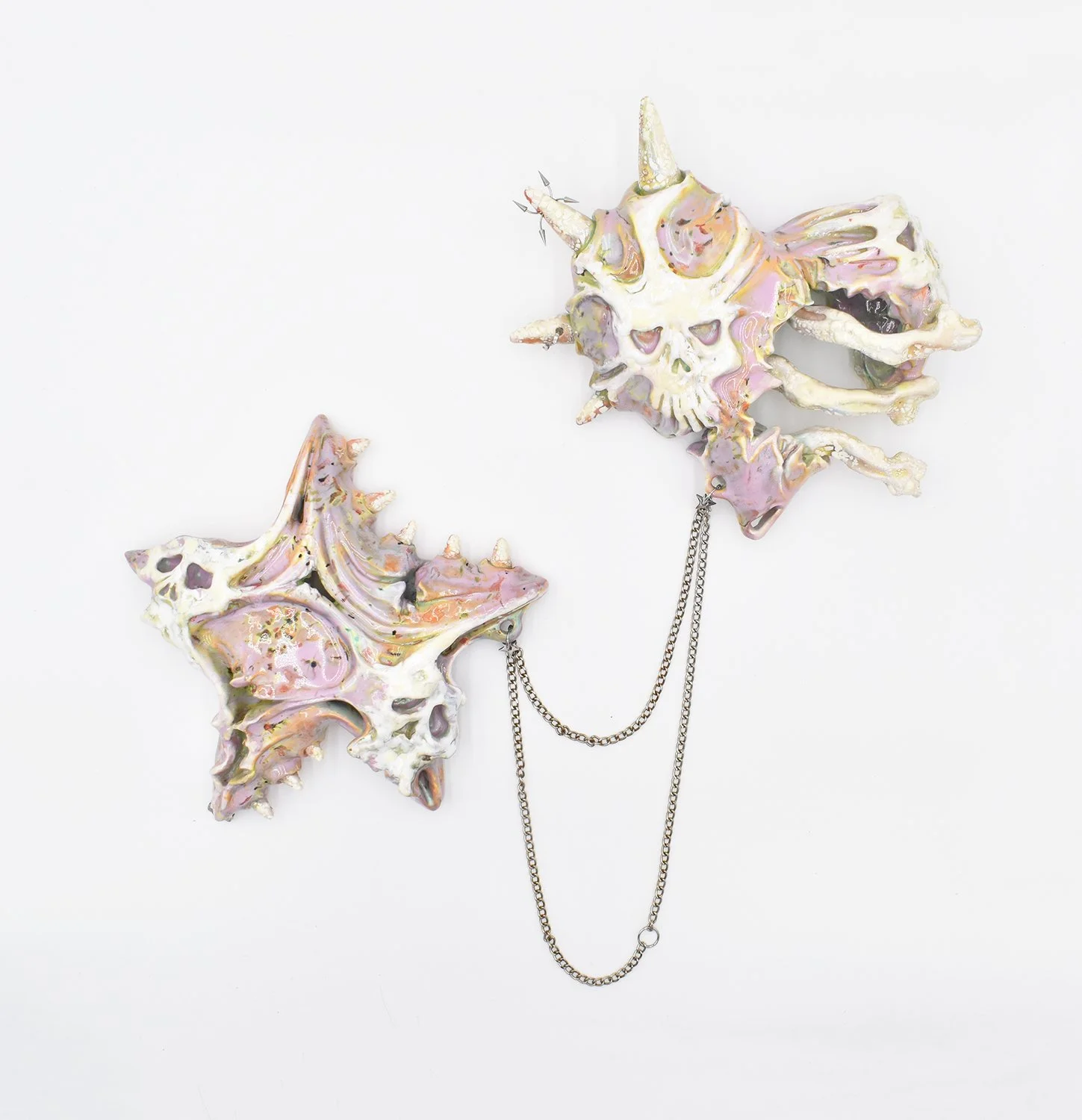
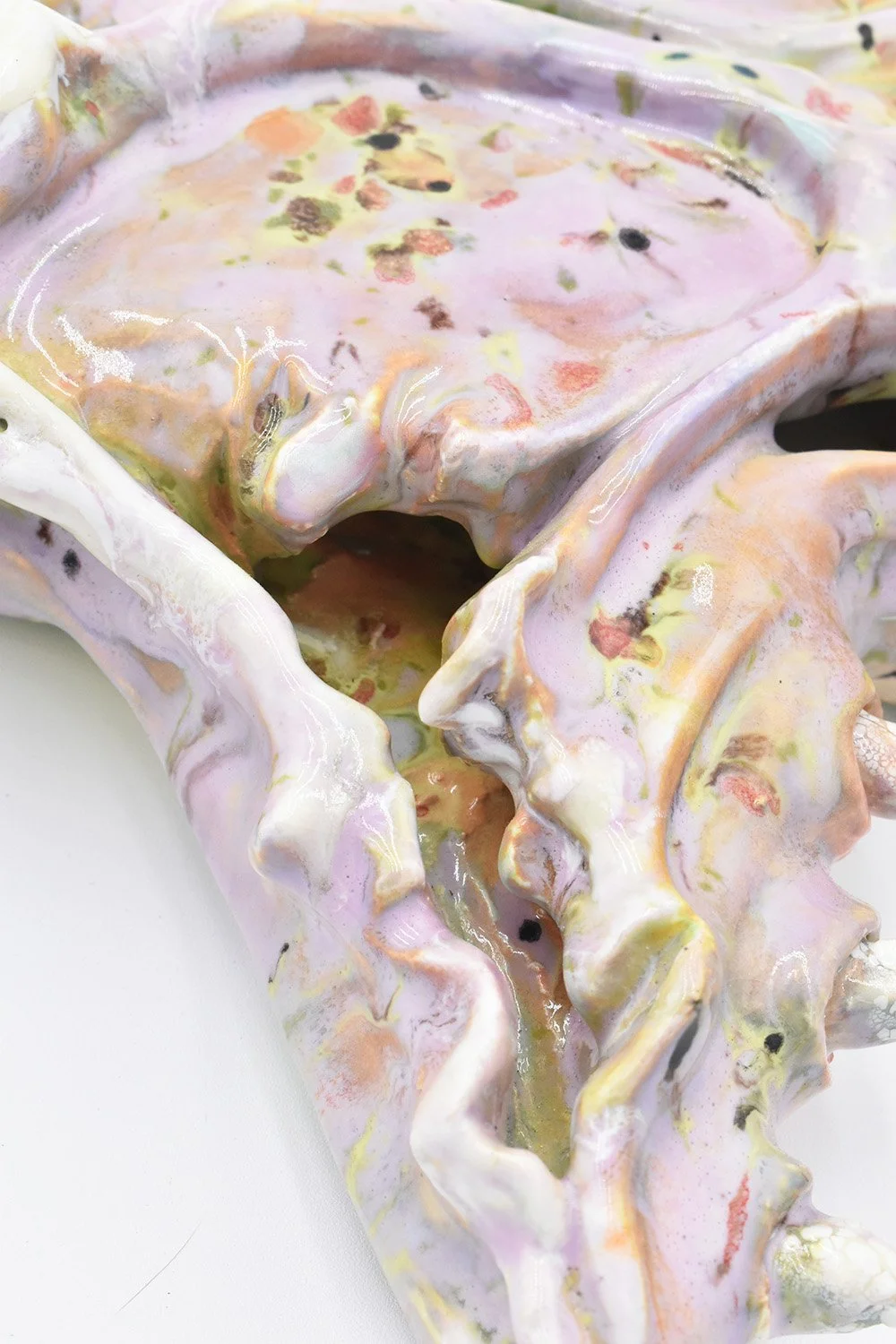
At the same time, there’s a loss of control in that repetition. The forms start to shift, distort, or multiply in ways I don’t fully plan. I’m working with a material that records every touch, so there’s a constant negotiation between what I intend and what actually happens. Clay is really responsive, but it’s also unpredictable—it slumps, stretches, holds traces of hesitation. There’s a point where I have to let go of control and respond to what’s happening rather than forcing it. Things get chaotic through accumulation and excess, most often regarding the surfaces of the objects I am making.
How do audiences typically respond to the humor in your work versus the darker psychological undercurrents?
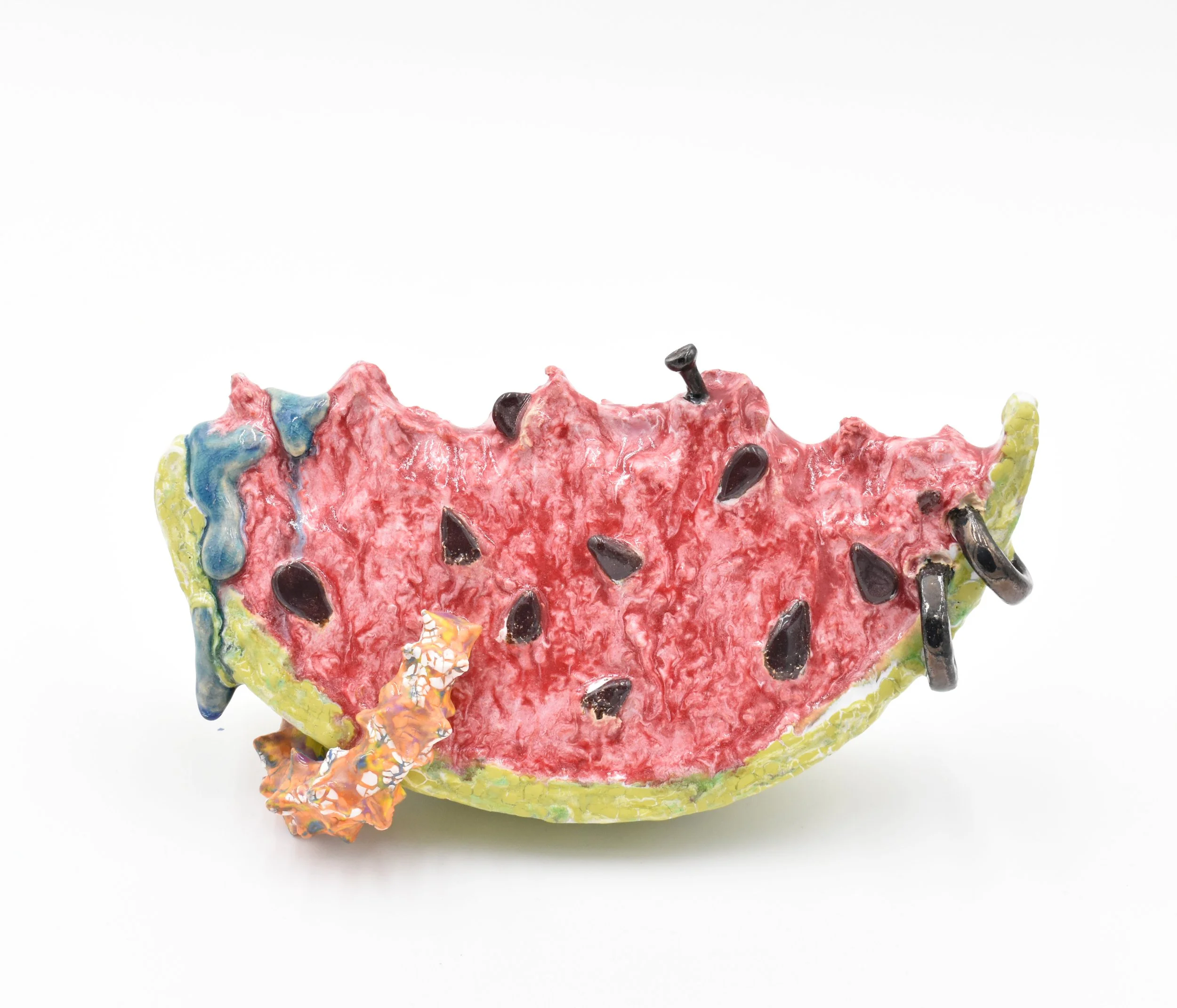
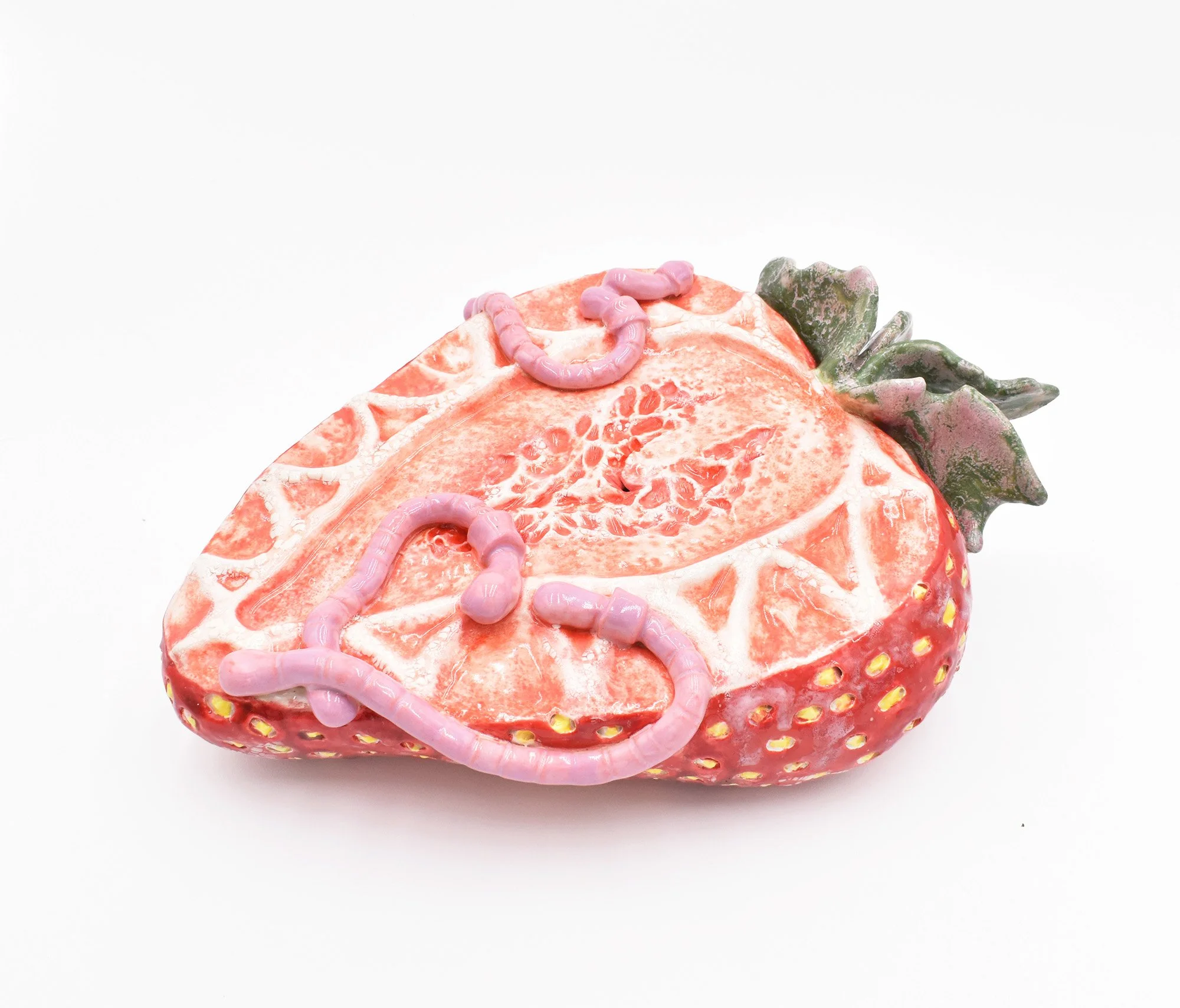
A lot of people initially respond to the color and humor in my work, absolutely. It draws them in and makes the work feel accessible. Those elements invite them in without requiring too much upfront context. But that response tends to shift the longer they engage with the work. I think that shift is important. The humor acts as an entry point, but it doesn’t stay stable. It starts to feel a little off. Shit gets weird.
Details start to register differently. The forms feel a little more bodily, a little more distorted, maybe slightly off. The humor doesn’t disappear, but it becomes less stable. It can tip into discomfort or ambiguity. I think that delayed recognition is important; it mirrors the way humor can function in real life.
Some people lean into the humor of my work and are curious about it, while others pull back. I’m interested in both reactions. The work isn’t trying to land in one emotional register; it’s more about creating a shift or a disruption in how something is initially perceived.
There’s a strong sense of embarrassment and vulnerability in your statement. How do you navigate exposing that in a public context?
It’s uncomfortable, but I think that’s part of why I do it. The work often comes from thoughts or feelings that feel embarrassing, intrusive, or difficult to admit. There’s also something important about recognizing that those feelings aren’t isolated.
It’s definitely something I’m aware of while making and especially when showing the work. A lot of what I’m pulling from feels personal in a way that’s not always easy to articulate—things tied to intrusive thoughts, anxiety, or impulses that don’t feel socially acceptable to admit. I have learned to let go of embarrassment about my writing associated with my work. I see it as just another way for me to tell a story.
Showing the work publicly means accepting that loss of control over how it’s interpreted. At the same time, it creates the possibility for connection—someone recognizing something of themselves in it, even if they wouldn’t say it outright. I’m not trying to present a resolved version of myself. I’m more interested in exposing something that still feels unresolved.
What kind of emotional experience do you hope viewers carry with them after encountering your work?
I’m not interested in directing viewers toward a single, fixed emotional response, but I am intentional about the kind of tension the work holds. I want there to be an initial sense of attraction that draws people in without resistance. But that entry point isn’t meant to be stable. As viewers spend more time with the work, I want that clarity to shift.
Ideally, the experience becomes more layered. The humor starts to feel less certain, the forms more ambiguous. That movement, from recognition into discomfort, is important to me. It reflects the way we often process difficult thoughts or emotions indirectly, especially through humor or deflection.
If the work can create space for people to sit with contradictions, then it’s doing what I want it to do. I’m less interested in resolution and more interested in leaving something open-ended that continues to unfold after they’ve walked away. That aftereffect, where the work continues to unfold mentally or emotionally, feels more important to me than any immediate reaction.