Wen Wen Zhou: Boundless Expanses
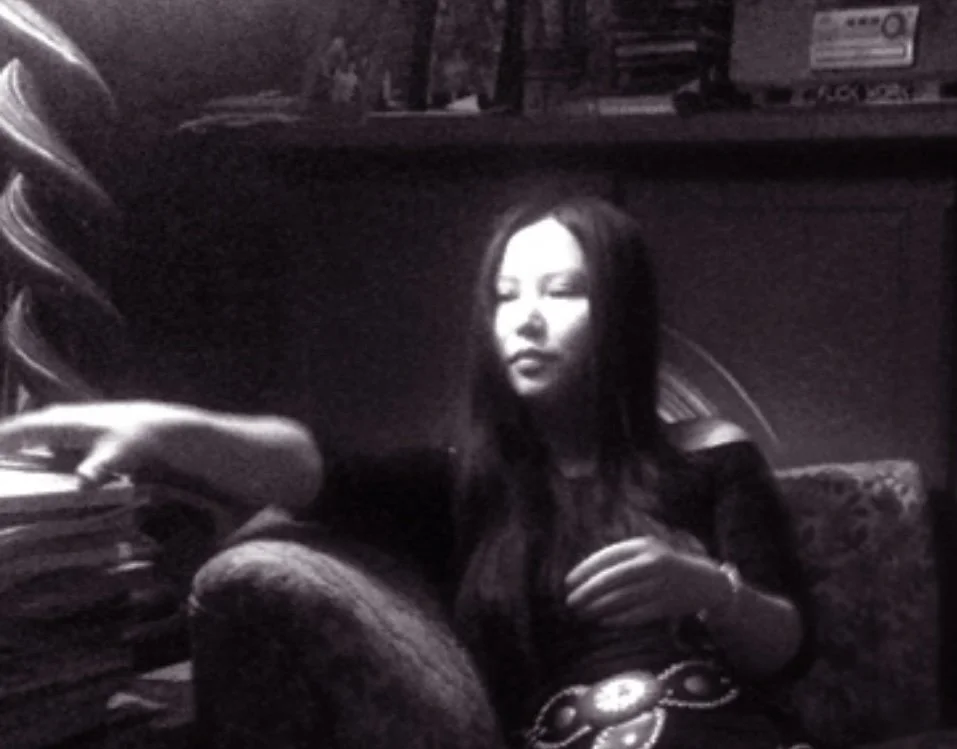
Born in China and now based in Melbourne, Australia, Wen Wen began studying art as a teenager before completing a Bachelor of Fine Art at Curtin University in Western Australia. Exhibiting internationally, her work explores the delicate relationship between humans, nature, and the built environment. Blurring the line between dream and reality, Wen Wen creates suspended, quietly surreal scenes where time feels paused and imagination takes over. Through these contemplative spaces, she invites viewers to envision new possibilities for harmony and coexistence.
How did your creative journey begin?
The roots of my creativity can be traced back to my childhood. I was always a child who loved to imagine. I would take the magnet out of my pencil case and break it into two pieces. Then I would use the Summer mat I slept on to shape a mountain, pretending to run a train with the magnet's north and south poles on the mat. I'd piece together colorful doll outfits from scraps of fabric my mother discarded. I also loved observing the clouds in the sky, imagining all sorts of people or animals in their shapes, and sketching them with my pencil. It's safe to say that my love for creation stems from the boundless imagination of my childhood. Even if I hadn't pursued painting, I would have chosen a creative profession like fashion design or landscape architecture. My love for creating something from nothing is a natural fit for my career in painting. Creativity is essential to me - it is the primary force that drew me to this path.
How has moving from China to Australia influenced your artistic perspective?
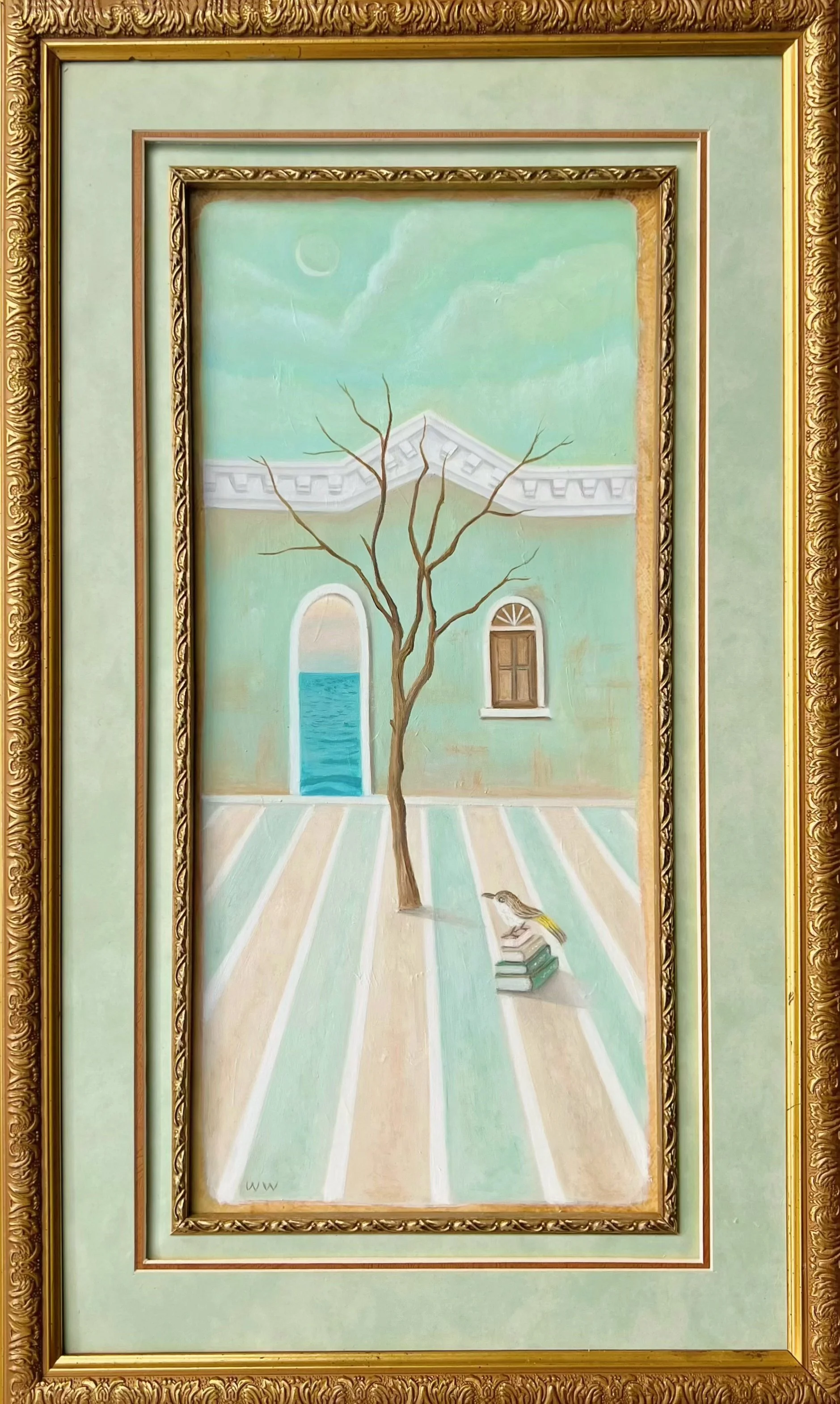
Australia's natural environment has had the most profound impact on me. I still vividly recall the awe I felt upon first seeing the ocean at age 17;that sense of boundless expanse touched me deeply. That's why you'll find the sea featured in many of my paintings.
Over the years, I have come to cherish tranquil, open natural spaces even more. Each morning, I hike in the national forest near my home. It borders a river, ending at a mountain, requiring a two-hour round trip. The entire journey is exceptionally quiet, accompanied only by birdsong, flowing water, the wind and my footsteps. While walking, I often enter a meditative state, as if my soul is freely traversing the universe, with everything around me ceasing to exist; a truly wondrous experience.
Along the way, I photograph trees of diverse shapes and small animals — lizards, wombats, kangaroos and wild rabbits.
I once lived in the heart of China's busiest metropolis, surrounded by traffic and towering skyscrapers. This stark contrast in lifestyle and environment has had the most direct and profound impact on the evolution of my creative work.
What does a typical day in the studio look like for you, and how has your art practice grown or changed?
I usually begin painting after lunch. My studio has three floor-to-ceiling windows. I start by drawing back the curtains to let sunlight stream in, make a cup of tea and turn on the stereo. Thus, my day unfolds amidst sunlight, music and the subtle aroma of herbal tea. During breaks, I flip through a few pages of a book before painting until dinnertime. Unless I'm in the final stages needing a push, I rarely paint at night because the lighting isn't ideal.
My themes often evolve with life circumstances. During my time in China, I primarily created the [Virtual Reality] series. This series features large-scale paintings with imagistic tendencies, inspired by imagery like clouds, skies and flames. In Australia, however, shifts in both environment and self led me to completely break away from my previous style, starting anew to develop a series with an entirely fresh aesthetic. This process was arduous, taking years of exploration to gradually form my current, more cohesive creative system. To an uninformed viewer, these works might seem created by two different artists.
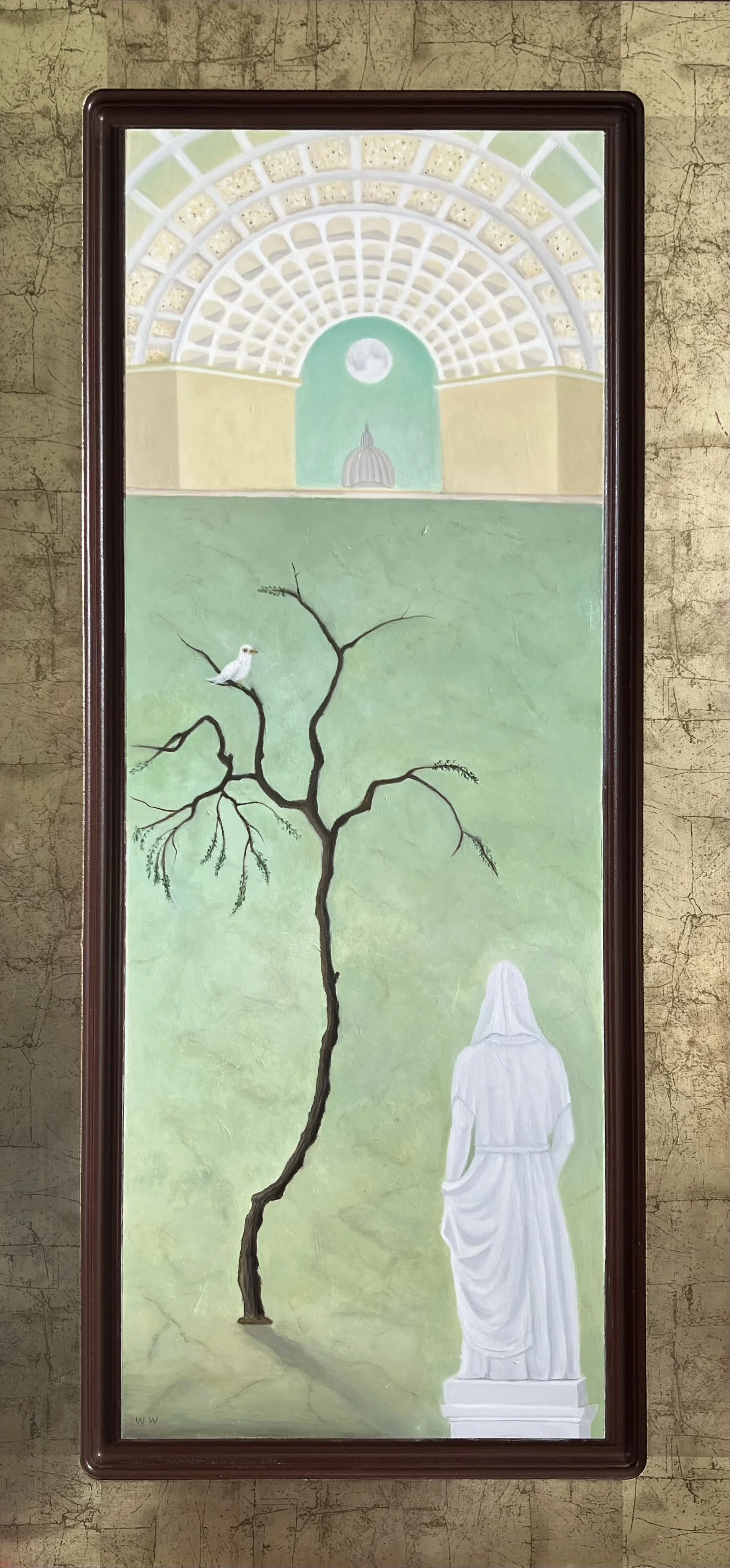
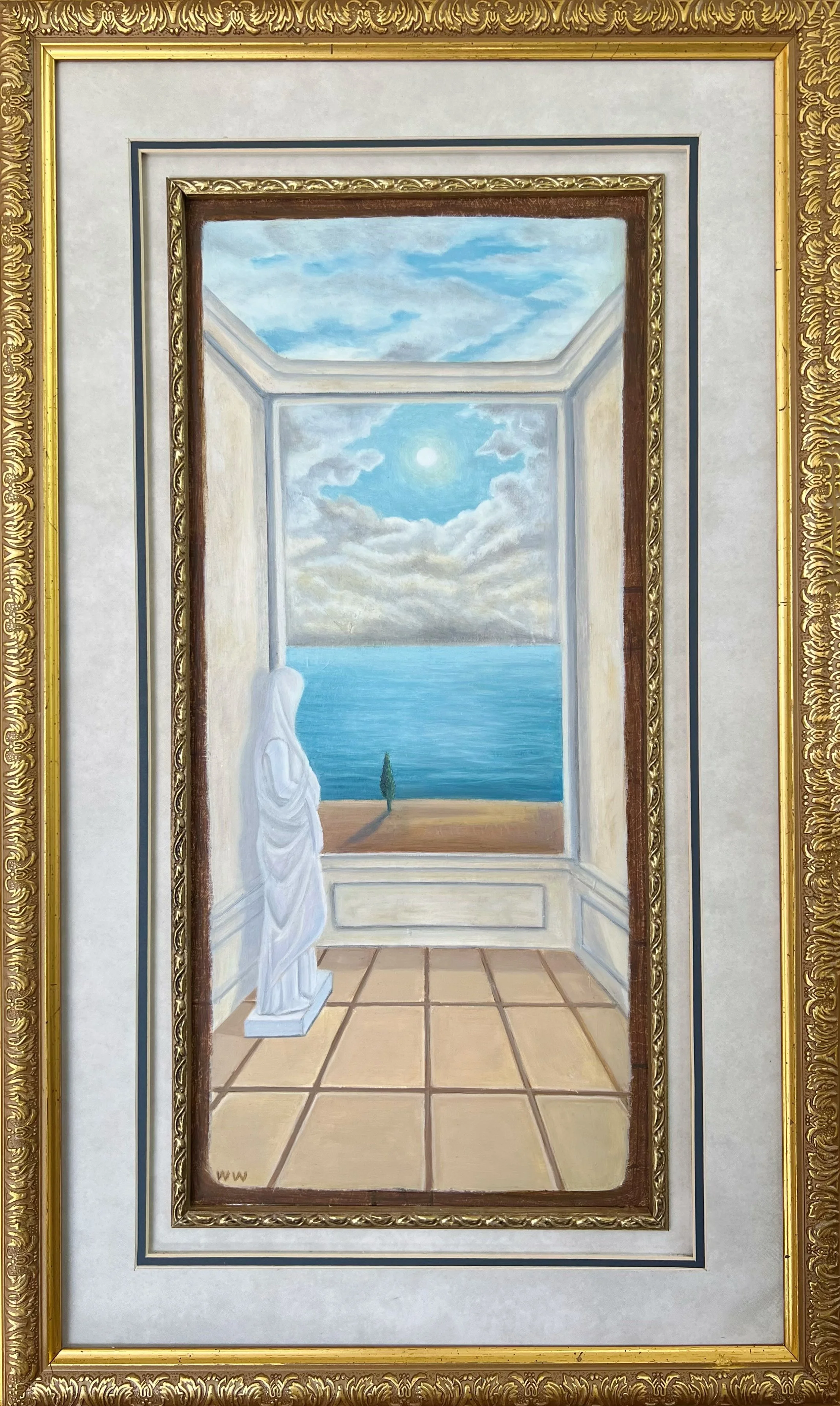
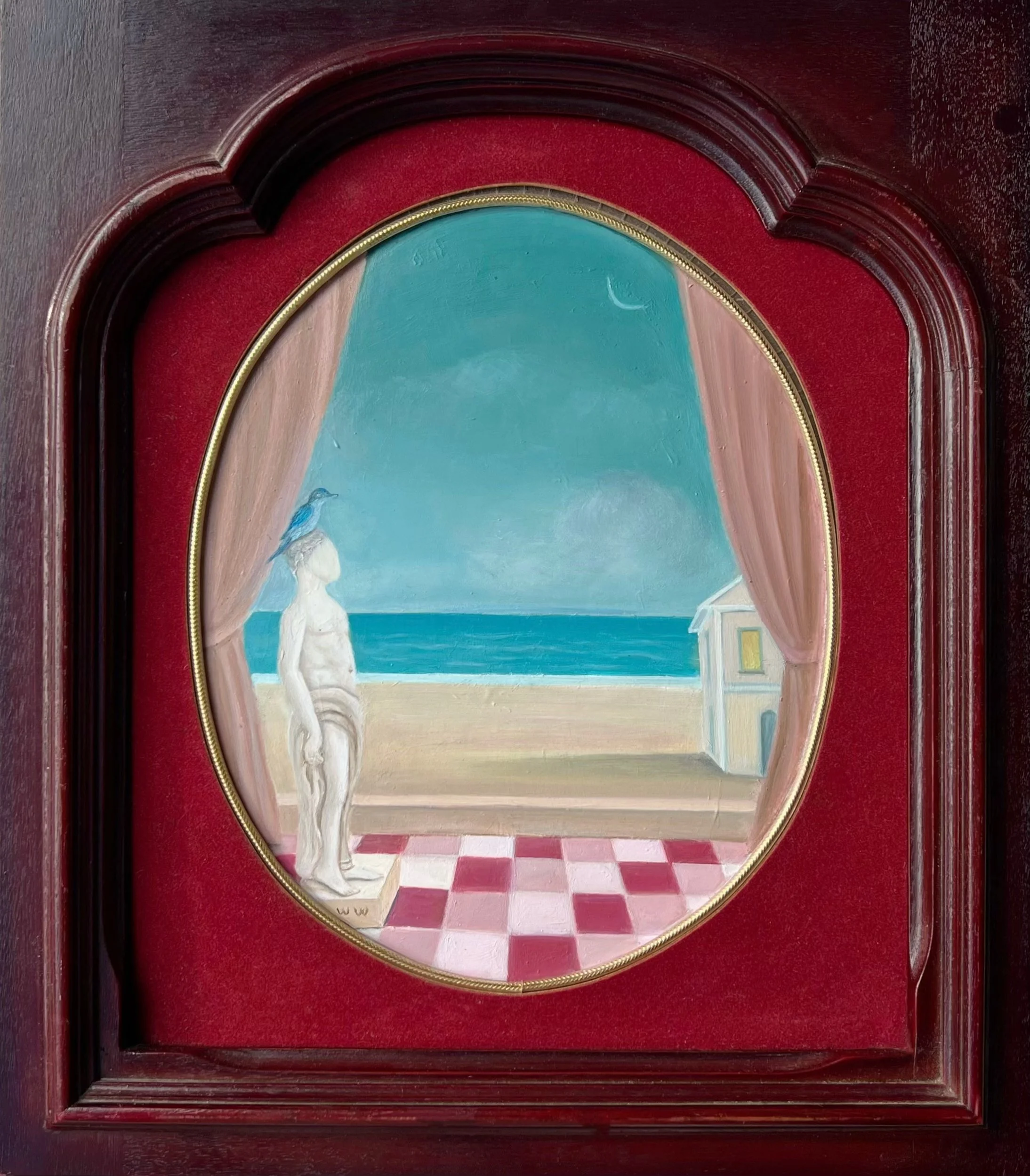
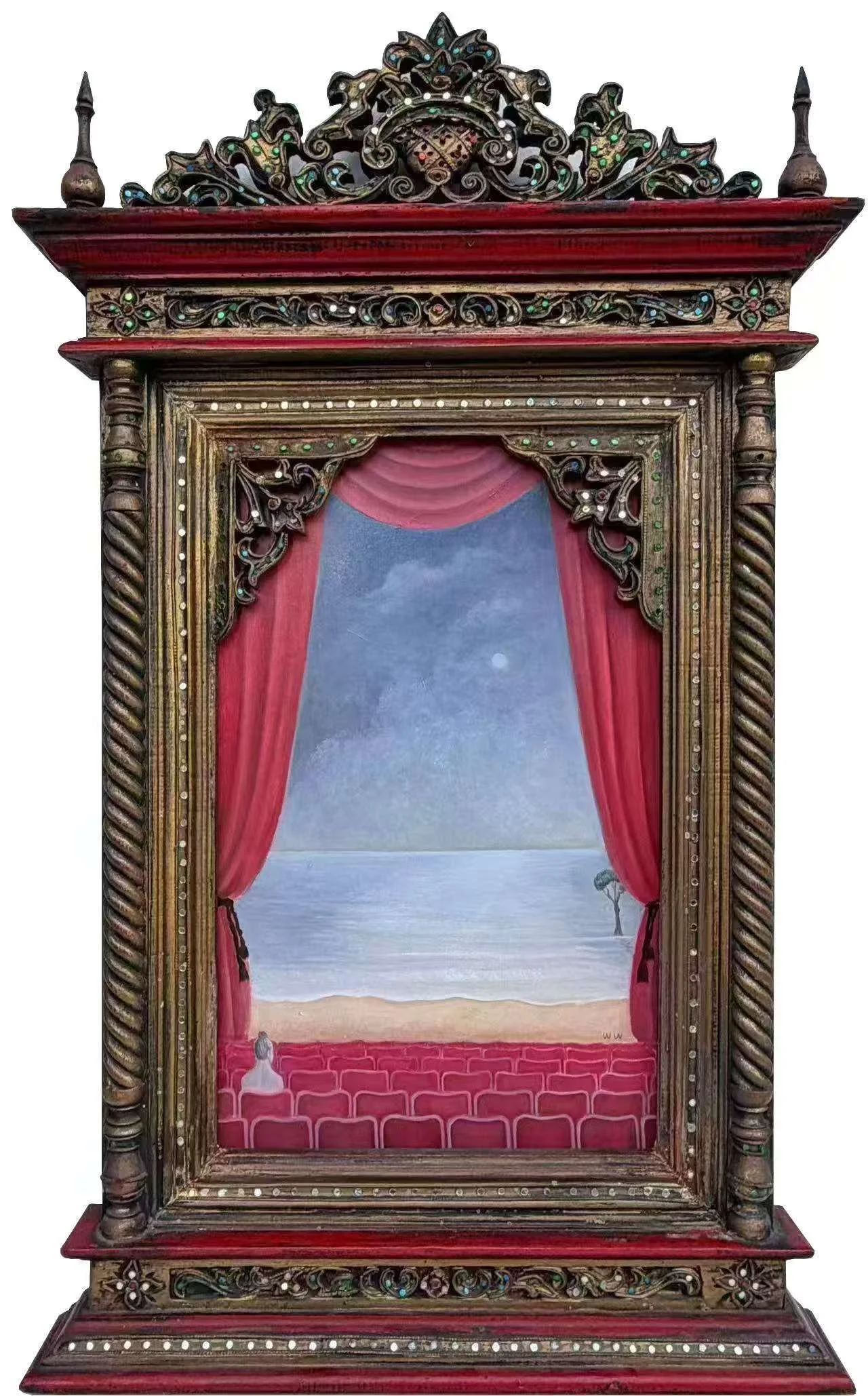
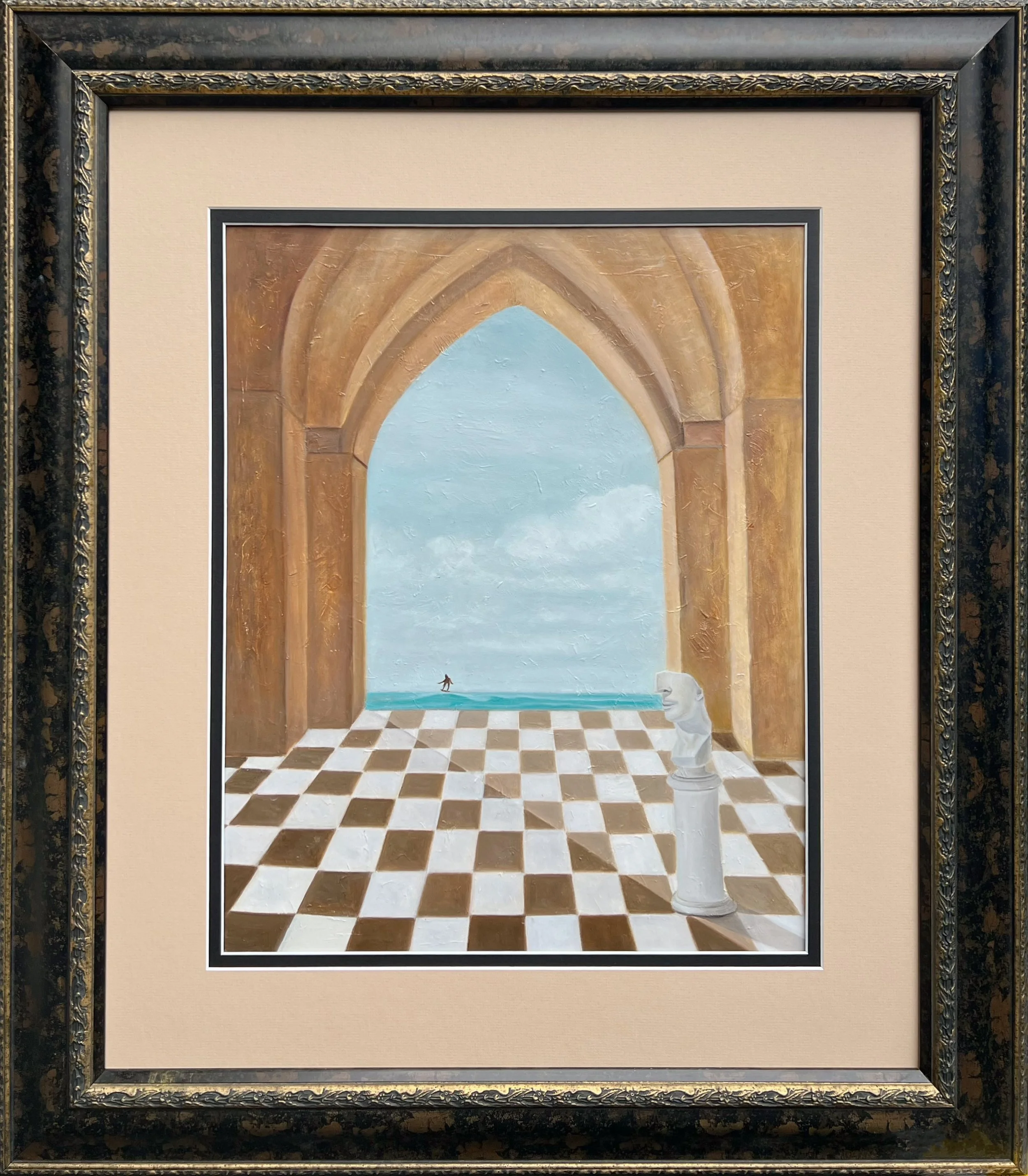
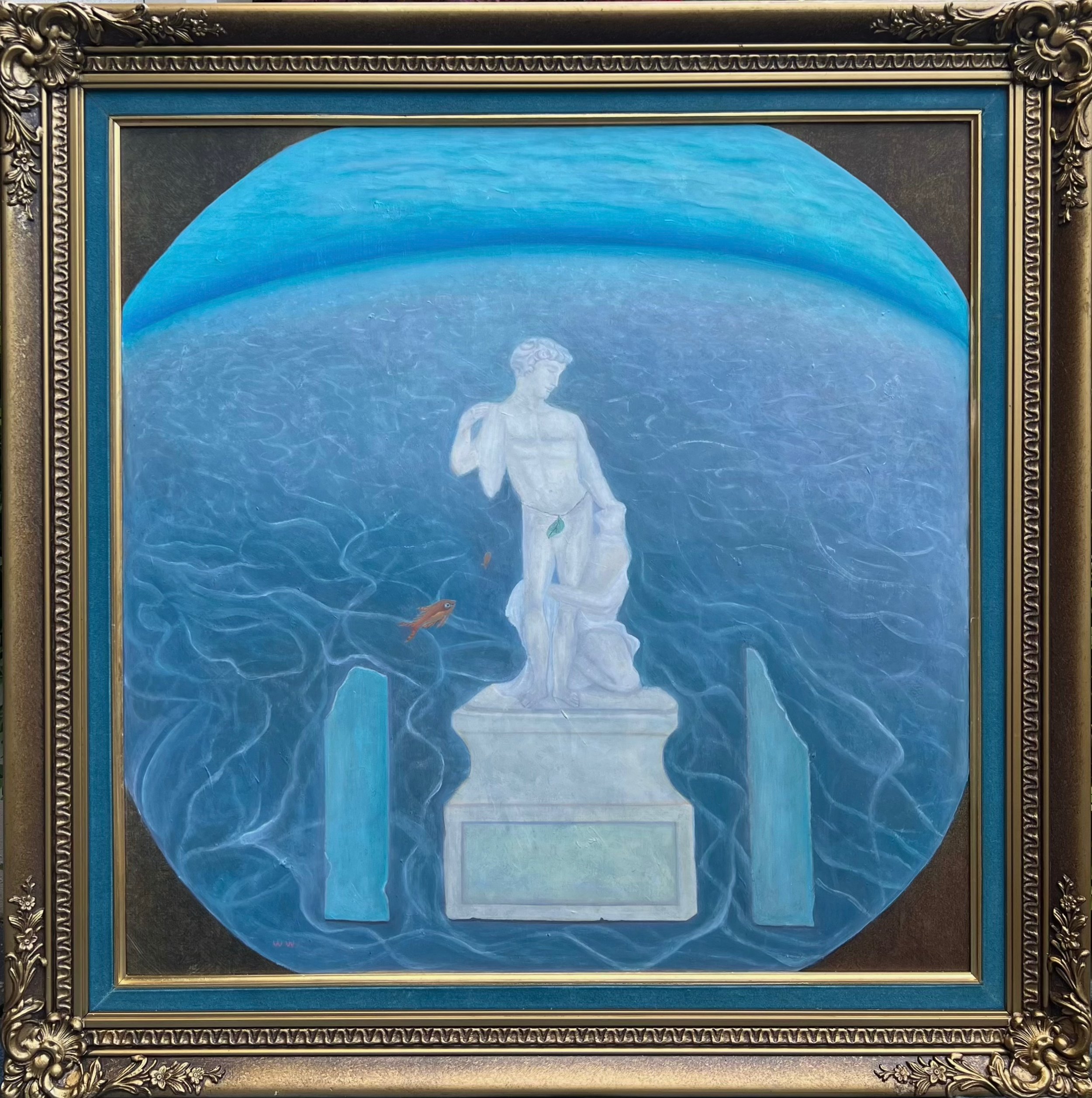
This new series, titled “I like for you to be still” (inspired by Neruda's poetry), explores the essence and meaning of life through elements like architecture, anthropomorphic sculptures, nature and animals. It is also inspired by my long-time fascination with ancient Italian architecture and Renaissance paintings. Last year, during a month long journey through Northern Italy, whilst visiting numerous historic buildings and museums I was left profoundly moved. Therefore you will glimpse traces of Italian artistic influence such as arches and sculptures in my recent works. Painting reflects the artist's inner world at a given moment - my surroundings, my feelings, how I perceive reality, and my subconscious awareness. This state is transient, flowing like water.
Your work blurs the line between reality and fantasy. What draws you to this space in between?
As mentioned earlier, I have been a creative person since childhood. Translated into painting, I naturally wouldn't be satisfied merely depicting scenes from real life. In this sense, my work might lean toward surrealism, however it generally does not reflect illogical existence. In other words, I seek rationality and logic in the relationships between objects and scenes. This interdependent yet transcendent existence holds profound exploratory value for me. It satisfies both my passion for imaginative creation and my inclination toward rational, logical reasoning. For instance, I wouldn't paint an apple in the sky, but I might depict an apple core sinking deep into the ocean floor. The boundaries between reality and the subconscious; the collision where wakefulness and dreams intertwine, all spark endless inspiration for me. I find reverie and freedom in scenes that are both mystical and serene.
How has social media impacted your work?
The convenience of social media is undeniable. For instance, Instagram facilitated this interview and has created other opportunities for me. In Australia, nearly all galleries and artists use Instagram. It's the fastest way to showcase work. I gain extensive art world insights through social media and browse global exhibitions without leaving home; both conveniences of the internet. Yet simultaneously, the online world is an information explosion, bombarding us with dozens of different messages or ads every minute. Looking back, you realize 90% of it holds no value for you, yet time slips away unnoticed. That's why I now use only two platforms - WeChat and Instagram. WeChat serves as a Chinese-language diary for daily life, while Instagram showcases my work. These two platforms fully meet my needs. As a creator, I still aim to make deliberate choices in the digital realm, focusing more time and energy on what lies beyond the screen.
What do you hope viewers feel when time and space appear suspended in your paintings?
In the 21st century's global information explosion, we are swept along by countless events, rushing forward at breakneck speed. Behind the bustling clamor, there is occasionally an inexplicable melancholy and loneliness. Living in this vast world, at times we feel insignificant and perhaps in these moments we forget that we came here alone and will depart alone.
I believe solitude, tranquillity and freedom are intrinsic to humanity's most primordial nature. I hope viewers, beyond appreciating the sensory beauty of my paintings, can also feel the deeper spiritual symbolism behind the works.
Of course, a thousand readers have a thousand Hamlets. Human psychology varies immensely, and each viewer can gain distinct feelings through their own interpretation, even if it diverges completely from my creative intent. Differences in perspective and thought, the distance between viewer and artist, forge a connection transcending time and space through the artwork. This can grant a painting new interpretations and viewpoints, which is fascinating; it embodies the diverse charm that art brings.
How do you approach the theme of harmony between humans, nature, and architecture?
In my work, a window or a door serves as a metaphor for home and the anthropomorphic sculptures can represent anyone. They often appear in the scene as observers, gazing into the distance, as if stepping from the past into the future.
Imagine if time were frozen, space suspended, and the traces of all things growing were illuminated by a single beam of moonlight. There is a Zen saying in Buddhism - “One flower, one world”. What I strive to capture is that "one flower”; that single moment as a microcosm revealing the vastness of the world, where the smallest detail speaks volumes. Painting is my bridge to the conventional world. It may not be perfect, but it is my truest, purest form of expression. Whilst painting, I achieve self-redemption and emotional release, building and dwelling in my own spiritual garden.
Instagram: @art.wenwen
Published on February 20, 2026