Amy Kligman: Matrilineal Inheritance
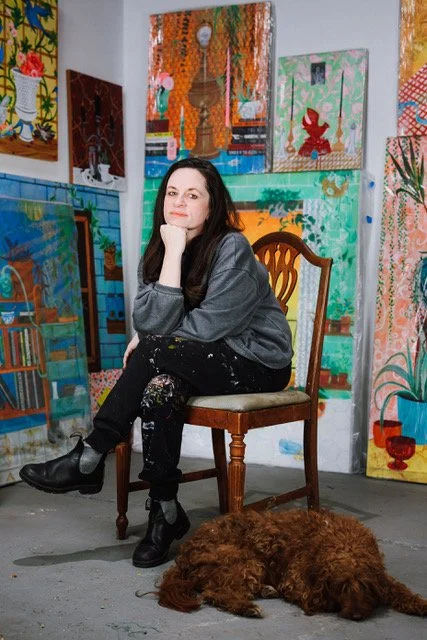
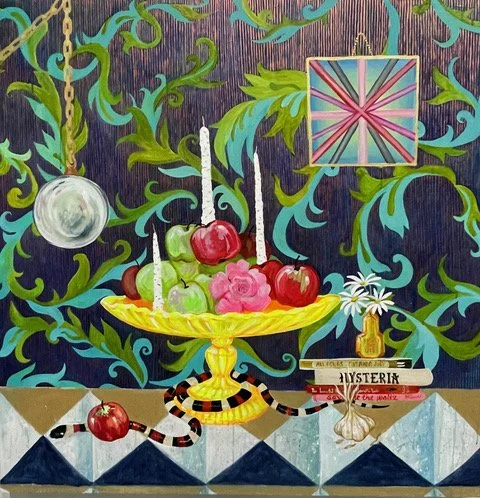
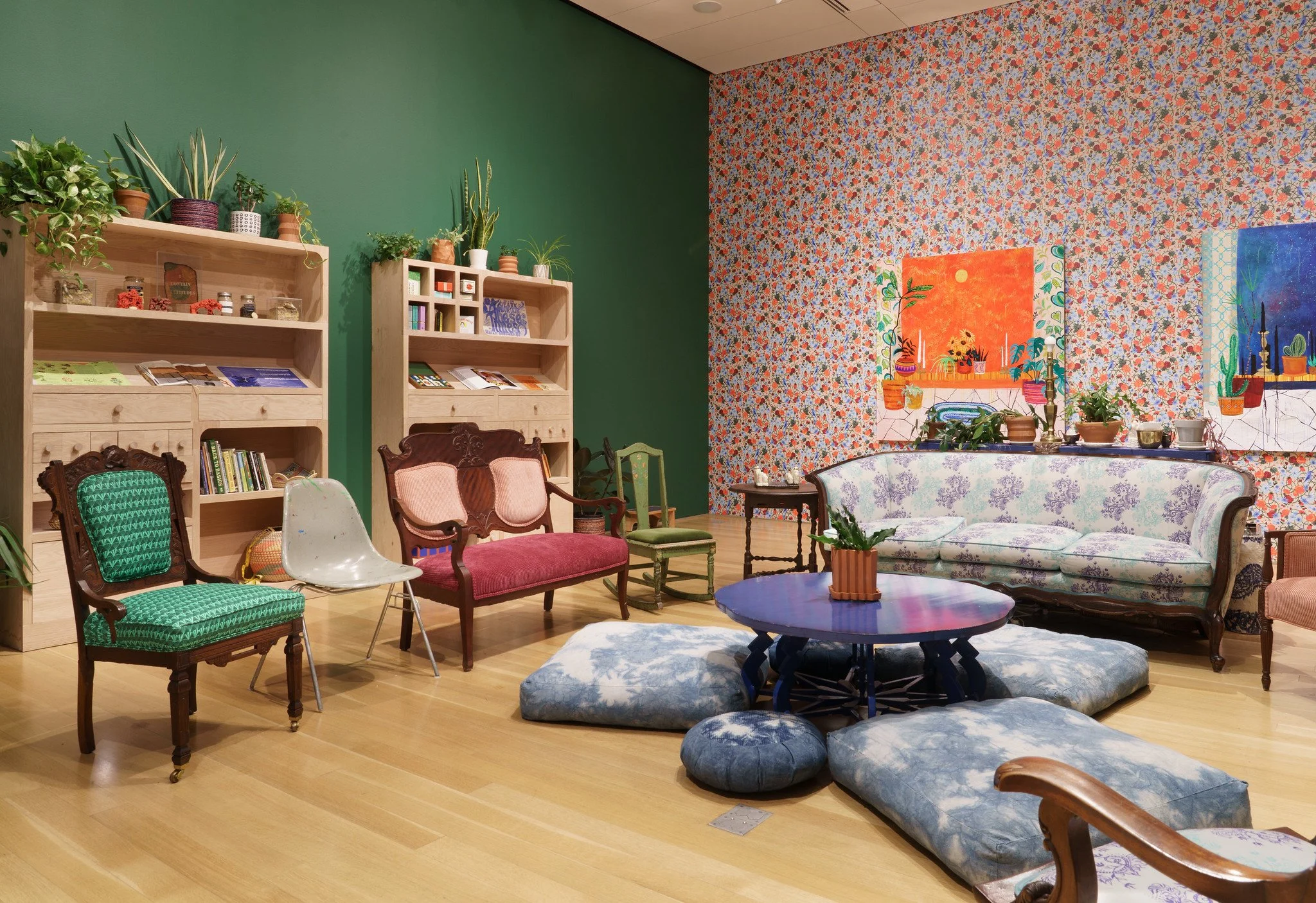
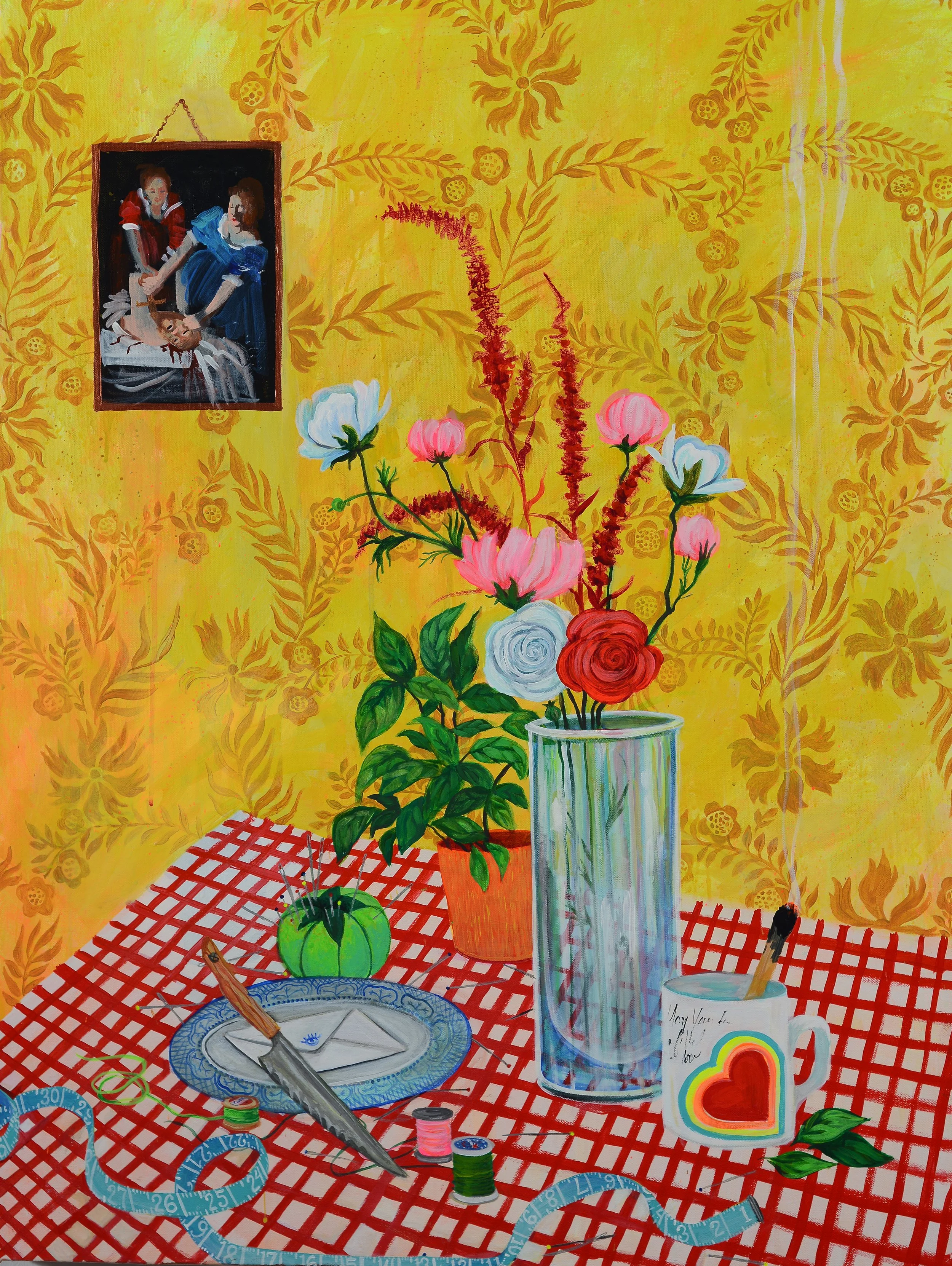
Amy Kligman (born 1979, Jeffersonville, IN) is an artist and arts organizer living in Kansas City, MO. Amy’s practice is centered on people, space, and care. Kligman’s studio work spans painting, social practice, and installation. She embraces a cacophony of coexisting social and political themes like gathering, ritual, unpredictable dualities, the mundane, class, and art and feminist history. Her work is exhibited nationally, and is the permanent collection of the Nerman Museum of Art, Hallmark Art Collection, and numerous private collectors. She is represented by Sherry Leedy Contemporary Art, and has had solo exhibitions at the Nerman Museum of Contemporary Art and Contemporary Art Museum Indianapolis.
How did your creative journey begin?
I’ve made work for as long as I can remember- but growing up I definitely thought the only way to have a career as an artist was to have an “art job” like an animator or designer. I went to school for commercial art and did that professionally for awhile, but I always also had a studio practice, because there was always work I wanted to make that didn’t make sense commercially. I lived in Cleveland and was working for American Greetings the first time I decided to rent a studio and start trying to showing my work in galleries, and then curating the work of other artists as well. That was like, 20 years ago. As time went on I got to spend more and more time in the studio and now its my primary focus, professionally.
How does the exploration of the feminine connect to your art practice?There was a moment in my practice early on when I avoided feminine iconography or imagery because someone told me it was limiting my audience. That always felt wrong to me, and when I finally acknowledged it and embraced the feminine as an important part of my work and who I am as a person, things started to feel both more honest and whole. I think a lot about matrilineal inheritance - what we receive from the generations before us - the grief and traumas as well as the strength and joys. I try to credit women by acknowledging centuries of invisible labor, the shaping of our domestic worlds, and a way of operating that prioritizes people and care.
What does a typical day in the studio look like for you, and how has your art practice grown or changed?
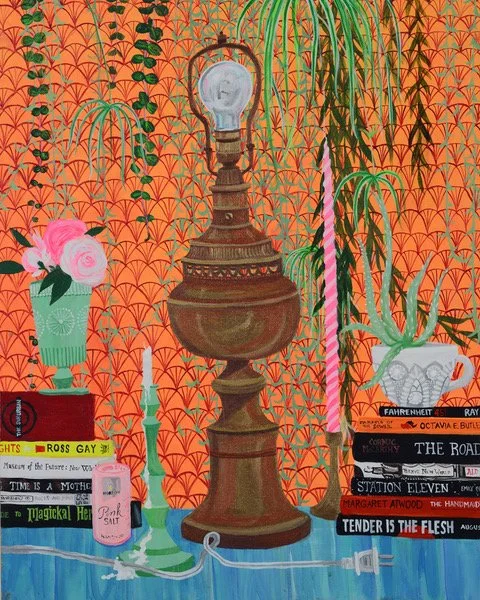
I share the studio with my husband, Misha, who is also a painter - if I’m lucky he’s there and we might chat a bit about where we are in life or in our work, because the studio is one of the few places you might find us alone (we have kids so our homelife is fairly chaotic). But I’m also there alone a lot… and I’d start with sorting through a lot of books and objects and looking for points of inspiration. I’m usually working on several pieces at once, and I might bounce around between paintings, maybe taking a break from a laborious render of ornamental wallpaper to flip through an art history book or go to the antique mall to find vessels that fit the ideas in whatever I’m working on.
What is your process for visualizing the patterns of human behavior and life experience?
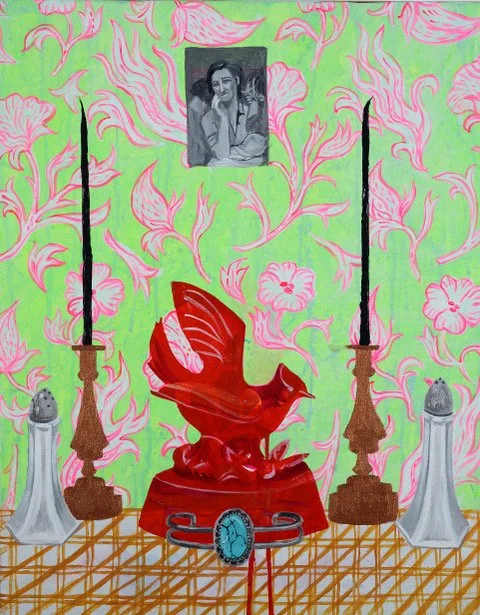
I read and write a lot, and notate in my sketchbook different things I come across that I want to incorporate into my work, things I learn about behavior, psychology, people in general. I also do a lot of research into symbolism and ornament, what meaning used to be assigned to the imagery that we now kind of gloss over or think of as “decorative”. As I piece together these works, I use this imagery coded with personal and cultural meaning to reflect patterns I see or want to see or manifest in some way.
How has social media impacted your work?To be honest, I’m not an enormous fan of how social media has affected people and society as a whole. But it is one of the primary ways people gather information and communicate, and that’s true for me too. Because of the algorithm, once I start researching a thing it’s fed to me almost daily, so I do bookmark things and particularly use instagram as a sorting device for research.
You mention folk art as an inspiration; are there specific cultures or artists that influence your work?
Mostly when I’m referencing folk art I’m thinking about art makers from the rural place where I grew up, including my own mother, grandmother, and lots of others I would encounter at flea markets, festivals, etc. I do love Mexican folk art for the color in particular, though as someone not of that culture I don’t feel right using it as too direct a point of reference.
Is your creative process different when creating an installation versus a painting?
When making an installation or social practice work, my practice is a lot more collaborative and usually involves incorporating the contributions of a number of other people. Painting for me is more of a singular, private processing of experiences and information. That’s probably the biggest difference.