Alisa McRonald: An Alchemist of Materials
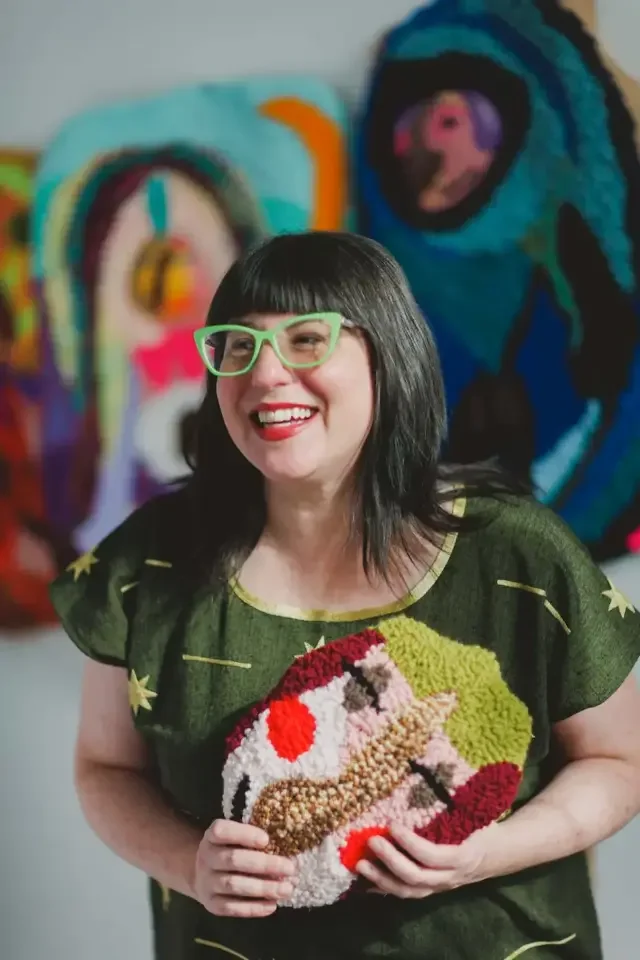
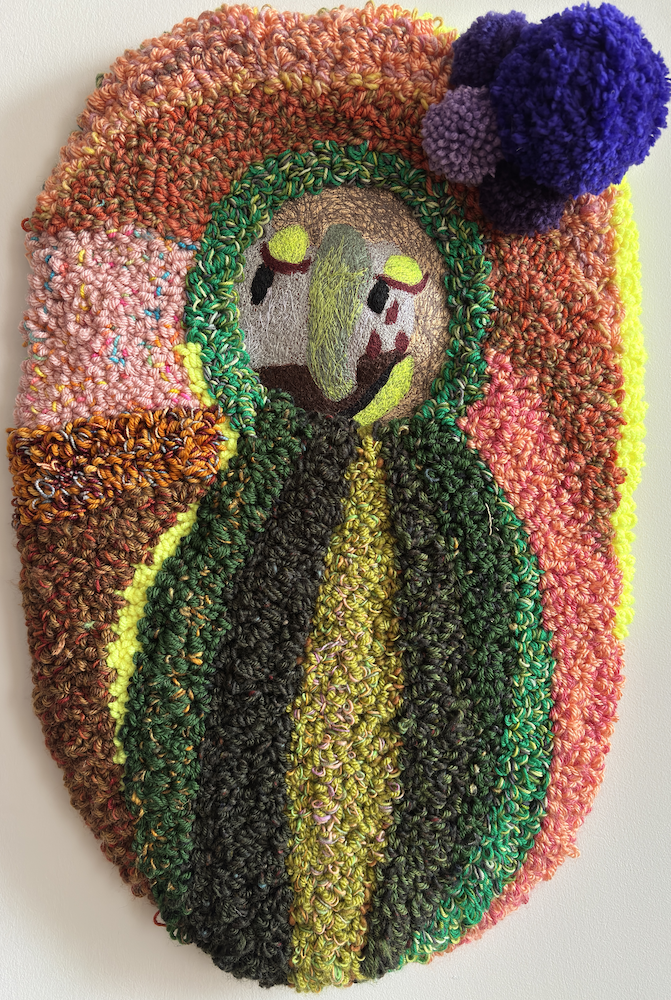
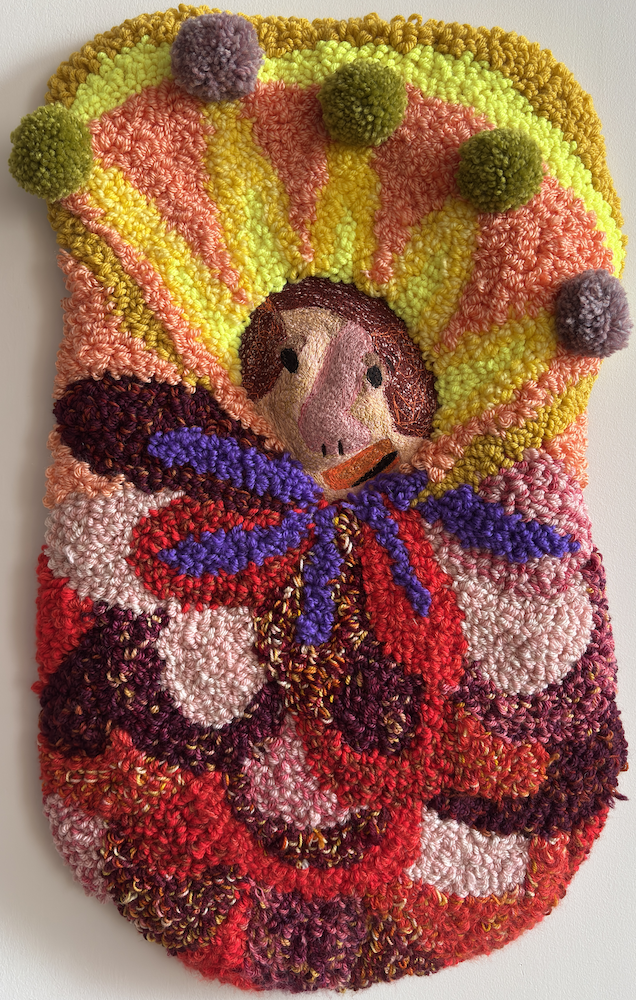
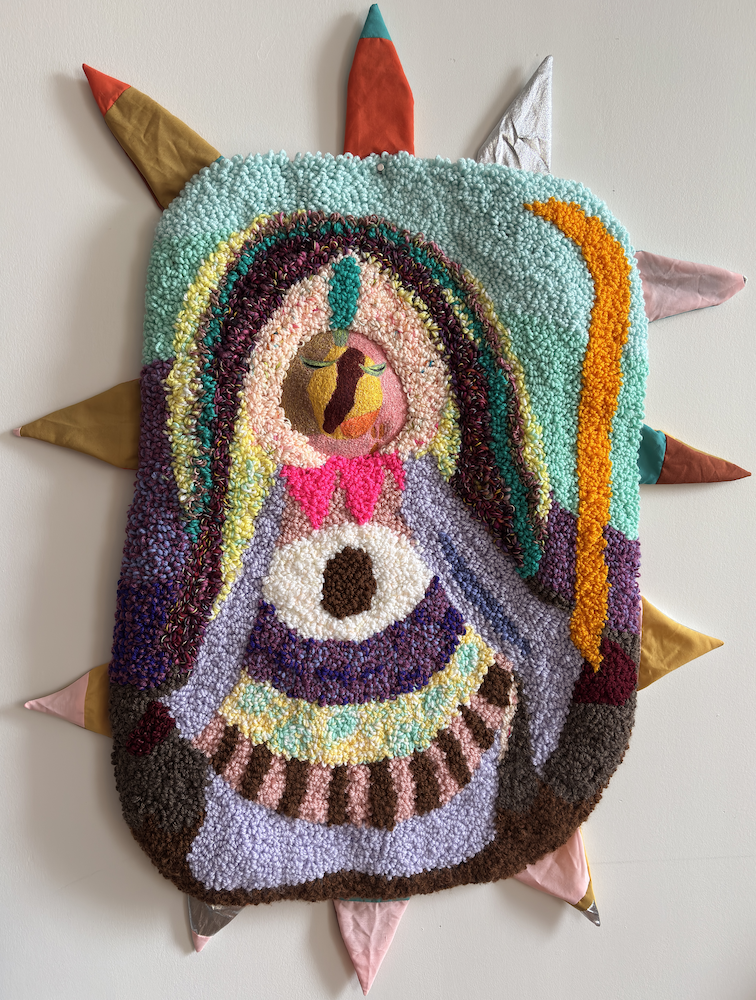
Alisa McRonald is a contemporary textile artist. Passionate about reclaimed textiles, she rescues handmade items, honoring the labor, love, and memory embedded in their fibers. McRonald weaves, sews, and punch-needles threads into whimsical, abstract, and deeply personal sculptural characters, drawing on the experience of growing up queer in a small town in the 1980s, guided by her crafty mother, punk rock aunts, and a deep love of fairy tales. Inspired by folklore, craft, and family lore, she turns humble materials into vessels of memory and magic and invites viewers into a world where the ordinary becomes enchanted and personal stories unfold.
How did your creative journey begin?
I sometimes feel like my creative journey began before I was even born—or at least my journey with textiles did. I come from generations of women who worked with textiles in all kinds of ways, both out of necessity and for pleasure. I honestly can’t remember a time when I wasn’t making something. There’s even a photo of me at three years old sitting on my mum’s knee at the sewing machine, which feels pretty fitting in hindsight.
Once I started school, I was lucky to have a teacher who really valued art. Possibly a little too much, considering we probably should have been doing more academics! But in Grades 2 and 3, we went to plays and galleries, talked about what we saw, and were encouraged to think, reflect, and make art in all kinds of ways. That experience gave me an early sense that creativity could be part of how you understand the world.
As I got older, I thought I might go into theatre costuming. I loved clothing, characters, storytelling, and the transformation that happens when someone puts on a costume. In the end, though, I followed a path into visual art. I think part of the reason was that I wanted endless possibilities. With visual art, I didn’t have to stay within one role or one material. I could sew, weave, crochet, build, make strange objects, tell stories, and follow whatever idea was pulling at me.
That sense of possibility has continued to shape my practice. My work has moved through textiles, craft, sculpture, ceramics, storytelling, folklore, and community-based projects, and I’m still interested in allowing the materials and ideas to lead me in unexpected directions.
How did you experience growing up queer in a small town in the 1980s influence your work?
Growing up queer in a small town in the 1980s had a huge influence on how I see the world and on the work I make. I think knowing, on some level, that I was different meant that I was always looking beyond where I was. I collected things, researched, read, watched movies, and dreamed about what it might be like to live in bigger places where there might be more people like me.
I searched out whatever I could find about queer culture. I read magazines, watched movies, and spent a lot of time at the library, especially reading biographies. I remember reading Ultra Violet’s biography about her time with Andy Warhol and learning about the queer culture of New York in the 1960s, 70s, and 80s. It opened up this whole world to me that felt very far away, but also somehow possible.
There were also people in popular culture who I instinctively understood were representing something beyond what I was seeing around me. David Bowie and Prince were hugely important in that way. I may not have had the language for it at the time, but I recognised something in their ambiguity, theatricality, and ability to create themselves. I was also drawn to fantasy films like Labyrinth, The Last Unicorn, and The Dark Crystal, which offered worlds where the strange, magical, frightening, and beautiful could all exist together.
As I got older, I started going into Toronto, which was only about an hour away and felt like a doorway into a much bigger world. I went to galleries and shops, explored different neighbourhoods, and slowly started developing my own sense of where I belonged.
I think all of this still shows up in my work. I’m interested in imagination, storytelling, transformation, and the people and characters who exist outside the norm. The experience of looking for yourself in books, films, music, and images—and then eventually beginning to build your own sense of identity—continues to shape how I think about making.
What does a typical day in the studio look like for you, and how has your art practice grown or changed?
I’m very lucky to have a studio in a building with lots of other artists, so even though I have my own practice, there’s always a sense of community around me. I’m someone who really likes structure, so a typical studio day is usually broken into two parts. I tend to do admin, applications, emails, and other computer-based work in the morning, and then keep the afternoon for making. It’s a rhythm that works really well for me, and I think it’s more or less how I’ve worked for as long as I can remember.
I also spend a lot of time reading, listening to music and podcasts, and visiting other artists in the building. At the moment, I’m reading How to Build a Haunted House by Caitlin Blackwell Baines, which takes a deep dive into the histories and stories behind famous haunted spaces and explores why those legends exist. That kind of research often finds its way into my work, even if I don’t always know exactly how at the time.
The past three months have been a little different because I’ve been doing a residency in Toronto, where three of us are sharing a studio space. I’ve been using that time to experiment and push my practice in a new direction through doll making. I’m creating sculptural and interactive pieces that explore multiplicity and stories of changelings. It’s been exciting to move away from working primarily in two dimensions and start thinking more about objects, characters, and how stories can unfold through sculpture and interaction.
I think that’s one of the biggest ways my practice has changed over the years. I still use many of the textile techniques that have been part of my work for a long time, but I’m becoming more interested in combining them and seeing what happens when they move into new forms. I’m giving myself more permission to experiment, play, and follow ideas without always knowing exactly where they will lead.
What drew you to textiles as your chosen medium?
I’m not sure I ever really chose textiles—they’ve always been there. I come from generations of women who worked with textiles in different ways, both out of necessity and because they enjoyed making things. I grew up around sewing, yarn, fabric, and handmade objects, and I can’t remember a time when I wasn’t making something. There’s even a photograph of me at three years old sitting on my mum’s knee at the sewing machine.
What I love about textiles is how many possibilities there are within them. I can weave, sew, crochet, punch needle, knit, spin, dye, quilt, or combine several techniques in one piece. I like that textiles can be both very familiar and very strange. They’re connected to everyday life, clothing, home, family, care, and labour, but they can also become sculptural, fantastical, or completely unexpected.
I’m also drawn to the histories that textiles carry. I often work with reclaimed garments, lace, blankets, and fabric scraps because they already have a life before they come into my studio. You can see traces of use and care in them, and I like the idea of giving those materials another life and allowing their stories to become part of something new.
There’s also something about the physical act of making that suits the way my brain works. Textile processes can be repetitive and meditative, but they also leave lots of room for experimentation and problem-solving. I can start with a simple idea and see where the material takes me.
Over time, textiles have become more than just a medium for me—they’re a way of thinking and storytelling. They connect my family history, my love of craft, my interest in folklore and memory, and my desire to make work that feels tactile, playful, and a little bit strange.
How has social media impacted your work?
I’m one of those people who was making and showing work before social media existed, so I’ve had a chance to experience the whole shift. When social media first started, I found it really exciting. It was a completely new way to share work, connect with people, and find artists and makers from around the world. Suddenly, I could discover people who shared my interests, values, and aesthetics who I probably never would have encountered otherwise. That sense of connection was pretty amazing.
For a while, though, social media started to feel more like a job. There was so much advice about building a following, creating a content plan, posting at specific times, and constantly marketing yourself. I tried to follow that approach for a while, but honestly, I hated it. It took the joy out of sharing my work and started to feel like I was making content rather than making art.
These days, I’ve backed away from that approach. I tend to share when I actually feel like sharing—when I have new work, an exhibition coming up, or something I’m excited about. It feels much more genuine and much more like how I exist in the world.
Social media is still a useful tool for me, particularly for connecting with other artists and letting people know what I’m doing, but I try not to let it dictate my practice. I think there’s something important about making work without constantly thinking about how it will photograph, how it will perform online, or whether it will get enough likes. I’d rather make the work first and share it when I have something I genuinely want to say.
Do the characters featured in your work have narratives or backstories?
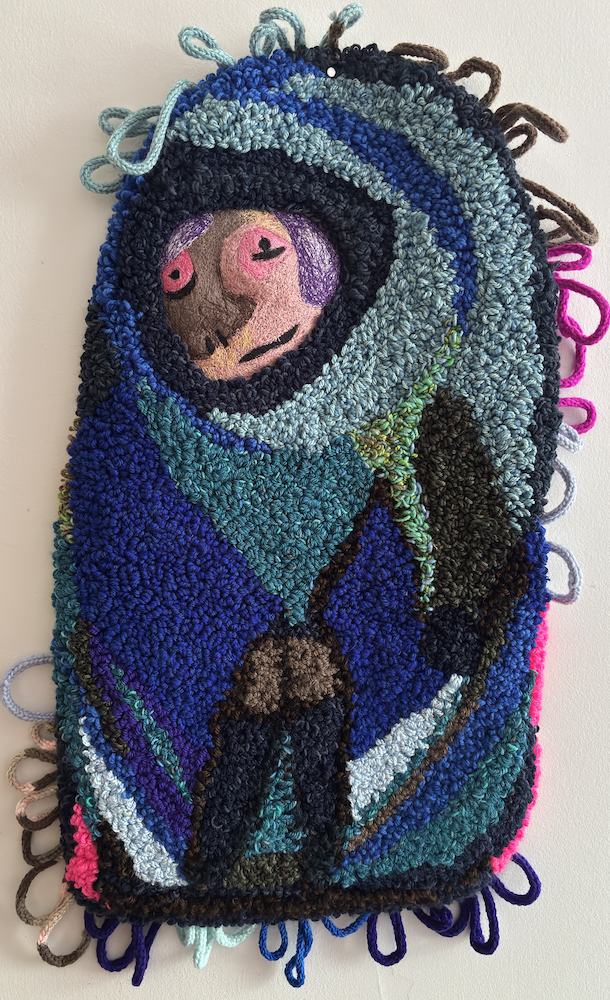
Yes, although the narratives aren’t always fully formed or written down. Sometimes a character begins with a feeling, an image, a material, or a story that I’ve encountered. I’m interested in characters as a way of exploring ideas around identity, transformation, otherness, and the strange parts of ourselves.
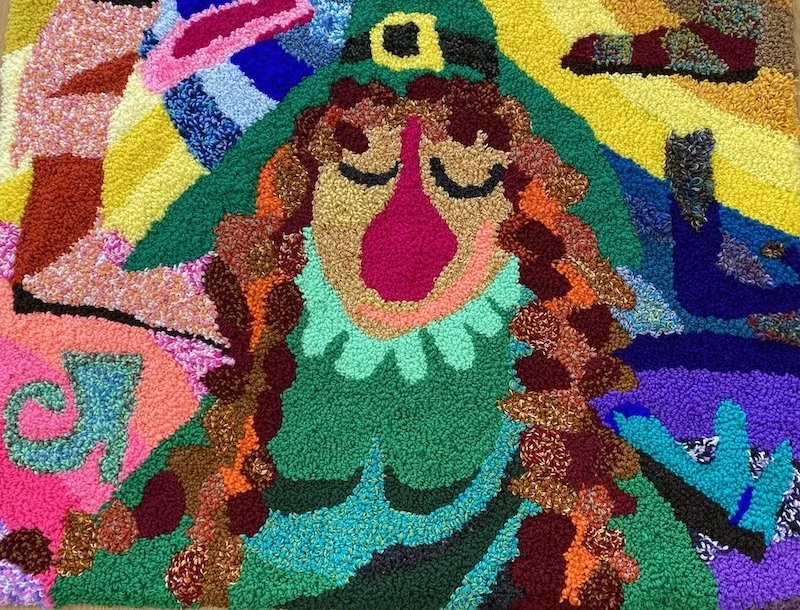
A lot of my characters come from the world of fairy tales and folklore. I’m particularly interested in figures like the witch and changelings—characters who exist somewhere between worlds or don’t quite fit into the roles they’ve been given. The witch, for example, has appeared in my work as a symbol of resistance, difference, and the way people project their fears and expectations onto others.
With the doll work I’m making now, I’m becoming more interested in the idea that a character can have multiple versions of themselves, or that a story can change depending on who is telling it. I’m exploring multiplicity, transformation, and the idea of characters who might not be entirely what they first appear to be.
Sometimes I know quite a lot about a character before I make them, and sometimes I discover who they are through the making process. I like leaving some room for mystery. I don’t necessarily want to tell the viewer exactly who a character is or what has happened to them. Ideally, there’s enough there to suggest a story and let the viewer bring some of their own imagination to it.
How do you reclaim art form typically categorized as "craft" as a fine artist?
This is a funny question for me because I’ve gone through so many phases with it. In the past, I’ve really enjoyed challenging the idea that “craft” isn’t fine art. I’ve also been angry about it, and I have engaged in "the craft-versus-art debate" very passionately. I’ve thought a lot about how patriarchy and anti-feminist attitudes have shaped the way certain forms of making—particularly textiles and other traditionally women’s work—have been valued or dismissed.
I’ve also struggled with the idea that I’m not “trained.” I don’t have a degree, let alone a master’s degree, and for a long time I felt embarrassed about that. I felt like I needed to justify why I was making the kind of work I was making, or prove that I belonged in the fine art world.
I don’t really feel that way anymore. I think I’ve reached a point where I just want to make the work. I’m less interested in debating whether something is art or craft, or in fighting to have my work placed into one category or another. Those categories can feel like they’re tied up in institutional and capitalist systems that want to organise, label, and assign value to everything.
I use techniques that are traditionally categorised as craft—punch needle, crochet, sewing, weaving, knitting—and I take them wherever I want them to go. Sometimes the process is the starting point, and sometimes it’s the idea. The techniques are tools for exploring things I care about: memory, identity, folklore, queerness, storytelling, and transformation.
In some ways, living queerly has helped me let go of the need to fit into these categories. I’ve spent a lot of my life questioning what I’m supposed to be doing and what I’m supposed to look like, so eventually arguing about whether my work is “art” or “craft” started to feel like another version of the same thing. I’d rather spend that energy making something interesting.
So, these days, I don’t think of myself as reclaiming craft so much as refusing to worry about where it belongs. I’m an artist who uses textiles and craft techniques because they’re the materials and processes that make sense to me. That feels like enough.