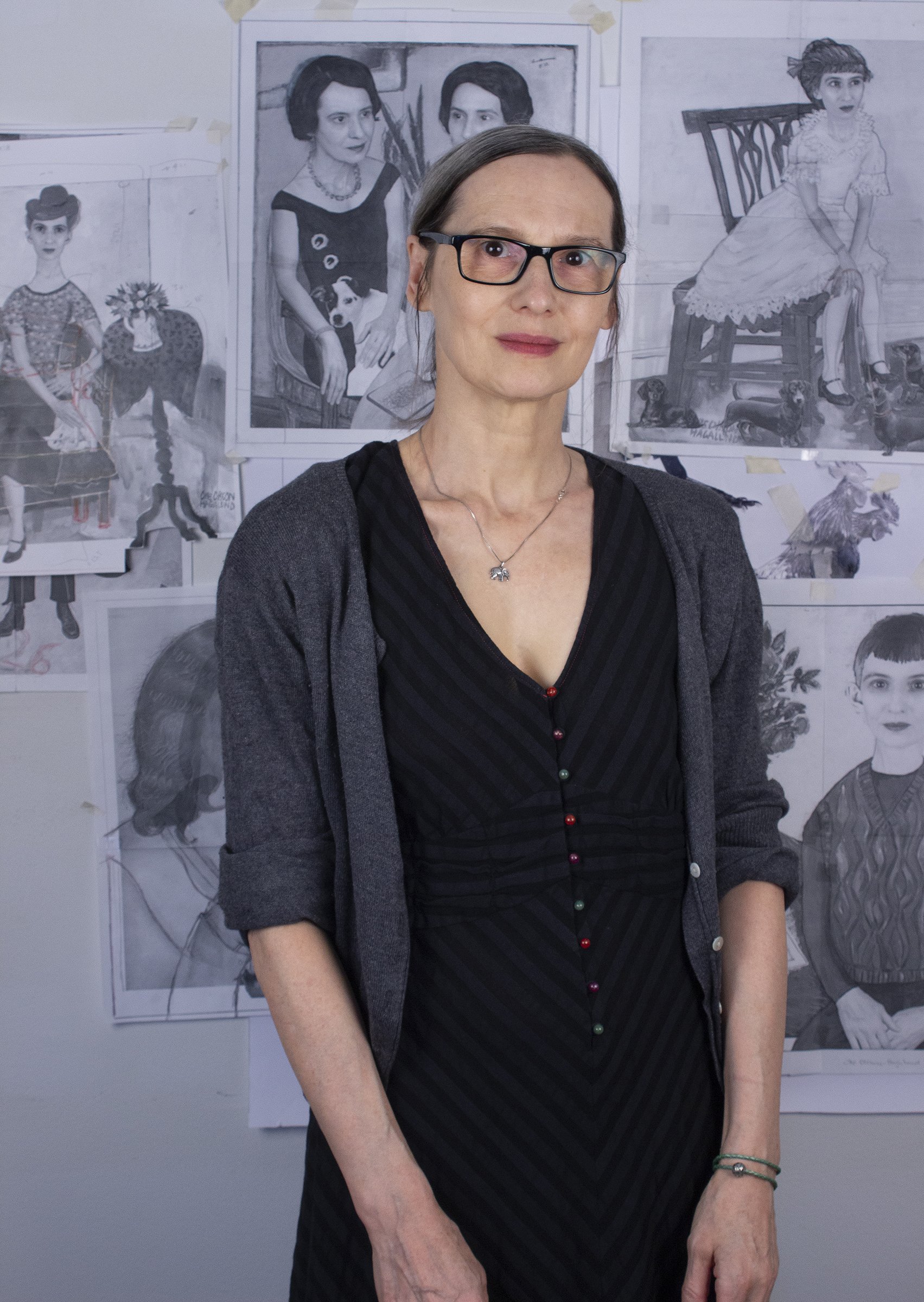
Born in Switzerland, Cornelia Hediger has been living and working in New York City for the past two decades. She was awarded both her BFA and MFA from Mason Gross School of the Arts at Rutgers University, where she studied under Martha Rosler and Dawoud Bey and trained as a visual and conceptual artist. With a background in painting, Hediger transitioned her art practice into photo-based-media work, ranging from traditional black and white film photography, to color images, handmade photomontages to more complex photomontages through compositing.
How did your creative journey begin?
For me, the journey was never a straight path. I was introduced to art at an early age. My parents would take my brother and me to exhibitions and openings featuring local artists in small villages throughout Switzerland, as well as to museums, where I began to develop a genuine curiosity about art. I drew and painted constantly as a child, but I never imagined that I would eventually attend art school.
It took me several years to understand what I truly wanted to pursue. I crossed the Atlantic several times, living in Canada for two years before returning back to Switzerland, and it was not until my mid-twenties that I came to the United States and finally enrolled at university to study art. Looking back, I realize that I needed that time to give myself permission to follow my passion. Eventually, I found the courage to step fully into what I love doing most.
What led to the decision to transition your art practice into photo-based-media work?
Initially, I entered art school with the intention of becoming a painter. I have always loved the medium and its possibilities. During my third year at university, I enrolled in a black-and-white darkroom photography class, which opened an entirely new way for me to express myself visually. From the beginning, I was drawn to the photographic medium as a means of telling stories. For me, the camera is a tool—one that allows me to translate ideas into finished works of art.
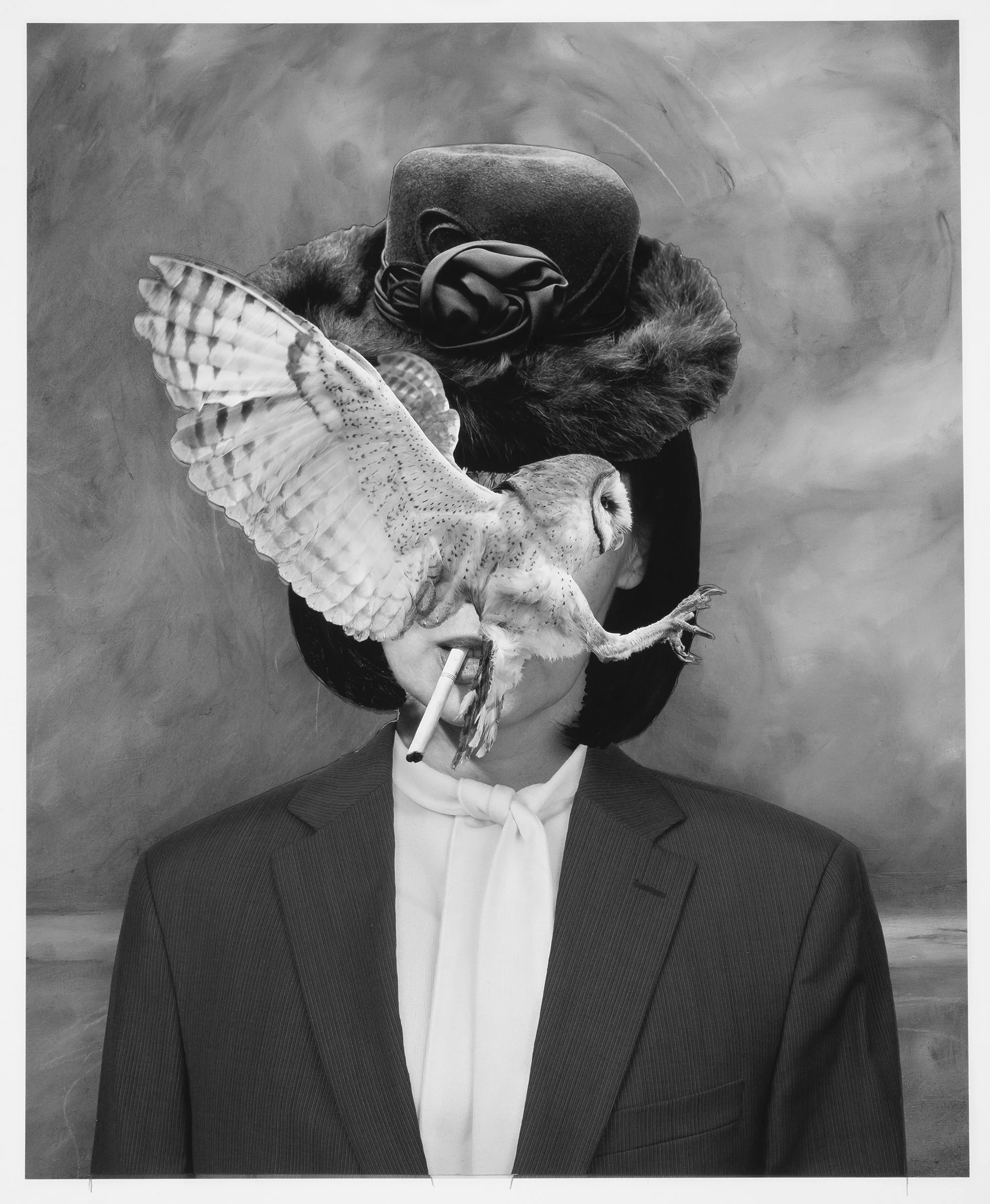
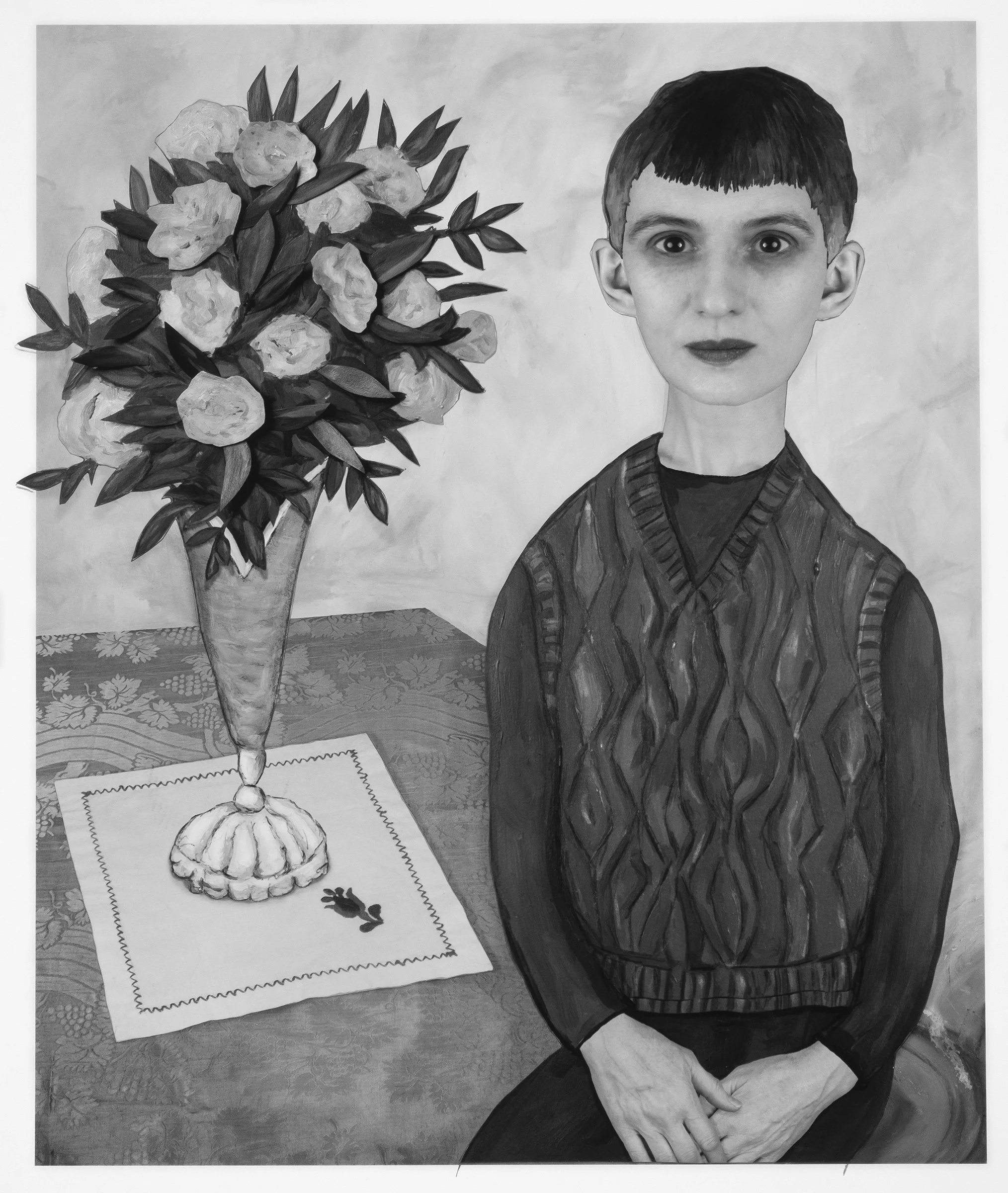
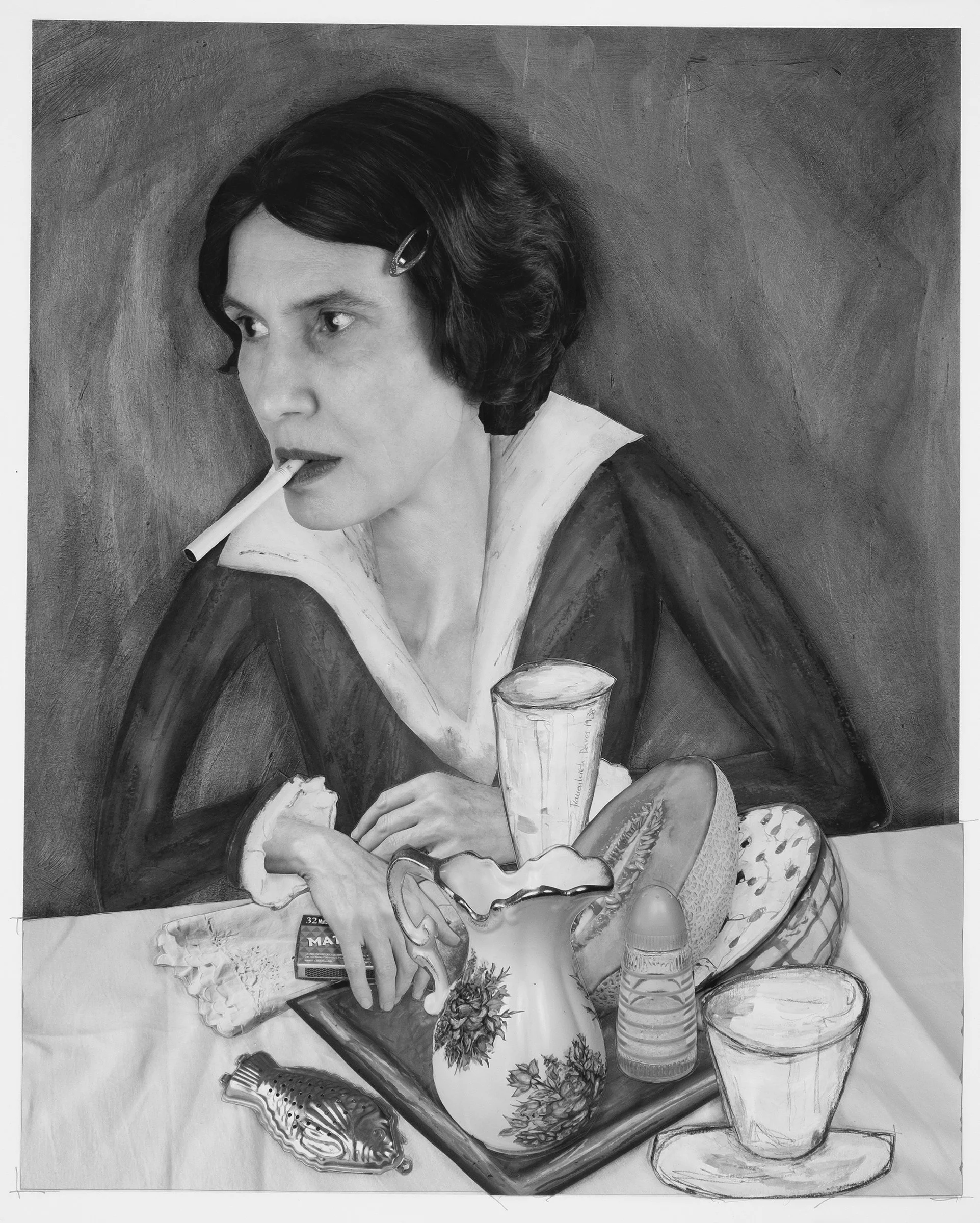
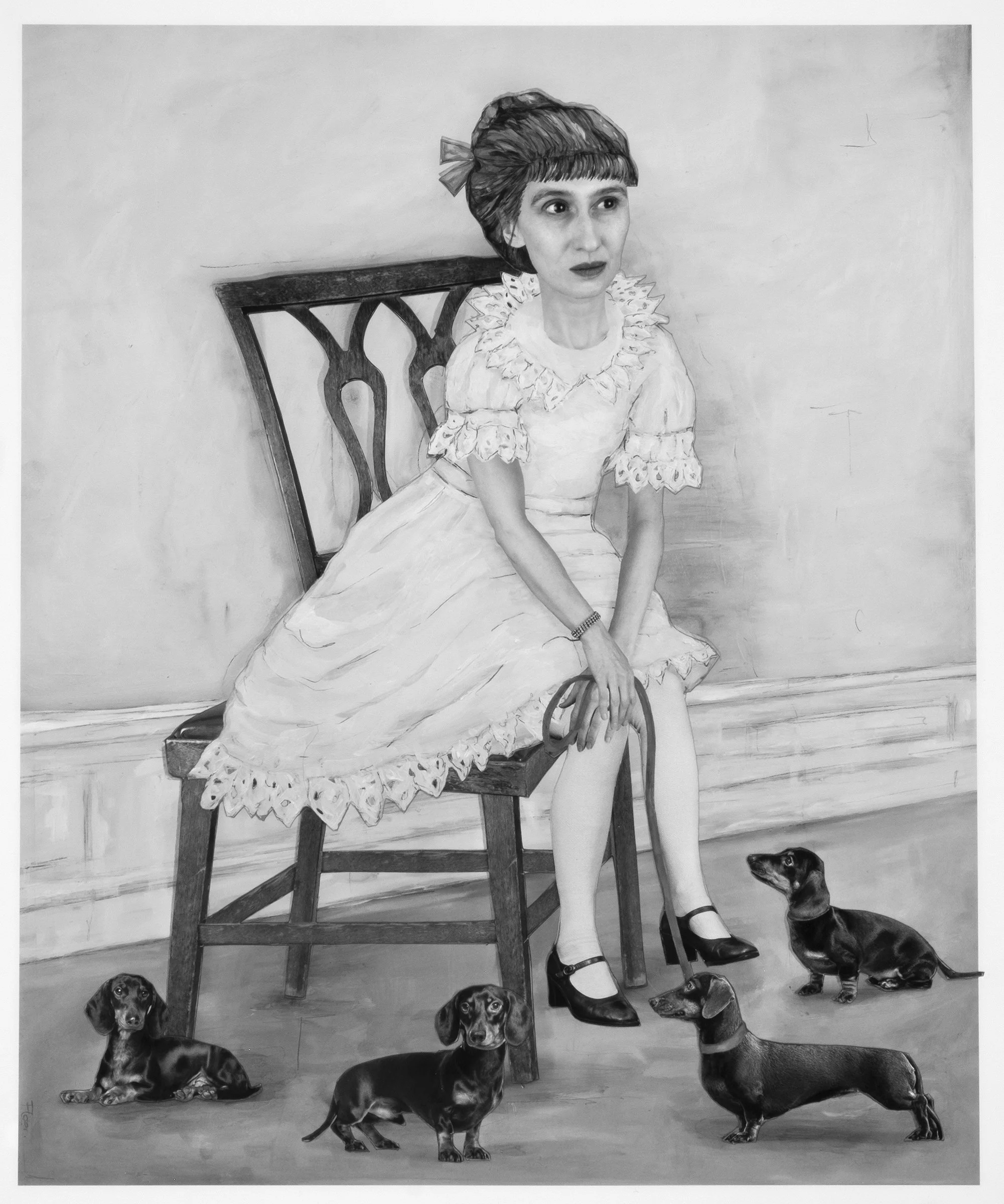
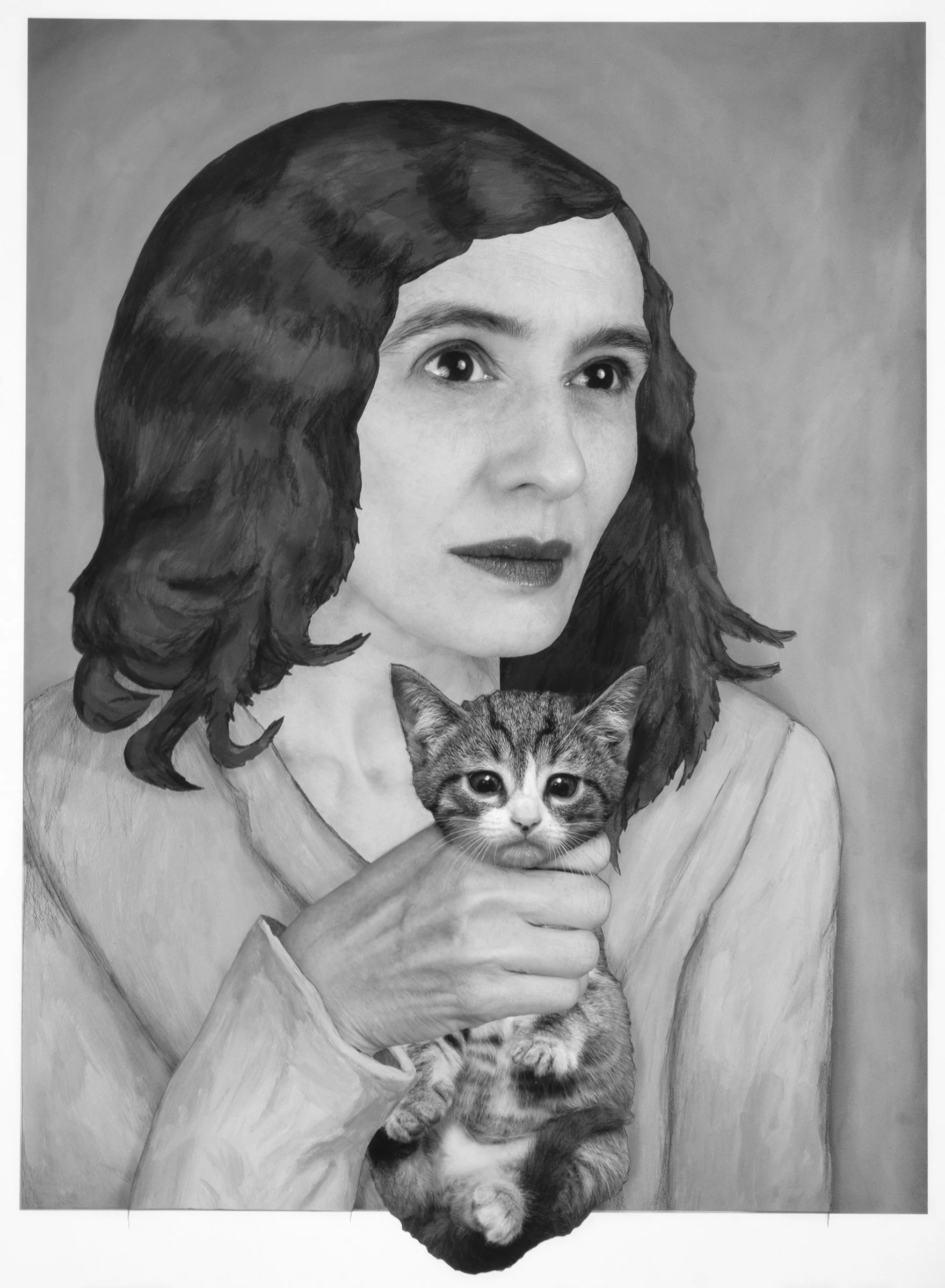
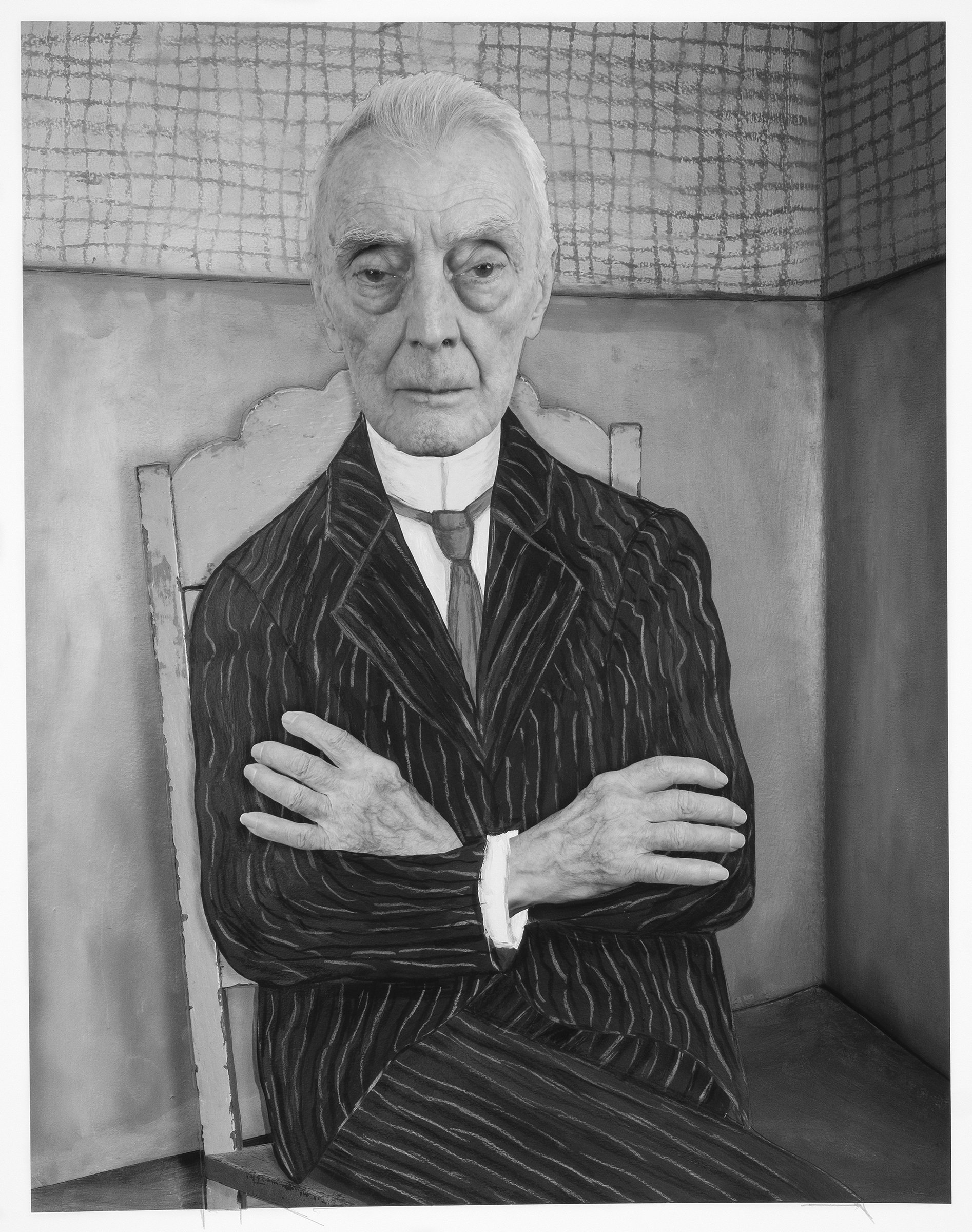
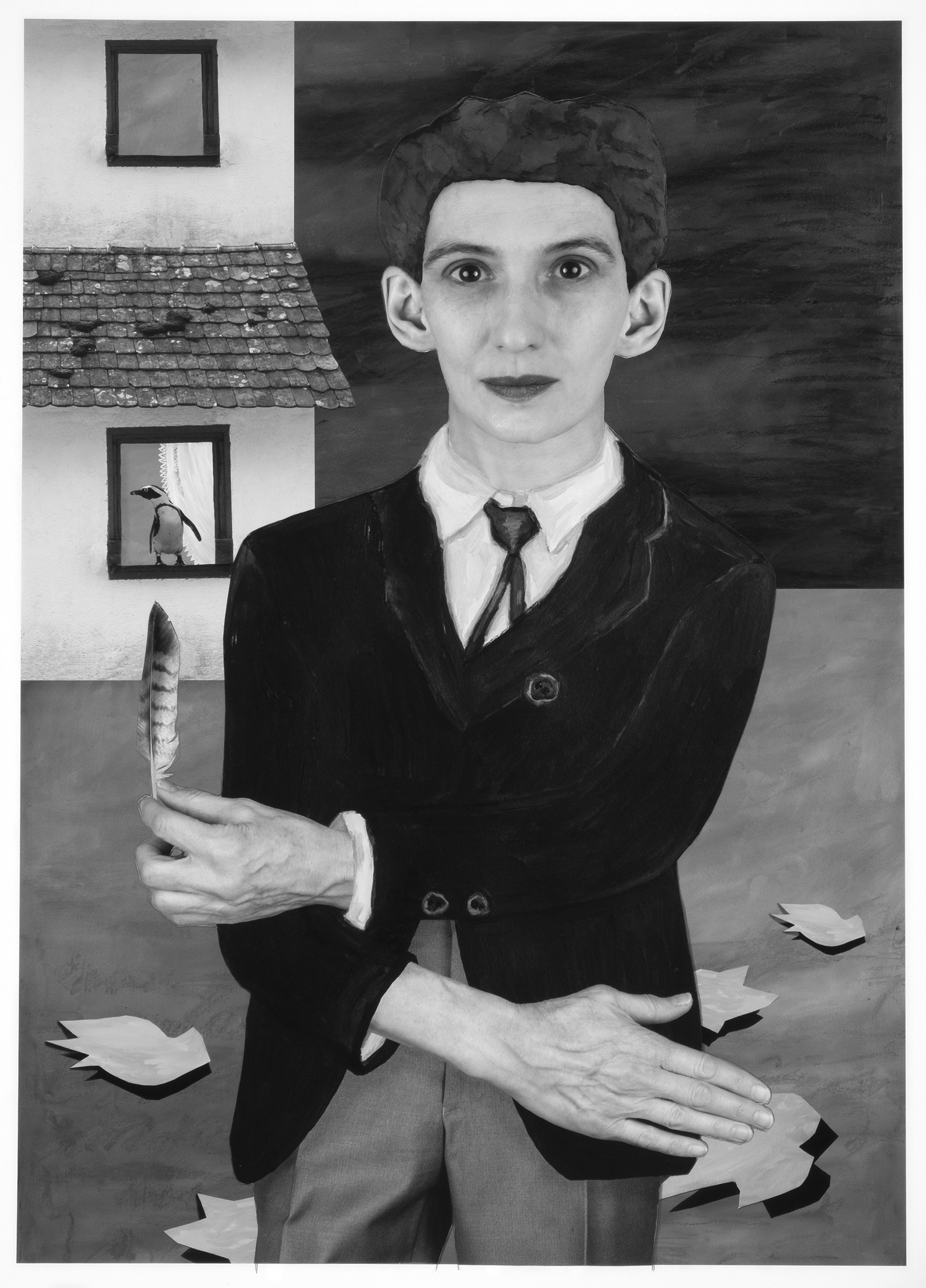
Over time, however, I have found myself increasingly drawn back to painting. Photomontage has become a natural way for me to bring these two approaches together, allowing me to incorporate more painterly elements into my work. At this point, many of the elements within my montages are created by hand, using acrylic paint and oil pastels. The process has become a way of moving fluidly between photography and painting, rather than seeing them as separate disciplines.
What does a typical day in the studio look like for you, and how has your art practice grown or changed?
I get up very early. On the days when I can go to the studio, I am often there by 7 a.m. There is no such thing as a typical day for me; it depends entirely on what I am working on. I used to approach each image individually, taking a piece from beginning to end before moving on to the next. Over time, that process has changed, and I now tend to work in stages.
Some days are devoted entirely to research—looking at paintings that might serve as a starting point for a photomontage and gathering as much information about them as possible. Once I have selected several paintings, I begin sketching and determining the direction I want to take with each piece. It is not unusual for me to work on three or four montages simultaneously. If I become stuck on one, I can shift my attention to another and return to it later with a fresh perspective.
I have learned to trust the process and, importantly, to understand that it cannot be rushed. My work has changed considerably over the years, and I do not always know what will come next. That uncertainty is part of what keeps me engaged. I am interested in continuing to learn, experiment, and discover new ways of expressing myself visually.
You mention being inspired by figurative master painters; are there any particular artists who inspire you most?
There are so many artists that inspire me. To name a few: Hans Bellmer, Otto Dix, George Grosz, Max Beckmann, Hannah Höch, Ernst Ludwig Kirchner, Florine Stettheimer, Dorothea Tanning, Leonora Carrington, Olle Olsson-Hagalund.
Has social media impacted your work?
Social media has opened up connections with creative people around the world—artists I might never have encountered otherwise. I see it as a valuable tool for discovering new work, exchanging ideas, and becoming part of a broader creative conversation. It has also had a significant impact on my own practice by giving my work a level of visibility and reach that would be difficult to achieve without it.
How have your past and your heritage inspired you?
My childhood and the place where I grew up have shaped me profoundly. I still see the world, in many ways, through the perspective of someone who grew up in a small village in the northern part of Switzerland, at a time when there was no internet or social media. I was fortunate to have a grandmother who was an incredible storyteller, and her stories allowed my imagination to run wild.
There simply was not that much to do. We played in nature, drew and painted, listened to and told stories, and, of course, spent time at school. Life was quieter and simpler, and I think that sense of simplicity and stillness is something I continue to seek out and recreate in my daily life. In a way, there is an irony to that, because I now live in Manhattan—a city defined by movement, noise, and speed.
In your series, Homage, how did you draw on the visual language of history?
When I started Homage, I was primarily drawn to paintings that fall under German Expressionism and the New Objectivity movements. Ernst Ludwig Kirchner, Otto Dix, George Grosz, and Max Beckmann were the artists I continually returned to. I was fascinated not only by the paintings themselves, but also by the historical period in which they were created. Their work was a response to the political, economic, and social conditions of the time, and that context is important to me.
There is an urgency in their work that I respond to and draw from. I am interested in how these artists used their visual language to reflect the tensions of their time. In my montages, I draw from that history while reinterpreting its imagery through my own perspective. I am interested in how visual references from the past can be brought into the present and take on a different meaning, while still carrying something of the atmosphere, tension, and emotional weight of the period from which they came.