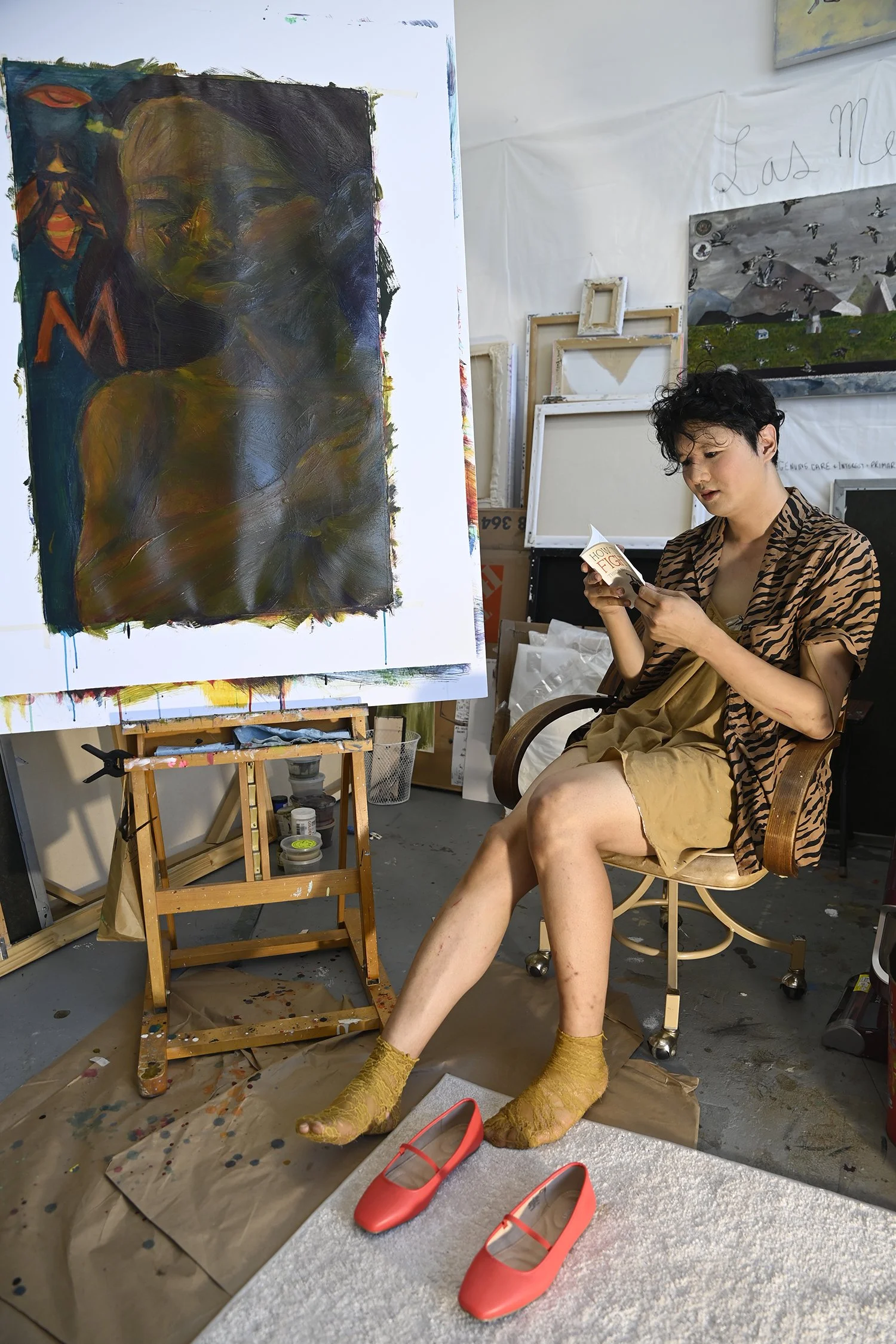
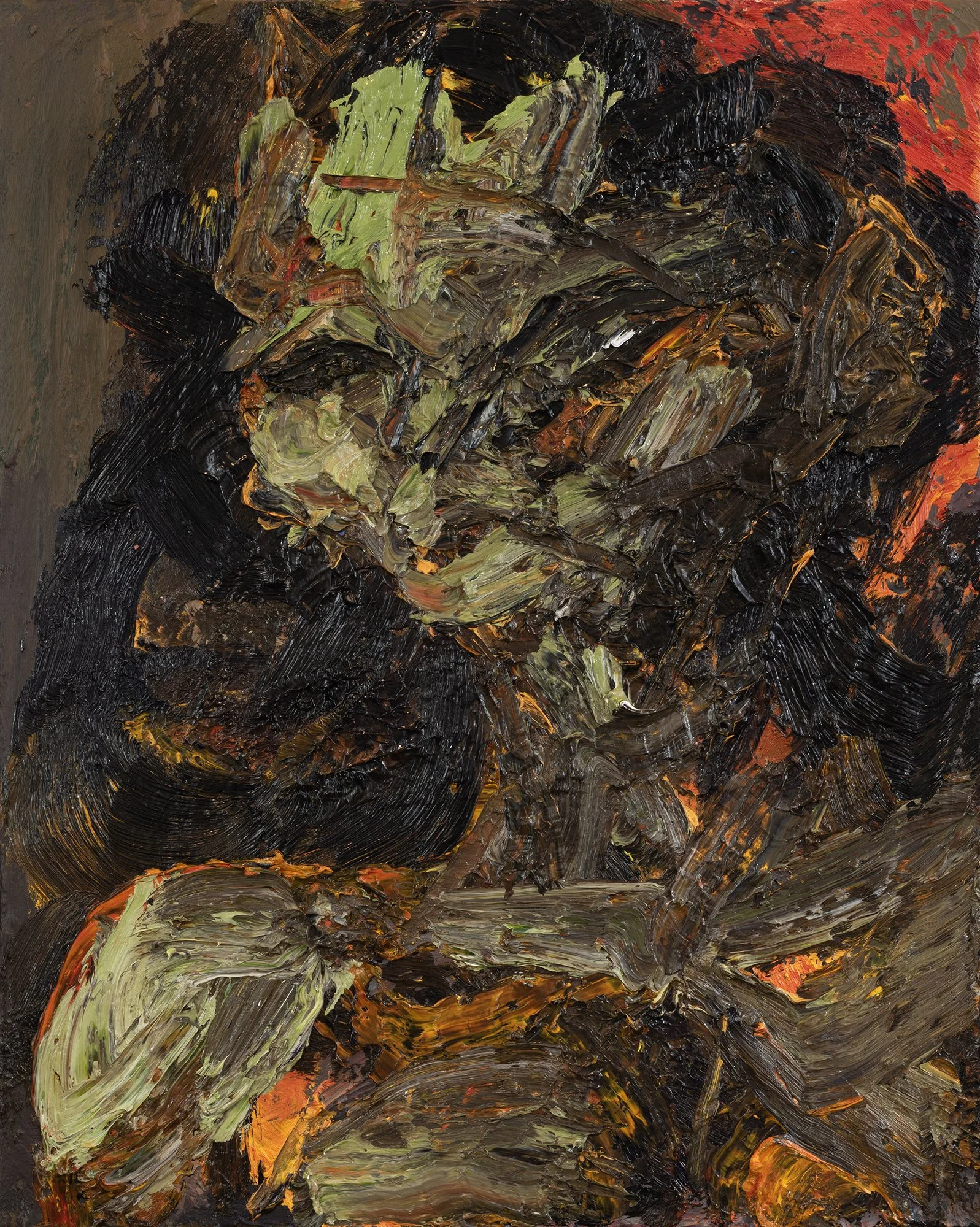
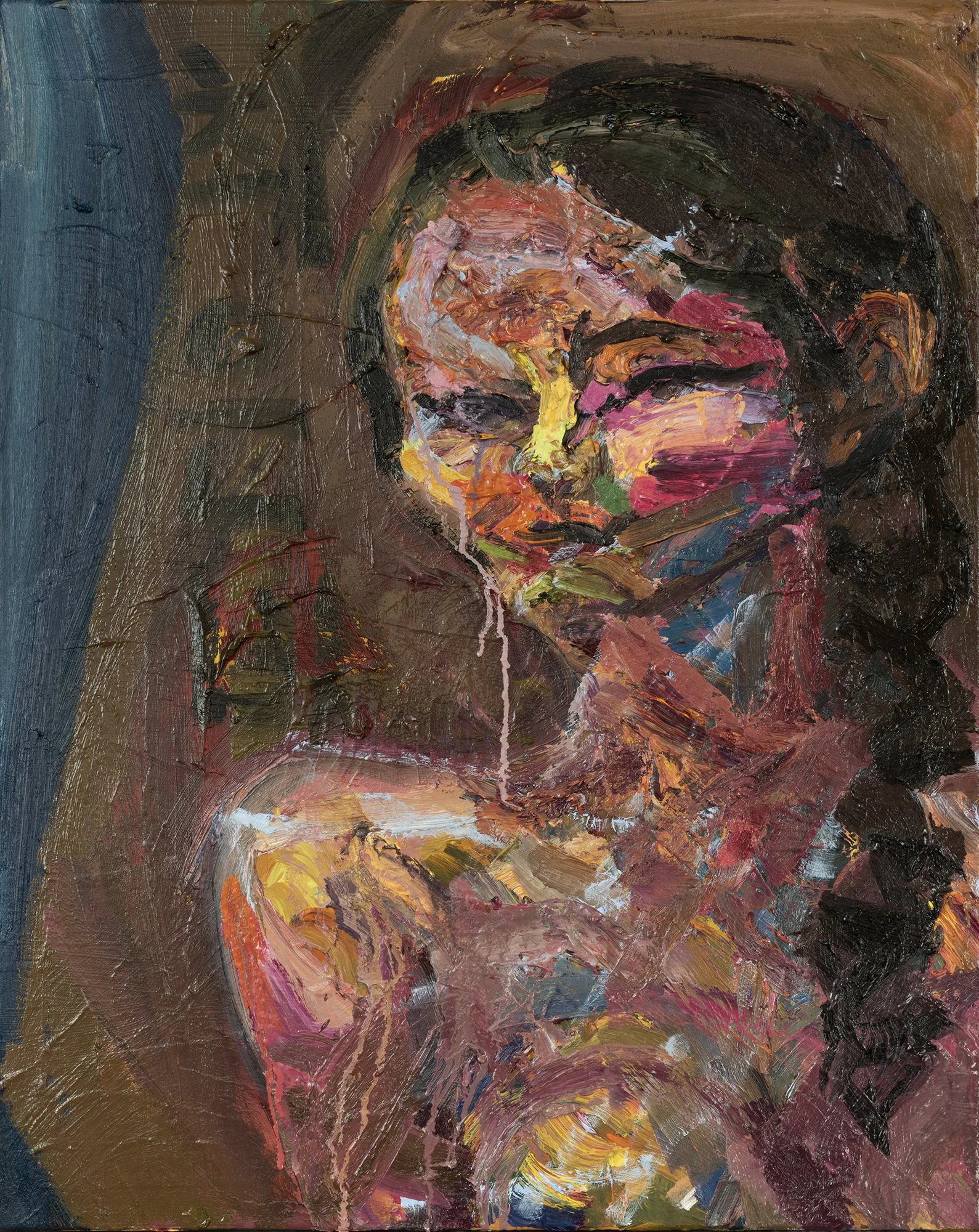
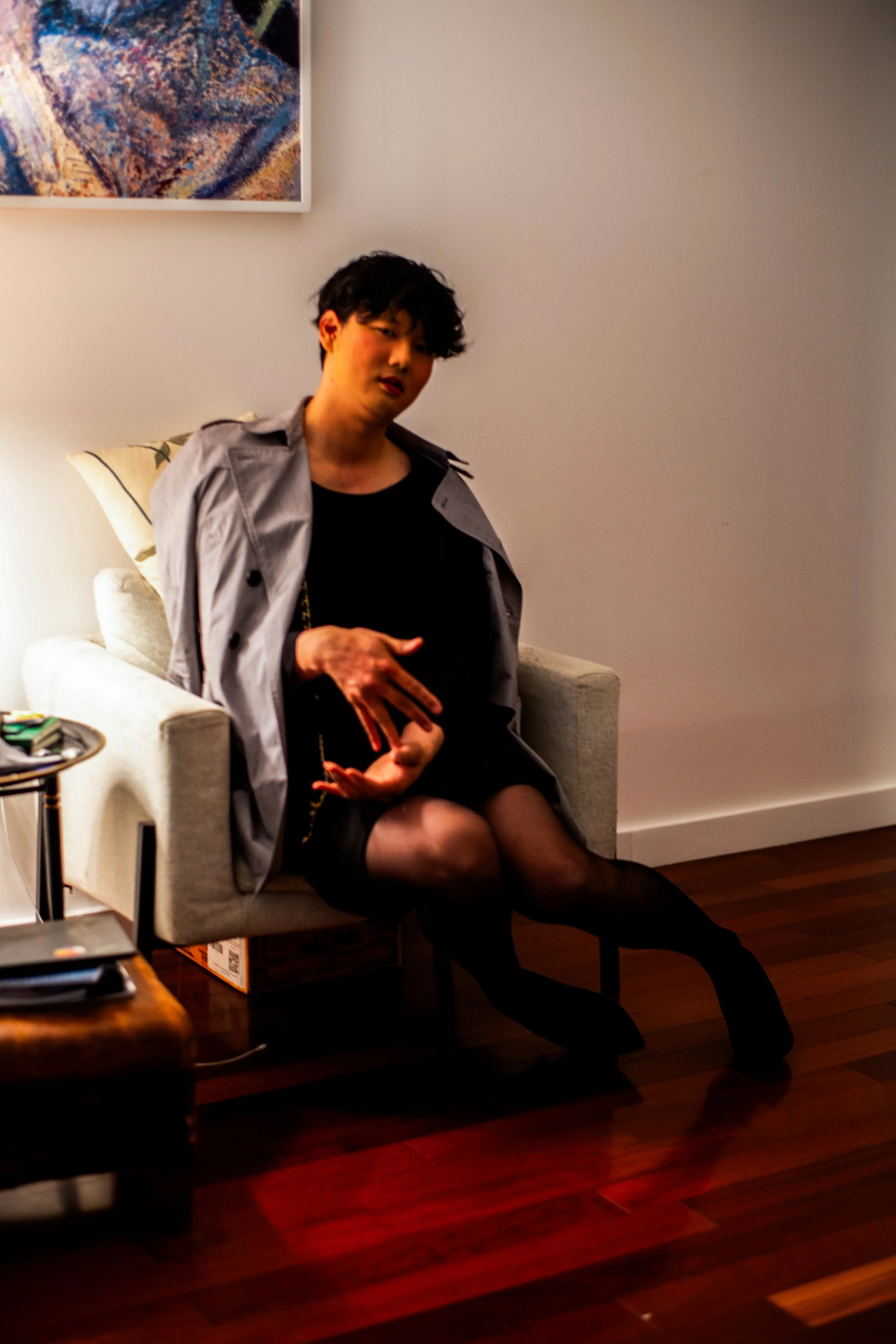
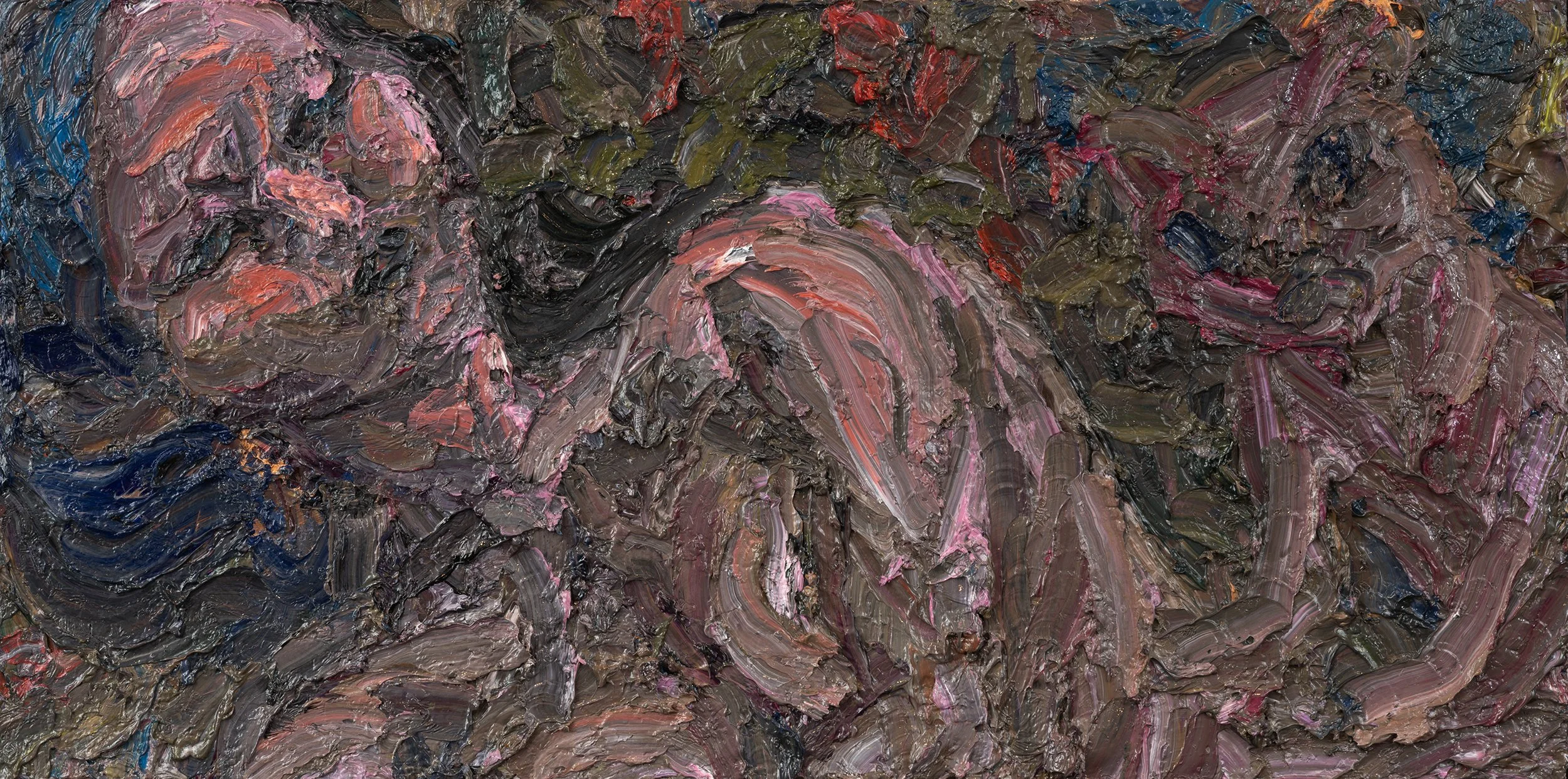
Chunbum Park (Korean alphabet: 박준범, Chinese characters: 朴準範), also known as Chun, is a South Korean-born artist whose paintings explore gender identity, femininity, beauty, and self-expression through the lens of their cultural upbringing. Born in South Korea in 1991, Park came of age in a society where traditional beliefs and expectations around gender and beauty played a significant role in shaping their understanding of masculinity and femininity. These early cultural influences continue to inform their work, particularly their exploration of the tension between societal expectations and personal identity. Through self-portraiture, Park depicts themselves as a woman, challenging conventional gender roles while embracing the beauty, strength, and complexity of femininity. Drawing connections between Korean cultural values, personal experience, and broader ideas about gender performance, Park creates paintings that question how identity is shaped, expressed, and perceived.
How did your creative journey begin?
My creative journey began in several phases from high school until after grad school. I attended Montgomery Bell Academy in Nashville, TN, and, as a nerdy Asian boy, I felt that I did not belong or have close friendships there at the time. My art teacher, Mrs. Rosie Souter Paschall, pushed me to finish my assignments despite my addiction to computer games, which led me to become a delinquent who procrastinates. With her gentle guidance, I finished two drawings with ink on paper that depicted the Great Southern Gate ("Namdaemun") and an activist giving out free hugs in front of a Starbucks in Seoul, South Korea. The first would win the National Scholastic Gold Medal in Drawing in 2008 and the latter would be purchased by my school at graduation in 2009. This was a sign and an affirmation that I should pursue a path in art, rather than the history degree that I was pursuing at the University of Rochester from 2009 to 2010.
Due to the experiences of being ridiculed and ostracized for 6 years in high school, I was very socially inept and isolated at university in Rochester. Racist bullies from high school would constantly message me to mock me and my Korean heritage and identity even after I had left/graduated from high school. Feeling great anger and sadness, which caused me to have what was essentially a mental breakdown on a winter night in 2009, I typed into Google search thoughts of violence against the high school bullies and the American society at large, which I felt were racist and hostile against Asian people like me.
This was a turning point in my life because, even as I felt justified in harboring violent thoughts against the bullies and the larger society, which I believed to be bigoted and oppressive, I began to notice what was essentially government surveillance and other students becoming greatly afraid of me on campus. I overheard my hallmates discussing the school police searching my room for weapons during a false fire alarm. My experiences with paranoia and government surveillance and harassment were labelled and dismissed as "schizophrenia," but the worst of the experiences or "symptoms," which included loud knocking and laughing noises from upstairs whenever I was alone in my dorm room, would eventually force me to leave Rochester. I would not have survived the cold and lonely winter there without the care and nurture of my painting professor, Heather Layton, who strongly believed in my potential as an artist and wrote recommendation letters for me when I re-applied to art schools in 2011.
I briefly attended Rhode Island School of Design as a BFA Painting student in 2011, and there I met my best friend Graham, who would eventually ghost me. It was essentially the first time that I felt I had a real friend in my life, so the shock of losing him would traumatize me for years, from which I still have not recovered. The "symptoms" or government harassment exacerbated, and again I heard loud knocking and laughing noises to harass me not only in my dorm room but also in the painting studio, whenever I was alone there painting by myself at night.
When I complained about the noises to the painting department, they referred me to the Counseling and Psychological Services (CAPS). After a few weeks of counseling, in which I found myself disagreeing with the counselor on all issues, I requested to stop seeing the counselor because I wanted to have more time to focus more on my painting.
A day or two later, I was hospitalized by force, and because I refused to receive medical treatment (since I believed all that I had experienced, seen, and heard were real) the hospital and the school let me out on a "voluntary" medical leave after observing me for a few days.
All this was too much for me, so I flew to South Korea to stay with my grandfather, uncle, and father, traversing between Seoul and Mokpo, a port city in the southern end of the peninsula where my father was based. I consented to medical treatment because it was a requirement for avoiding mandatory military service, which would have lasted 2 years, during which I could focus more on my paintings.
The medication that I took initially was very strong and severely handicapped me as a painter in terms of my mental state and ability to perceive colors and forms. Upon transitioning to a lighter dose of a newer medication, my functions as a painter rehabilitated. I eventually returned to the States and took classes at the Art Students League of NY, where I studied painting and/or drawing with Mary Beth McKenzie, Ismael Checo, Deborah Winiarski, Michele Liebler, and John Varriano.
Because I felt that RISD was dragging out the readmission process, I officially left the school and reapplied to art schools.
I pursued a BFA in Fine Arts at the School of Visual Arts from 2017 to 2020, studying painting with Farrell Brickhouse and Leigh Behnke. There, during a summer residency in 2019, my mentor Steve DeFrank suggested that I was trying to see myself as a woman through my paintings of women. I was reminded of the time I wanted to become a girl when I was a little boy before coming to America, and I was attracted to and admired female characters in Japanese anime. I took my mentor's suggestion to heart and openly embraced this new hidden gender within my psyche.
During my MFA studies at the Rochester Institute of Technology from 2020 to 2022, I crossed over into genderfluid photography, in which I would "crossdress" as a Northeast Asian woman.
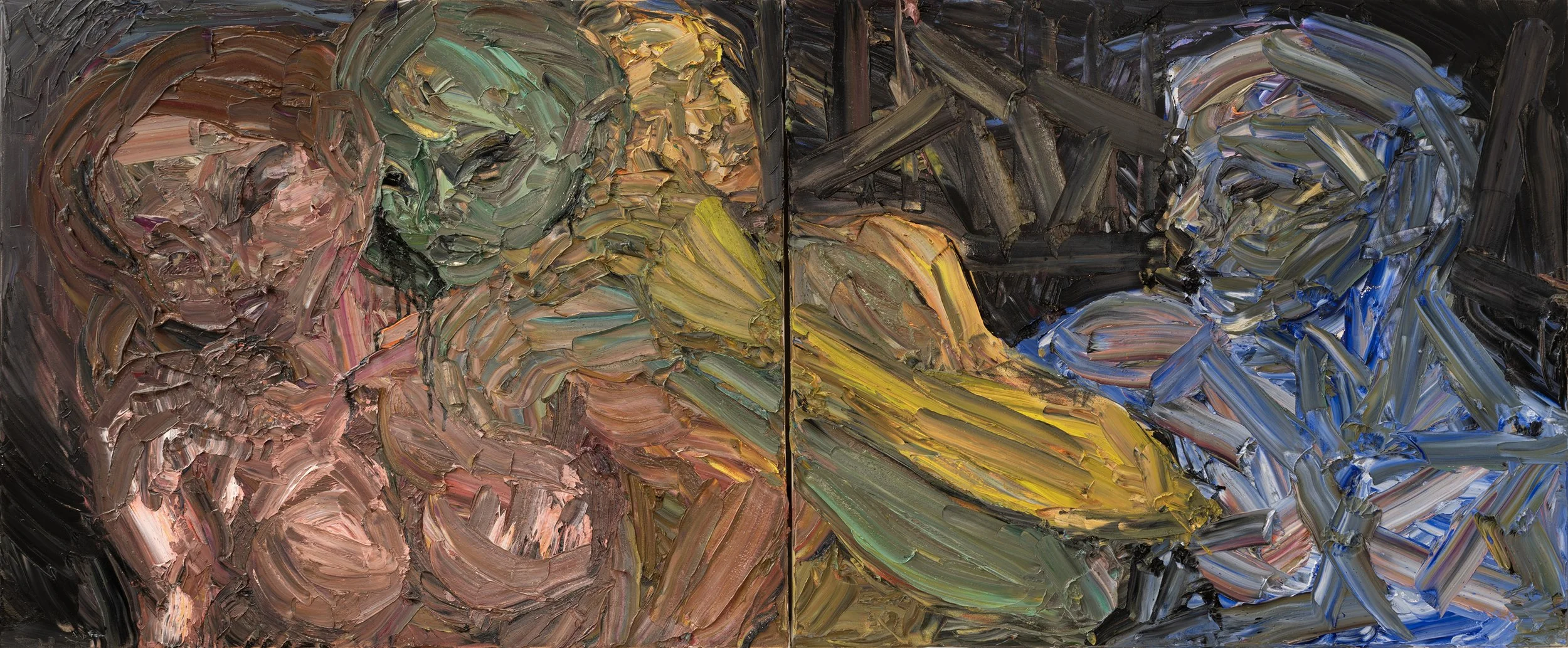
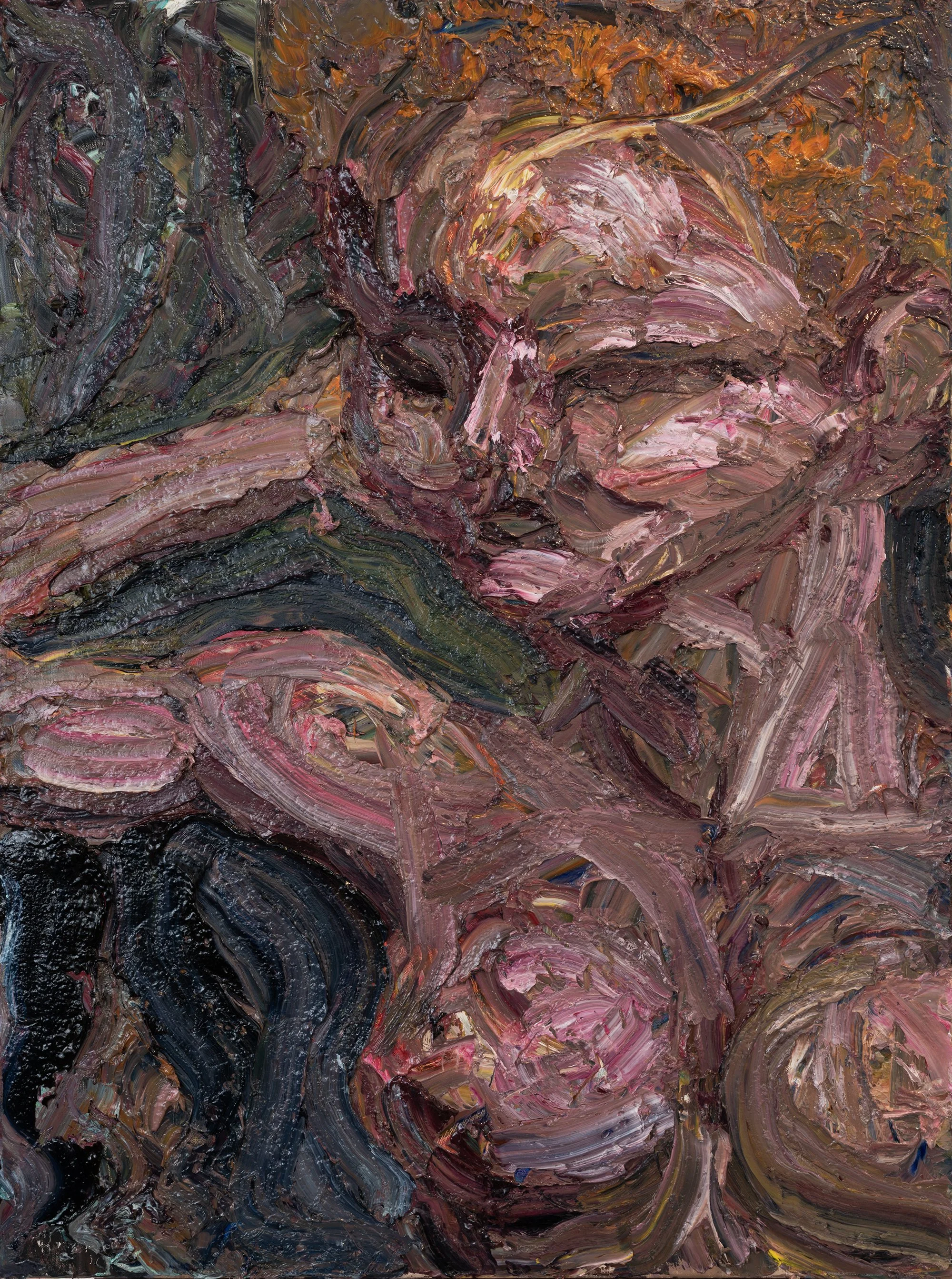
Now in 2026, I return to my figurative abstract paintings in oil that I had pursued at RISD under the guidance of my painting professor Craig Taylor, who showed me the works of Frank Auerbach and Leon Kossoff of the School of London figurative art movement in the latter part of the 20th century. So I am continually beginning, and new chapters are opening up each and every day.
As I reflect back on my life, I express gratitude to my mother, father, and brother for supporting me despite my numerous failures. I am still healing, and I am still struggling. I miss my friend Graham to this day.
What does "feminine beauty" mean to you, and how does this influence your work?
Feminine beauty is something very beautiful and exciting to me on aesthetic, visual, and symbolic levels or terms. I feel that the male body and attire are "tough" and also "boring" because they are rectilinear and static, involving less curvilinear or diagonal shapes than the feminine body. Feminine beauty is not only physiognomic but also involves performativity, in which women put on makeup and stylization practices repeatedly to shape their feminine image and identity. This is not something unnatural, just as someone might wash her hair, clip her nails, wear dresses or skirts, put on lipsticks and eyelashes everyday or for different occasions.
I pursue feminine beauty in my own paintings, in which I fantasize my own bodily appearance, attire, hair style, and facial expression through the painting itself serving as a magical mirror. While I am forbidden from dressing as a woman everyday by my parent(s), who are more conservative and fear ridicule from the Korean community, I repeatedly utilize painting and photography to express my hidden desires and fantasies, which are mimetic and performative in nature. One painting is never enough, and I must continually paint myself as a woman to satisfy my urge and wish to become a woman on a daily basis. This constitutes my inner necessity as a figurative and figuratively abstract painter.
What does a typical day in the studio look like for you, and how has your art practice grown or changed?
I do not get to paint often due to the lack of time and painting materials, but, when I do, I usually start in the evening when I am listening to music and feel inspired. This can lead to two different outcomes.
I either finish a successful painting within 45 minutes to three hours in peace and with joy and happiness, or I experience what I imagine to be the government's "radar" or electronic surveillance apparatus jamming and frying my brain and preventing me from seeing colors in my head. In such a situation, I hear a "pheeee" electrical noise in my brain, and I am unable to produce even a modestly decent painting. I quickly get defiant and angry, so I keep on painting out of spite, essentially, for hours until the next morning and entirely ruin the painting, turning it into complete, disastrous mud. In this situation, I would have burnt through two week's supply of paint, which would be equivalent to $200 to $300 that is wasted on a single day.
The radar jamming makes my head feel very heavy and empty, and all thoughts slow down as if I were orbiting a black hole and experiencing time dilation. You don't even get to have the full emotional capacity to get angry about this situation because this ability to feel and express the emotions is also jammed by the same radar tormenting you and preventing you from making a successful painting. I even got to a point where I become angry before I start painting because I anticipate the radar jamming my brain, which comes and goes unpredictably.
I actually don't know what the proper solution to this might be. Placing my studio inside a Faraday's cage to block out the electronic signals might work, but that would cost a fortune.
I tried to explain to the world recently on a social media post that my situation with painting is unlike anybody else's who might just be experiencing an artistic block. My situation is most definitely not an artist block in the natural sense of the word. It is a physical phenomenon (of a radar attack) manifesting in the material realm, and I can hear the electrical noises in my brain due to the government radar bombarding my brain with energy beams in the longer wavelengths that pass through walls and objects. It's just like invisible WiFi signals or the heat inside a microwave oven, except it is a million times worse and its intentions are purely malicious and evil with no good use or altruistic purpose.
Talking to artist friends and mentors help a great deal in coping with the stress and anger of this kind of situation. Reading books refresh my intellectual energy and visions for future paintings.
But really there seems to be nothing that I can do to stop the government from frying my brain whenever I try to paint in the studio. The economic cost is real because each time this happens I refuse to stop painting in defiance and use up every paint tube in my studio as I make mud on the canvas. Each year, I waste $4000 ~ $8000 in paint supplies because of this "phenomena" or experience with radar attacks by the government, which happen a few dozen times a year.
Spending time with family and friends seems to heal me from this anger and trauma that I have in suffering from the radar attacks whenever I am trying to paint in the studio. Whenever I am in their good company, I often forget about all the troubles in my life and feel inspired to paint again.
Does your heritage and upbringing play a role in your work?
I try to be bold in terms of exploring and expressing nudity, vulnerability, and sexuality because the Korean neoconfucian tradition of thought and values discourage those kinds of expression and vision. I think that human sexuality is one of the most beautiful aspects of our activities for humanity. As a virgin at the age of 35, I utilize my paintings as a way to explore sexuality and eroticism to sublimate my frustrations for the lack of sexual encounters in my life.
How has social media impacted your work?
Yes. At first I became discontent that my work wasn't getting recognized in social media, and I would constantly compare my works with those of others to "improve." However, at some point social media began to tire me, and I am now focusing on what I want to say and how I want to express it, without caring for whether it is widely received on social media or wins a competition. I also realize that certain works look better as a digital image than in person. Many of the artists on social media make works with colors that look better as a digital image but are lackluster when seen in person. I feel that I am striving to be the opposite. I want to make works that look way better in person than in photos or on social media.
What symbolic imagery appears in your work, and what do they mean to you?
The tiger is an important symbol that appears again and again because it represents my masculine side that coexists with my feminine side. Also, my father dreamed of me appearing as a tiger the night before I was born and the night I was conceived. He knew that my mother was pregnant even before she took any pregnancy test, and they were not trying to make efforts to have a baby at the time.
The tiger is the messenger from the mountains and the king of the beasts. It is a wise and regal, majestic creature that used to roam the mountains and pine forests of the Korean peninsula before the Japanese-sponsored hunters hunted down the apex predators to extinction during the 20th century Japanese occupation of the country. The Japanese knew that Koreans held the tigers in great reverence, so to eradicate the Korean national identity and race, the Japanese sponsored the complete extinction of tigers on the peninsula. (While this is a sad part of Korean history in relation to Japan, I have many Japanese friends, and I like the current-day country of Japan.)
Are there any particular artists or art movements that inspire you?
The figuratively abstract works of Frank Auerbach and Leon Kossoff of the School of London inspire me greatly, as well as Willem de Kooning and Elaine de Kooning, Franz Kline, and Jackson Pollock and Lee Krasner, amongst the Abstract Expressionists. Paul Gauguin's depiction of Tahiti women influence my own depictions of myself as numerous manifestations of the Northeast Asian beauties. I empathize with Vincent van Gogh's sufferings and triumphs on the pictorial plane because I had to undergo the same medical institutionalization and treatment a few times throughout my artistic journey. Diego Rivera and Frida Kahlo amongst the Mexican painters and muralists also possibly impacted some of my work in graduate school and afterwards. Even as I hold the Demoiselles d'Avignon in great regard, I no longer respect Picasso because he was oppressive to the women in his life. Amongst the artists from Korea, I respect Jung-seob Lee who was the Korean equivalent of Picasso or Matisse, Quede Lee who envisioned the modern Korean beauties and society, and Chun Kyung-ja who expressed feminine resilience through the motif of the female figures, flowers, and snakes.