Atlanta Weiss: Essence Meeting Image
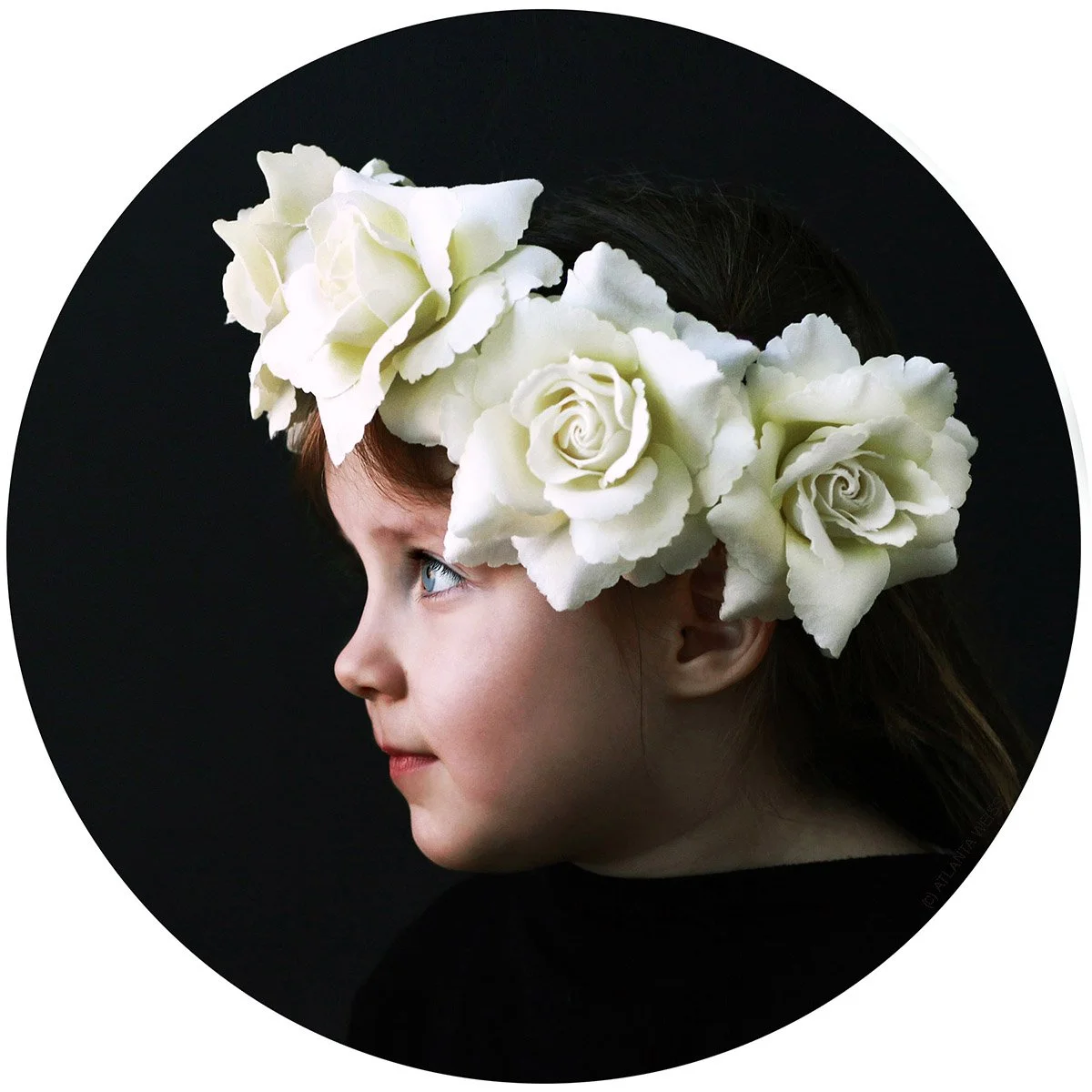
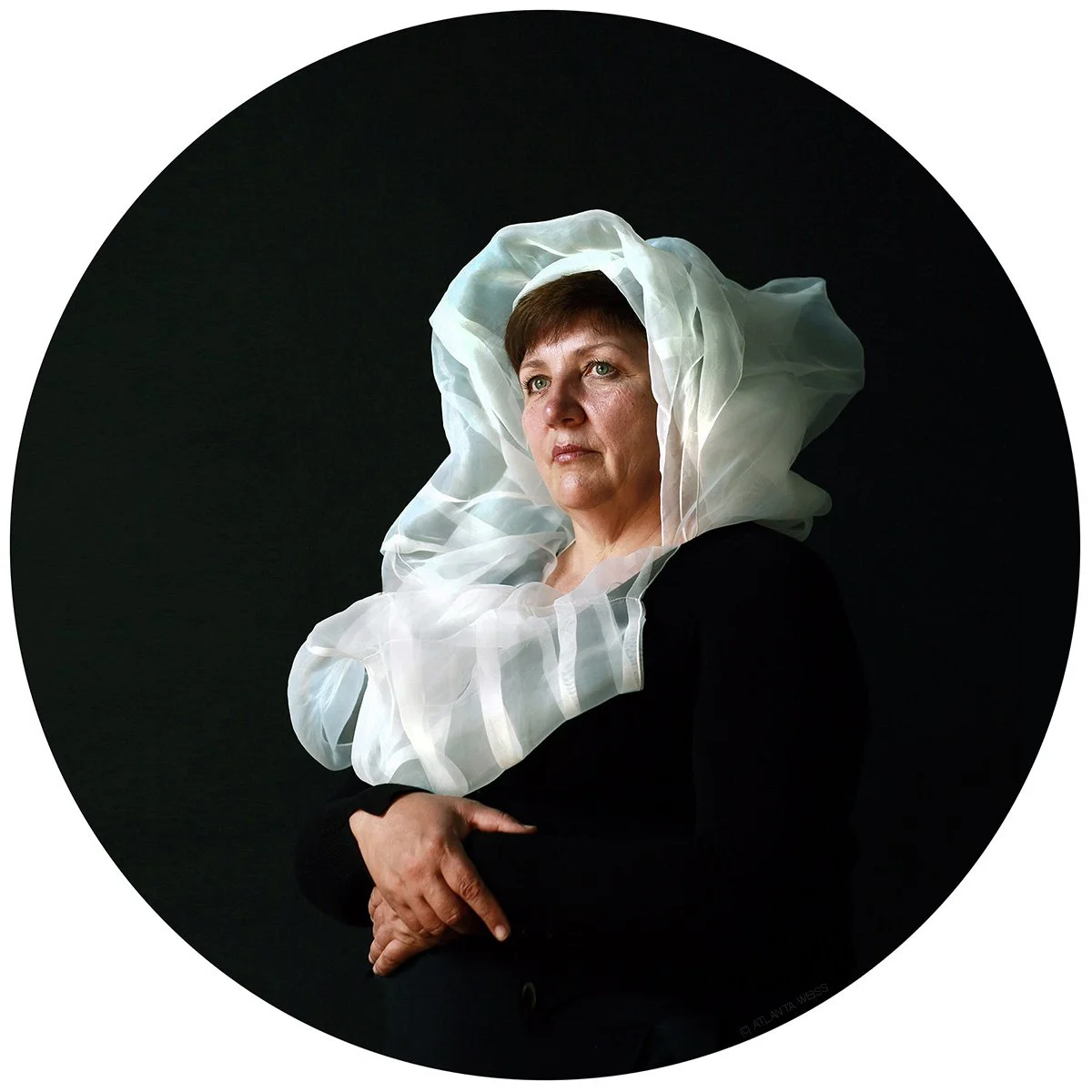
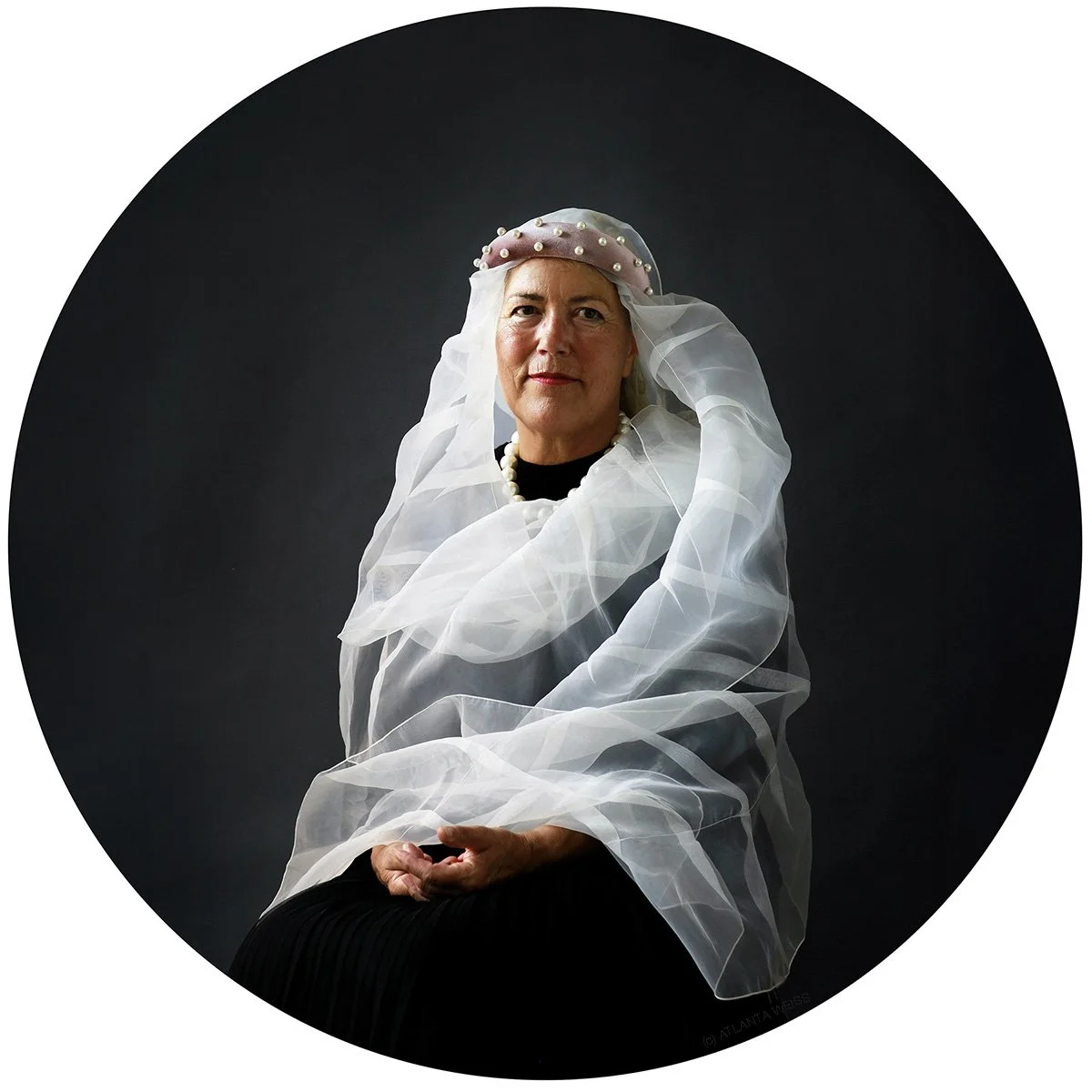
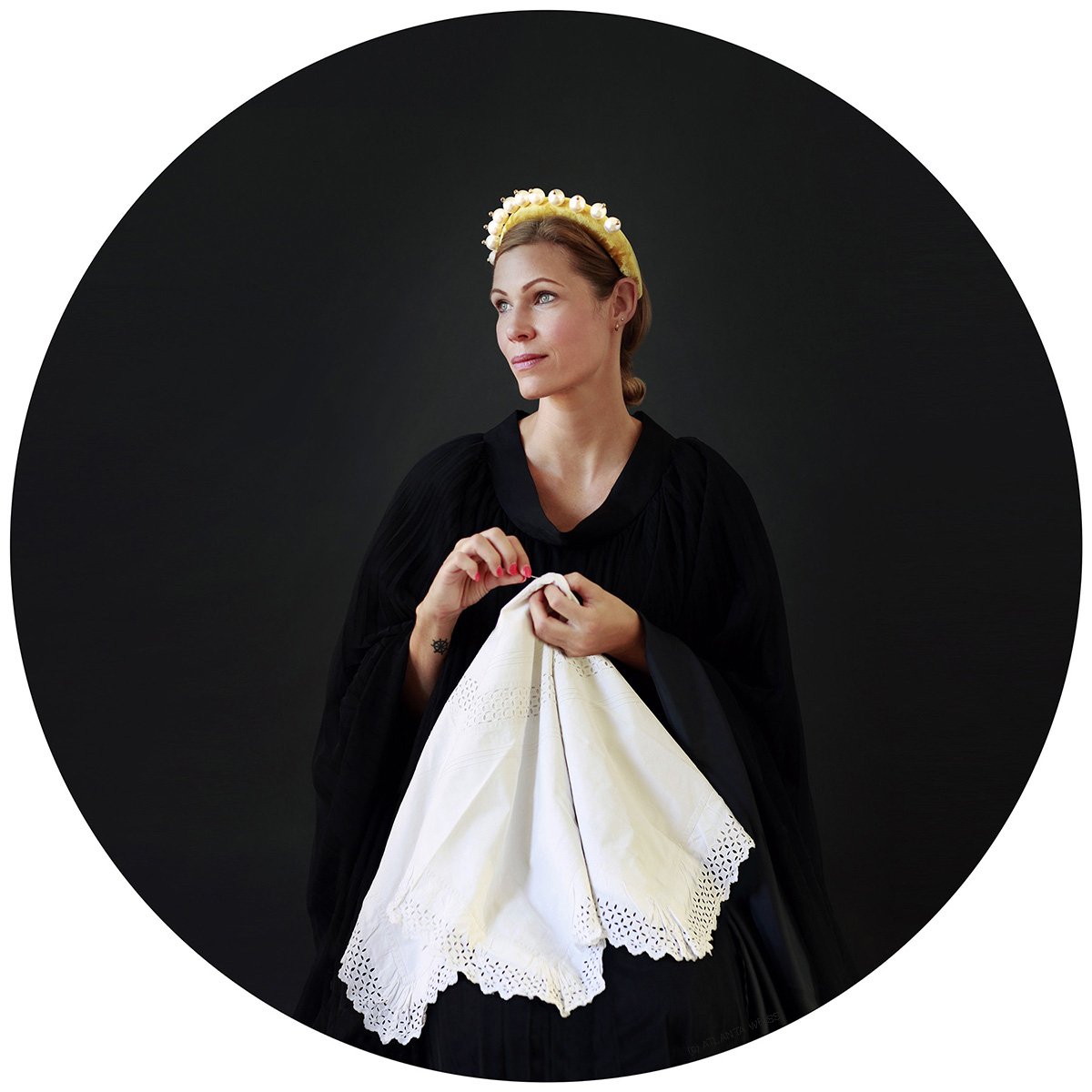
Atlanta Weiss is a second-generation, interdisciplinary artist whose portrait practice blends Old Master techniques with contemporary conceptualism. Informed by the artistic traditions of London, Moscow, and Düsseldorf, her work moves seamlessly across painting, drawing, photography, and sculptural materials such as pearls and thread. For more than two decades, she has explored the intertwined themes of identity, image, and reputation, with a particular focus on the complexities and power of the feminine experience.
How did your creative journey begin?
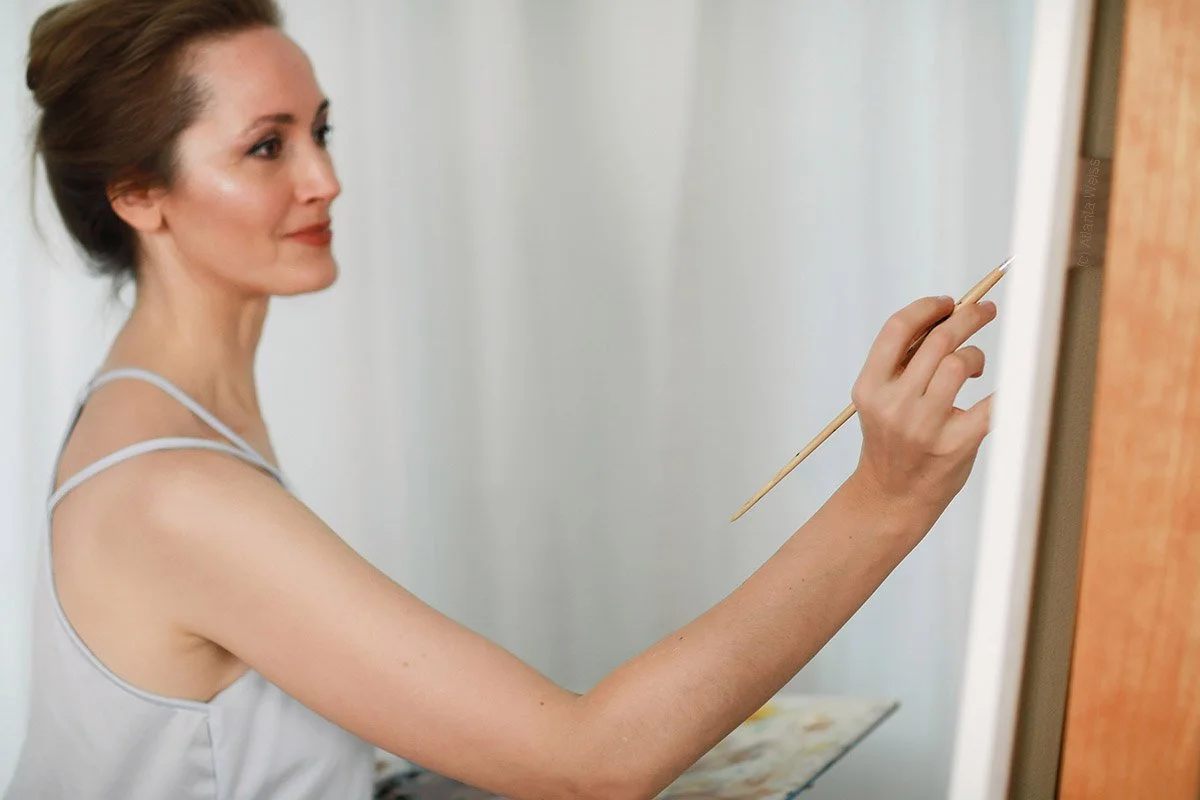
I was literally born into it—my parents met at art school, so in our modest home the living room was the studio and classical training a second language. We moved across countries and the smell of oil paint was our constant—our family home scent. I watched landscapes and still lifes emerge from linen and light—ideas turning material. Early on I learned art isn’t a “when the homework’s done” activity; it is the main work. As a kid, my social life often began only after I finished a piece.
Faces hooked me first. By twelve I’d lived in three countries and started twice with zero language, so I learned to read faces. They gave me more information than what their owners had to say. I saw their character, past choices, even the trajectories their life might take. It was so crystal clear to me that I assumed everyone could do that. Over time I realised portraiture—in paint, graphite, or through a lens—is more than likeness; it’s a conversation between a person’s inner life and the way the world receives them. That ongoing negotiation—essence meeting image—has been my compass ever since.
To me, a portrait is both intimate and civic: part diary, part press release. It preserves who we are, shapes how we’re seen, and points toward where we intend to go.
As a second-generation artist, how has your family heritage shaped your relationship with art and the studio?
Being a second-generation artist gave me both the romance and the reality. As a child, I stretched and primed canvases for my parents for pocket money, bathing in their love for craftsmanship and ideas. Art in our family was never a pastime; it was serious work, act of manifesting an idea: spiritual and conceptual but stubbornly material and realistic at the same time.
We also lived the harder pages: persistent self-doubt, the tug-of-war between commissions and one’s own voice, and the math of feeding a family of four in a foreign language. My parents met those pressures with courage, and that truth formed my backbone. As a result, I speak two native languages—Gesso and Google Sheets, chiaroscuro and cash flow. That’s why I founded Art Wisdom Education (AWE): to bundle the knowledge I wish my family had sooner so other artists can skip years of not-knowing and build sustainable, sovereign studios.
I now work with international clients—some visiting my studio in Cologne (Germany), others welcoming me into their homes. Today, my studio is both workspace and sanctuary of feminine heritage, vision, and creation—a place for those who dare to be remembered.
What does a typical day in the studio look like for you, and how has your art practice grown or changed?
I’d love to claim a “typical” studio day, but since pregnancy and pandemic-era motherhood my schedule is more jazz than metronome. Mum-artists will recognise the confetti calendar—kindergarten birthdays, early music drop-offs, and being the midnight emotional anchor.
Before, my week was tidy: raw creation, post-production, marketing. I over-planned, compared myself to other artists, took museum weekends (Europe makes that easy) and visited tons of art fairs. Now, priorities shifted, so the method did too: I now optimise for intensity, not length. If I get a clean hour or two, I wring it for all it’s worth.
I now work in quarterly chapters instead of daily slices—winter for creation, spring and autumn for marketing and outreach, summer for post- and pre-production. Batching protects depth, reduces context switching, and respects the energy each phase demands. Some weeks I work nights—six or seven uninterrupted hours—watch dawn hit a drying glaze, then school run in a great mood because the work moved. Other weeks I don’t enter the physical studio at all, and I’m learning to do that without guilt—strategy lives in my planner and also counts as work.
What’s changed? Motherhood sharpened my practice: leaner and fiercer, fewer false starts, clearer priorities, less comparison, more presence. I touch the essentials first—composition, value, gesture—and let the non-essential wait. I sometimes look at childless artists in my environment and wonder how much time is spent on searches, ideas, talks and activities that do not add to the result. Now, my muse rides in the back seat with a plush bunny, so the days are less predictable, but the art is more precise. And that, to my surprise, is my favourite kind of rhythm.
You move fluidly between painting, drawing, photography, and sculptural elements like pearls and threads. How do you decide which medium a portrait calls for?
With my free work, I choose the medium by listening to the idea— every idea arrives with a pitch. So my aim is to match that inner sound to the right material.
Medium carries the argument. Oil when a life needs time to surface—layers that hold history. Graphite/charcoal are merciless and kind at once—every decision is visible, and restraint is part of the meaning. Photography for presence—the inhale before performance returns, the exhale when the mask drops. I often run small studies across mediums and let the work choose me. The medium isn’t decoration—it’s the moral architecture of the image.
Scale also matters. I work close-up or life-size so intimacy is undeniable; micro-details—skin’s topography, the weather inside the eyes—become revelations. Before committing, I ask two practical, ethical questions: What truth and beauty needs telling? How long does the beauty of this particular idea take to arrive with this material?
If my aim as an artist is to materialise an idea, I want to be able to ‘speak’ in any medium. Currently, I am also exploring sculpture in its permanent and ephemeral, time-based form.
How has social media impacted your work?
Confidentiality and privacy is one of the privileges I gift to my clients. Be it a commissioned family portrait or a series of exclusively commissioned grand kids - I never share any details of a commissioned portrait, including its existence, without their consent. Some of my international clients have historic family circles and are extremely private. Honest online and offline privacy is rare in our day and age.
However, creatively, social media allows me to discover parts of the art world that I would have never discovered just by visiting museums and art fairs. Visionary Art Collective for example - Victoria’s network - and similar initiatives are gold when it comes to bringing artists, particularly female independent artist, together.
Practically speaking, social media needs time and affects my studio rhythm. I constantly feel behind on what I create in the studio and what I have published. Every month I say, now is the time for a big update and postpone it again. Social media widened the room for me - but so far, I treat sit as a bridge, not a stage. My artworks now travel farther than my passport, and the conversations they spark—about beauty, courage, legacy—reach people I might never meet in a museum queue.
It helps me share the work without letting the media shape the work—and that distinction keeps both the art and the artist intact.
Your work interrogates identity, image, and reputation. How do these concepts particularly shape or challenge the feminine experience today?
To differentiate, identity is how we name ourselves, image how we are seen, and reputation is the social memory that stays after we leave the room. For women, that triad—historically constructed as a compass—has been upheaved in the last century. We moved from prescribed roles into a still-unfinished terrain full of contradictions: punished for having children and for not having them, for being accomplished and for being “too independent,” for being feminine and for being feminist. The cost of this lack of compass on a personal level is self-censorship and permanent search for what ‘resonates’. Lack of compass on the social level is more tangible - it is cultural friction and unrest.
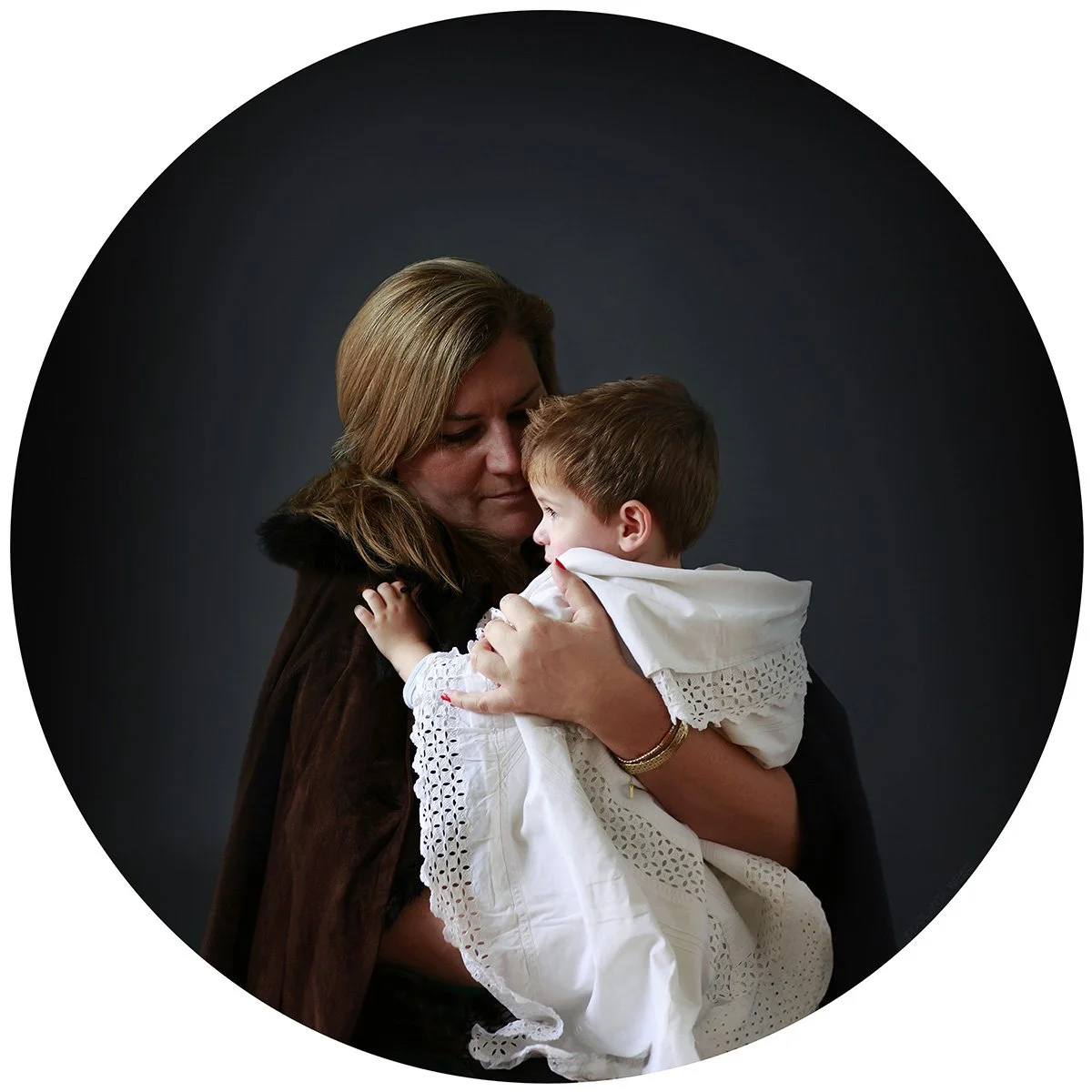
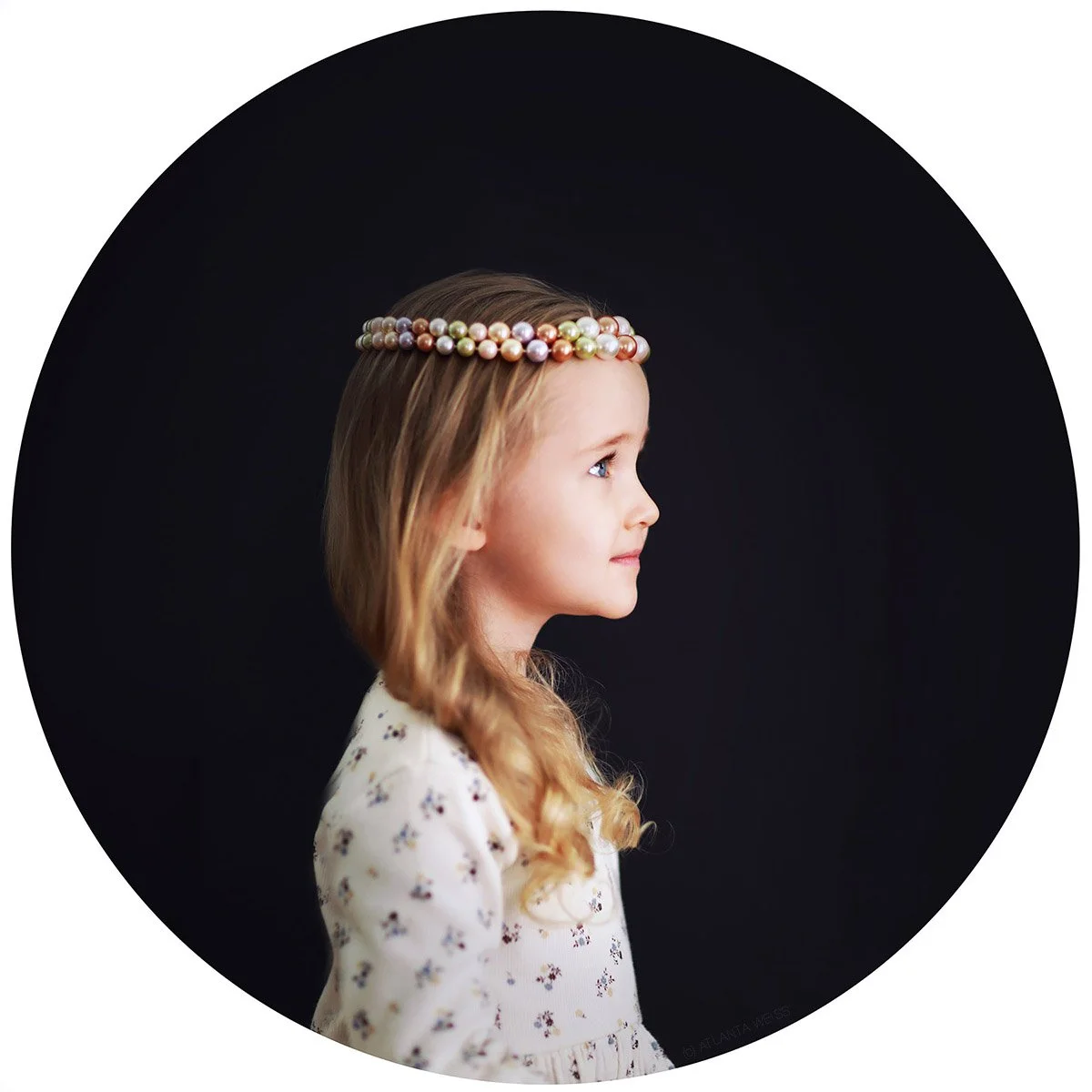
My work pushes back by slowing the gaze and restoring authorship. I want portraits that treat women like whole ecosystems. The women in my work are not muses. They are archetypes, visionaries, sovereigns. I portray them as authors of their own narratives—strong, courageous, tested and reborn; leaders, ancestors, and future selves. Each portrait is a deliberate visual affirmation of inner power, resilience, and legacy.
I begin with a live conversation with the sitter. I have to experience them like I did as a child when I did not speak their language, listening to their stories, fragments of memory, their wishes and plans for future—and then, between reminiscing, loughs, and glance in the mirror, when they take a break - This is where magic happens. I fall in love with this stillness where essence reveals itself: that luminous interval between vulnerability and resolve. All that evolves into portraits honouring both the individual and all their beauty of experience, past and future.
In the end, my portraits are not only records of who we are—they are mirrors of potential. They remind us what we carry, what we’ve inherited, and what we’re here to become. For me, portraiture is an initiation: presence is not merely recorded but honoured. In a culture quick to flatten women into image, the work insists on depth—on identity that is self-authored, complex, and free.
Having spent more than two decades investigating these interwoven themes, what new questions are you asking in your current practice?
My north star remains: align a person’s inner life—past and future—with their visible form. The new questions ask that alignment to hold under pressure—of technology, of speed, of gaze—and still feel like truth rather than verdict.
After two decades with identity, image, and reputation, my questions have become sharper—and kinder. I’m asking:
What does a truthful portrait look like in an age of engineered selves? When filters and AI saturate the air, how can an image remain unmanufactured—slow, sovereign, human?
Can beauty be rehabilitated as an ethical category? I’m after beauty with backbone—grace that dignifies, not flattens.
How do we show time? Not just youth or perfection, but duration—repair, lineage, the way a face carries ancestors and future tense.
Can an artwork shape the sitter’s future? I’m testing portraits as vision architecture—images that function like self-fulfilling prophecies.
What is the maternal archetype? Since becoming a mother, I study an attention that protects complexity and refuses spectacle.
What is a portrait’s civic duty? Beyond private likeness, how can a work contribute to cultural memory with accuracy and care?
Practically, this means I’m building slower pictures and smarter systems. I test ideas across mediums before the image “chooses” me. I design release paths that honour the sitter and the work. And at Art Wisdom, I translate these ethics into templates and teaching—so artists can align their inner compass with clear, dignified business structures.
Fist and foremost, my portraits are for those who dare to be remembered.