Femina at Warnes Contemporary
By Emma Hapner, May 22, 2026
Femina
From Latin fēmina (“woman”)
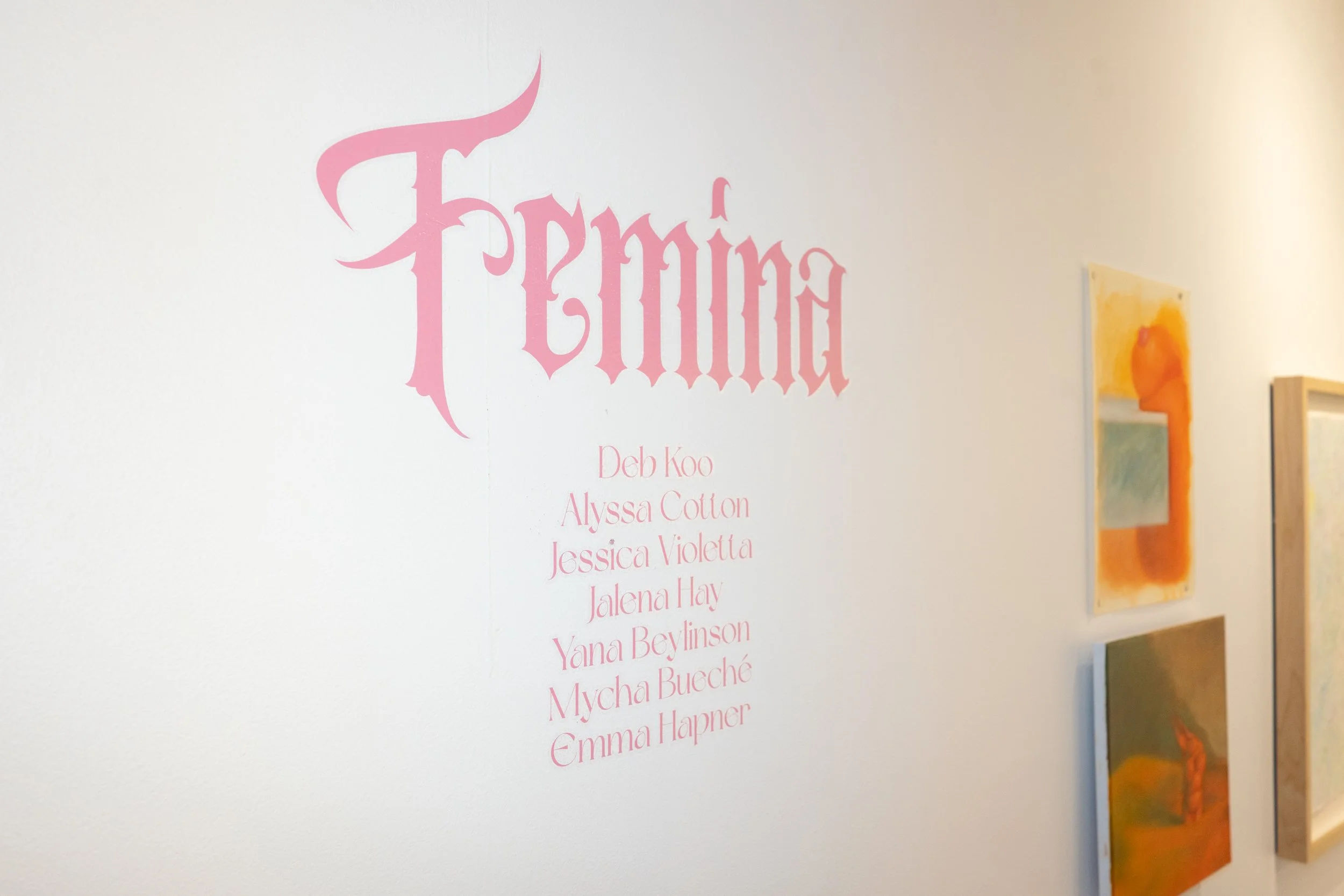
Femina, a groundbreaking book written by Janina Ramirez in 2023, uncovers and records the histories of women who were written out of the past. This exhibition, bearing the same name, asks: how will we write the history of women today? In this blog post, I reflect on our first exhibition at Warnes Contemporary in 2026 - a project close to my heart, as this was my first experience curating an exhibition.
By highlighting a diverse range of feminine-presenting artists in the exhibition, we aimed to explore, document, and preserve contemporary femininity in its many forms.
The show, which ran from January 29 to March 15, featured work by work by Deb Koo, Emma Hapner, Alyssa Cotton, Jessica Violetta, Jalena Hay, Yana Beylinson, & Mycha Bueché
Dana Nechmad, Harmony?, with Kaliner at Untitled Art Fair, 2025
When I first set out to curate this exhibition, I knew I wanted to explore femininity, not simply as a synonym for womanhood, but as a broader and more fluid set of ideas. In recent years, I have encountered many exhibitions dedicated to women artists, and while these are vital, I found myself wanting to move beyond representation alone and toward a more nuanced inquiry. This exhibition became an opportunity to use that foundation as a point of departure, shifting the focus from who is included to how femininity itself can be understood, embodied, challenged, and reimagined.
My thinking was also shaped by reading Femina by Janina Ramirez, which I had just finished as I began developing the show. The book’s reexamination of overlooked narratives and its insistence on expanding historical perspectives resonated deeply, encouraging me to approach femininity as something layered, constructed, and often obscured. It reinforced my desire to create a space where femininity could be explored not as a fixed identity, but as an evolving language.
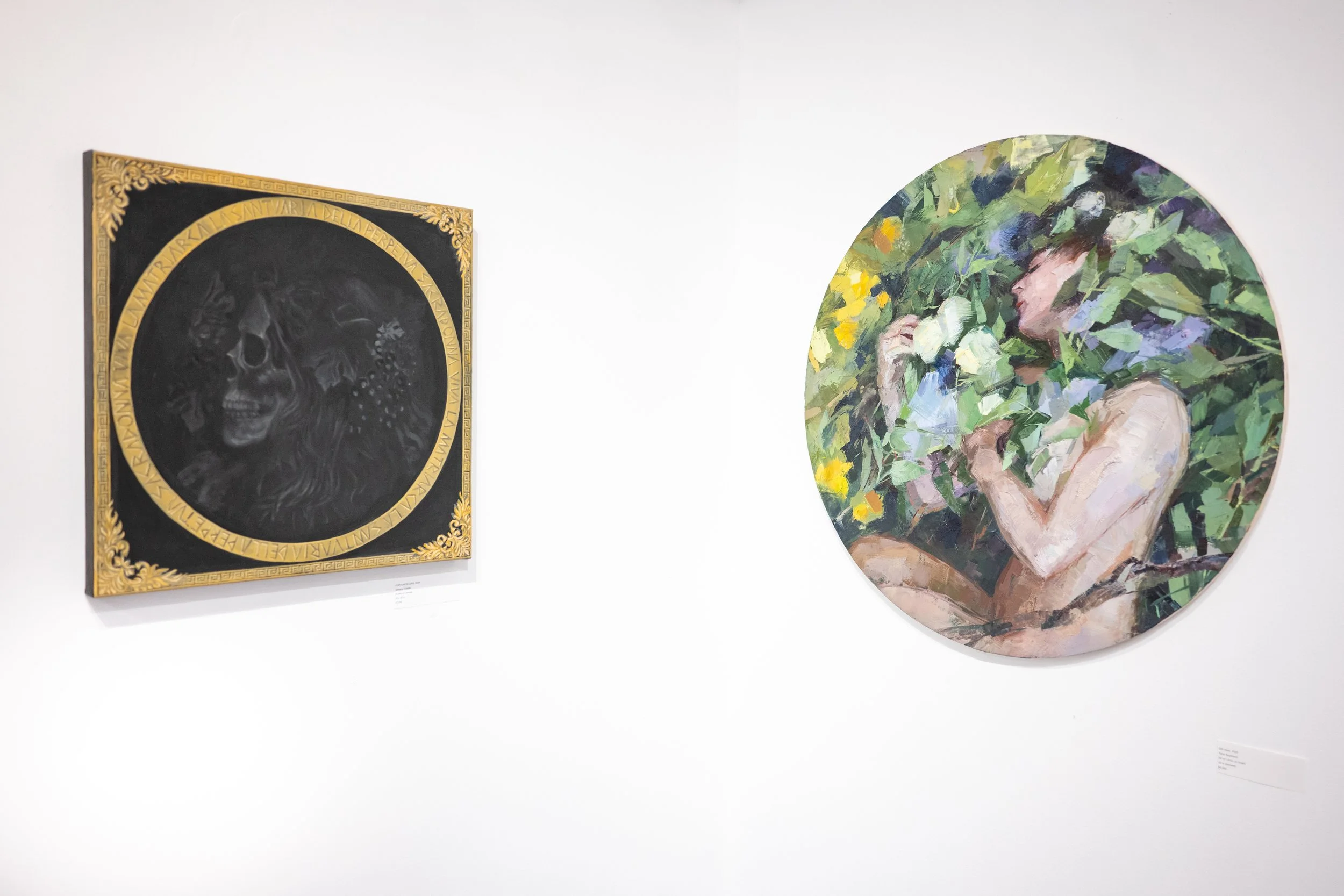
(Left to right) FORTUNOSCURA by Jessica Violetta, Still Here by Yan Beylinson
Each artist in the exhibition engages with this concept in a distinct way. Some approach femininity through materiality and gesture, others through memory, identity, or the body. Some embrace it, while others question or resist it. Together, their works form a dialogue that resists singular definition, instead offering a constellation of perspectives that reflect the richness and multiplicity of feminine experience.
A tension also emerges between the tangible and the intangible. Some works emphasize material presence through texture, weight, and form, drawing attention to the physicality of the body and the objects that surround it. Others lean toward the ephemeral, exploring sensation, memory, and emotional states that resist clear definition. In this interplay, femininity moves between what can be seen and touched and what can only be felt or intuited, existing as both substance and atmosphere.
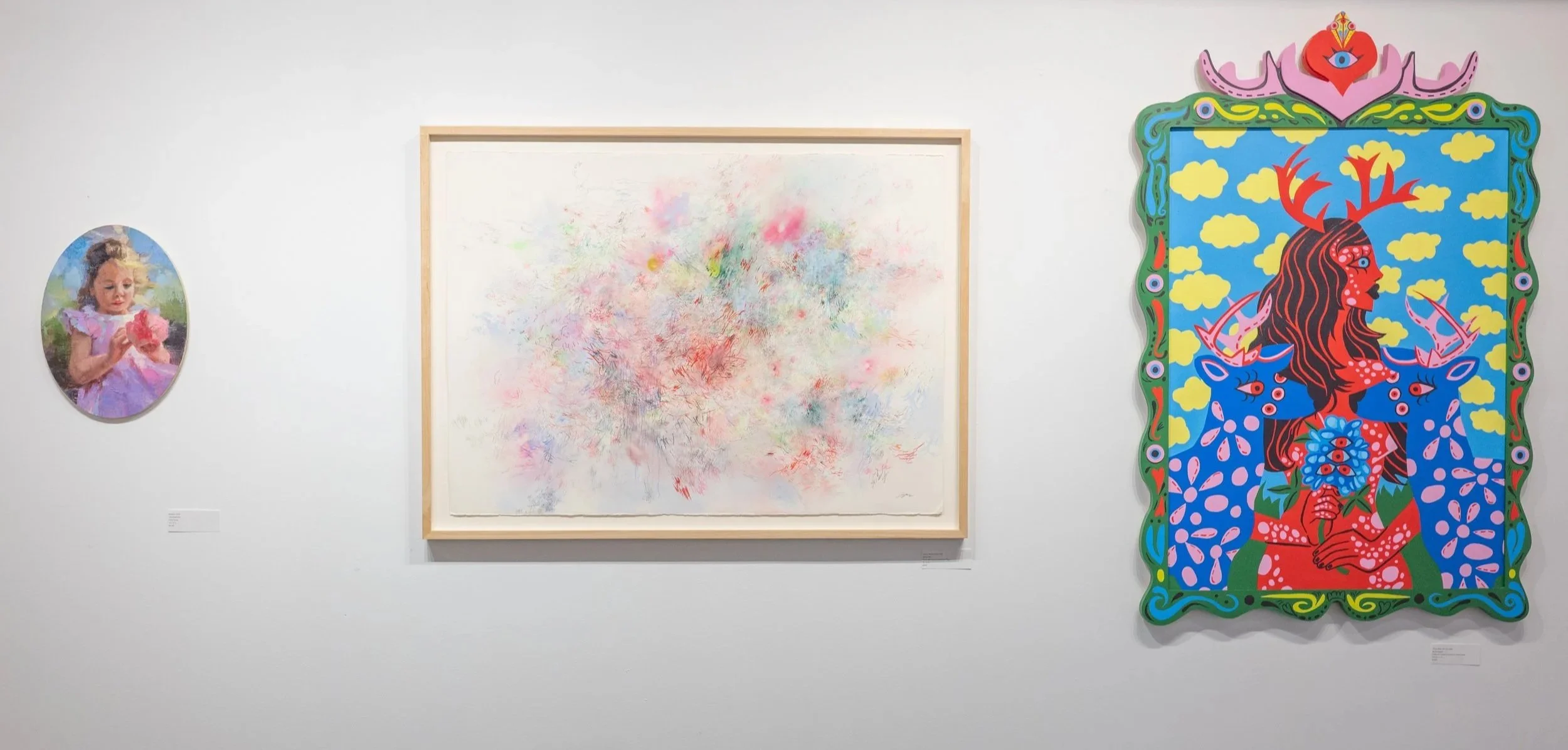
(Left to right) Madison by Yana Beylinson, Life is a State of Mind by Jalena Hay, Of the White Tail Deer by Mycha Bueché
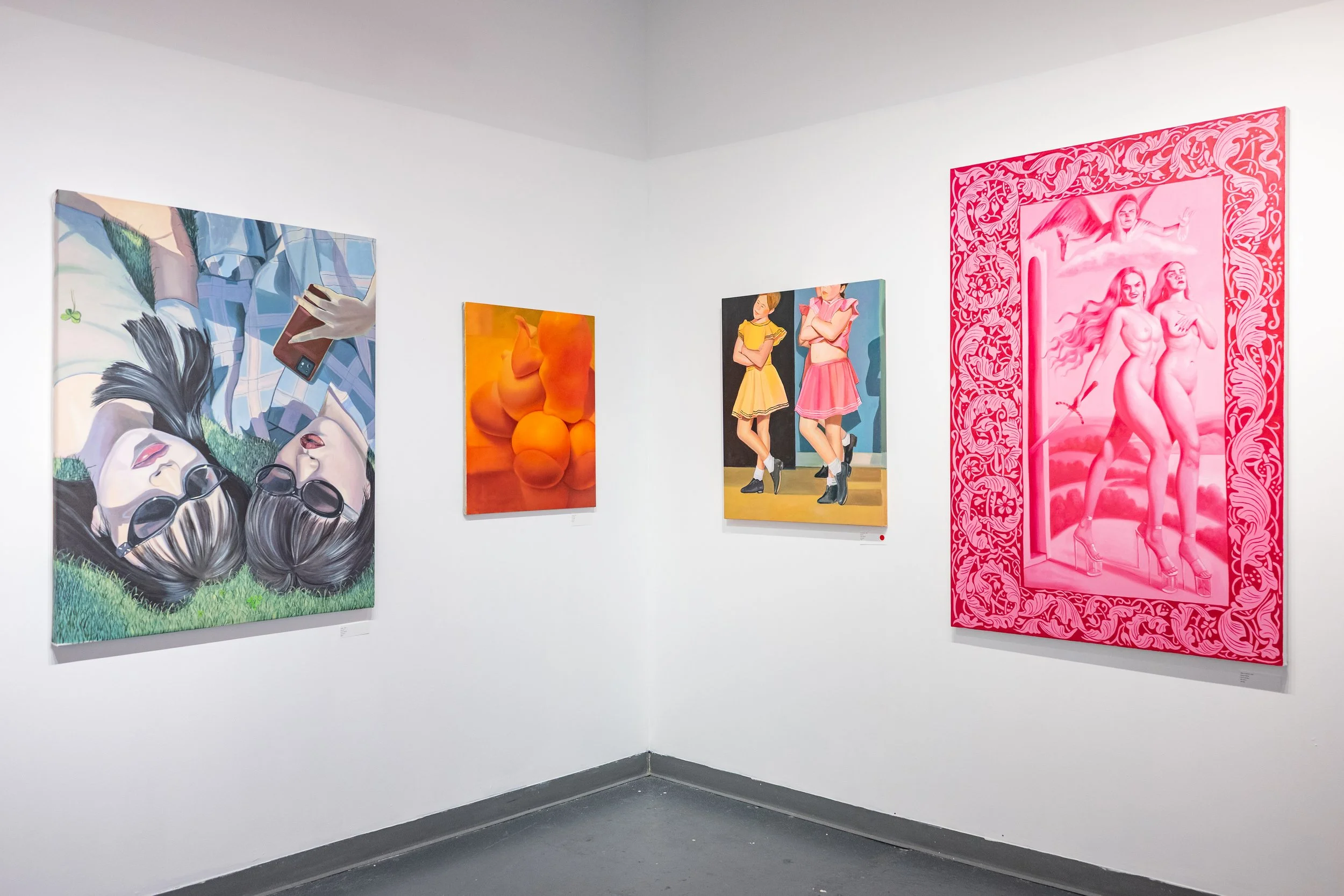
I also found myself drawn to the idea of time as it moves through the feminine experience, particularly the shift from girlhood into womanhood. One wall of the gallery brings this into focus through a sequence of three paintings that, to me, unfold almost narratively. On the left, Deb Koo’s Dancers evokes a sense of childhood innocence, capturing the sweet nostalgia of dance recitals. At the center, my own work, Walk of Shame, moves into a more complex and conflicted space, exploring women’s sensuality and the emotional fluctuations that can follow intimacy, from empowerment and vindication to shame, and even the internalization of judgment toward other women navigating similar experiences. On the right, Mycha Bueché’s Odyssey at Camp Bullis presents a Medusa-like figure with pink skin and a forked tongue, which, to me, brings this dialogue to a charged conclusion. It gestures toward the historical and ongoing tendency to demonize women who express or claim ownership over their sexual desire, transforming them into figures of both fear and fascination. While the artists’ original meanings behind the work may be specific to their own experience, when shown together, I believe we see a sort of gestalt unity about the universal experiences of femininity.
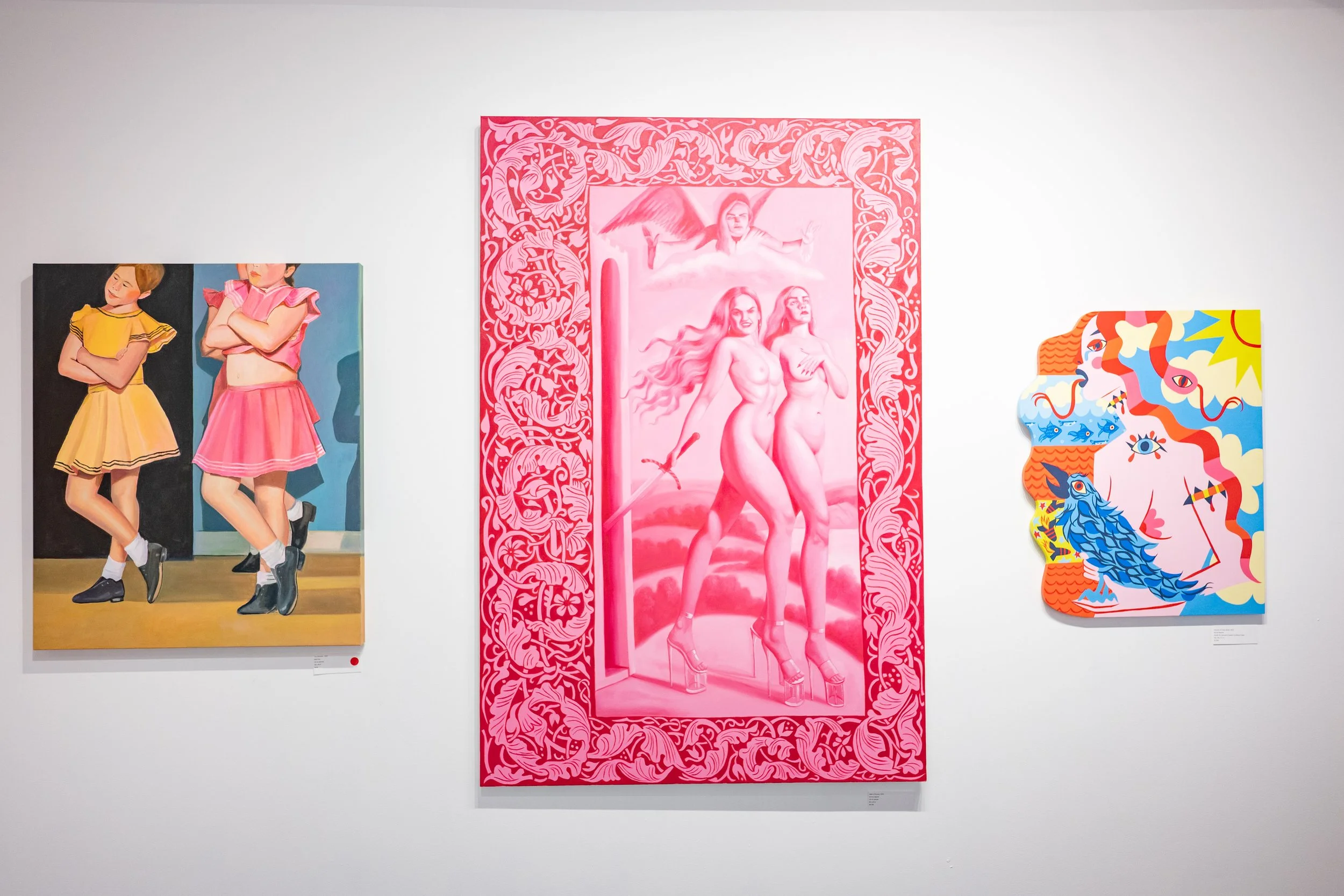
(Left to right) The Dancers, by Deb Koo, Walk of Shame, by Emma Hapner, Odyssey at Camp Bullis by Mycha Bueché
About the Artists
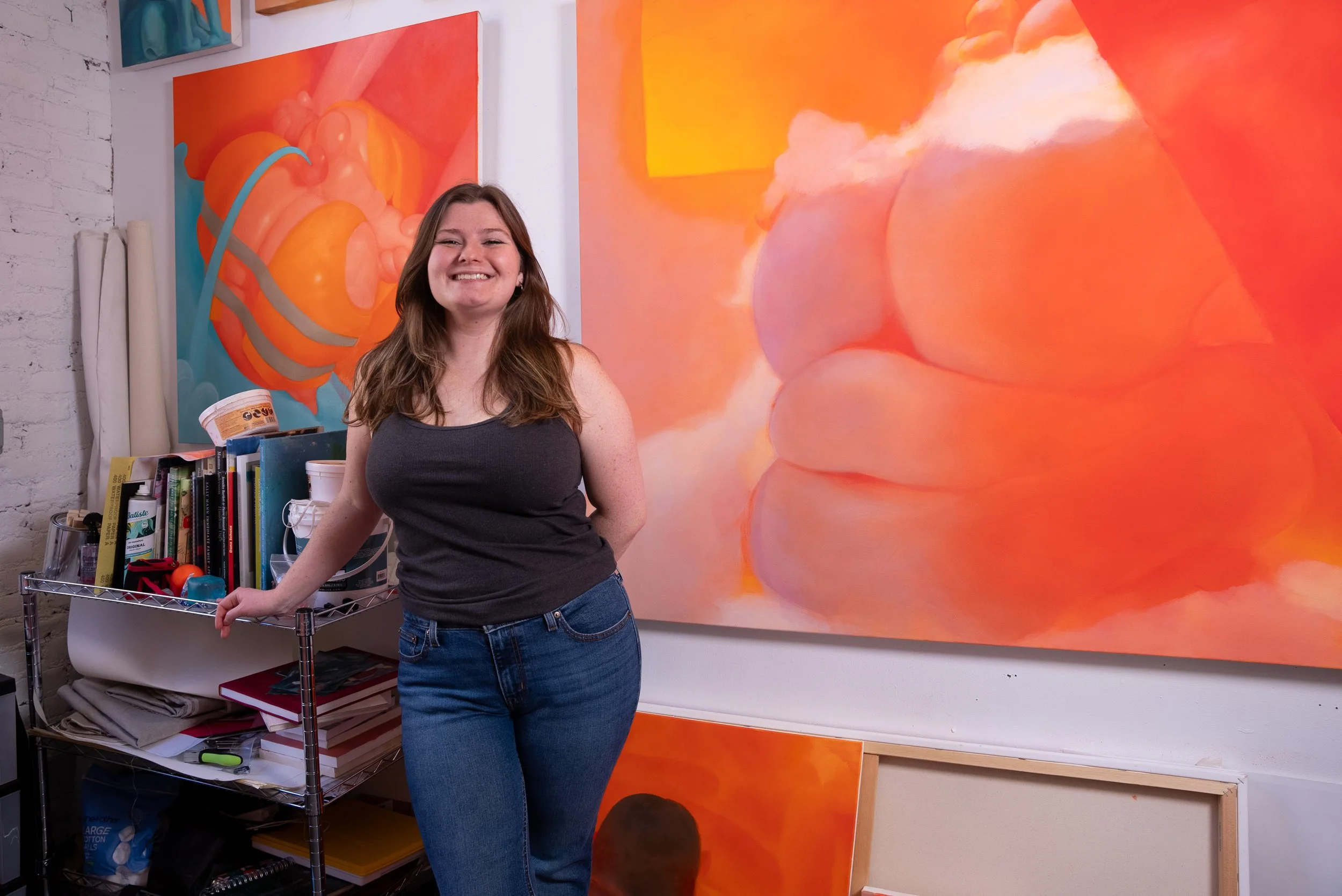
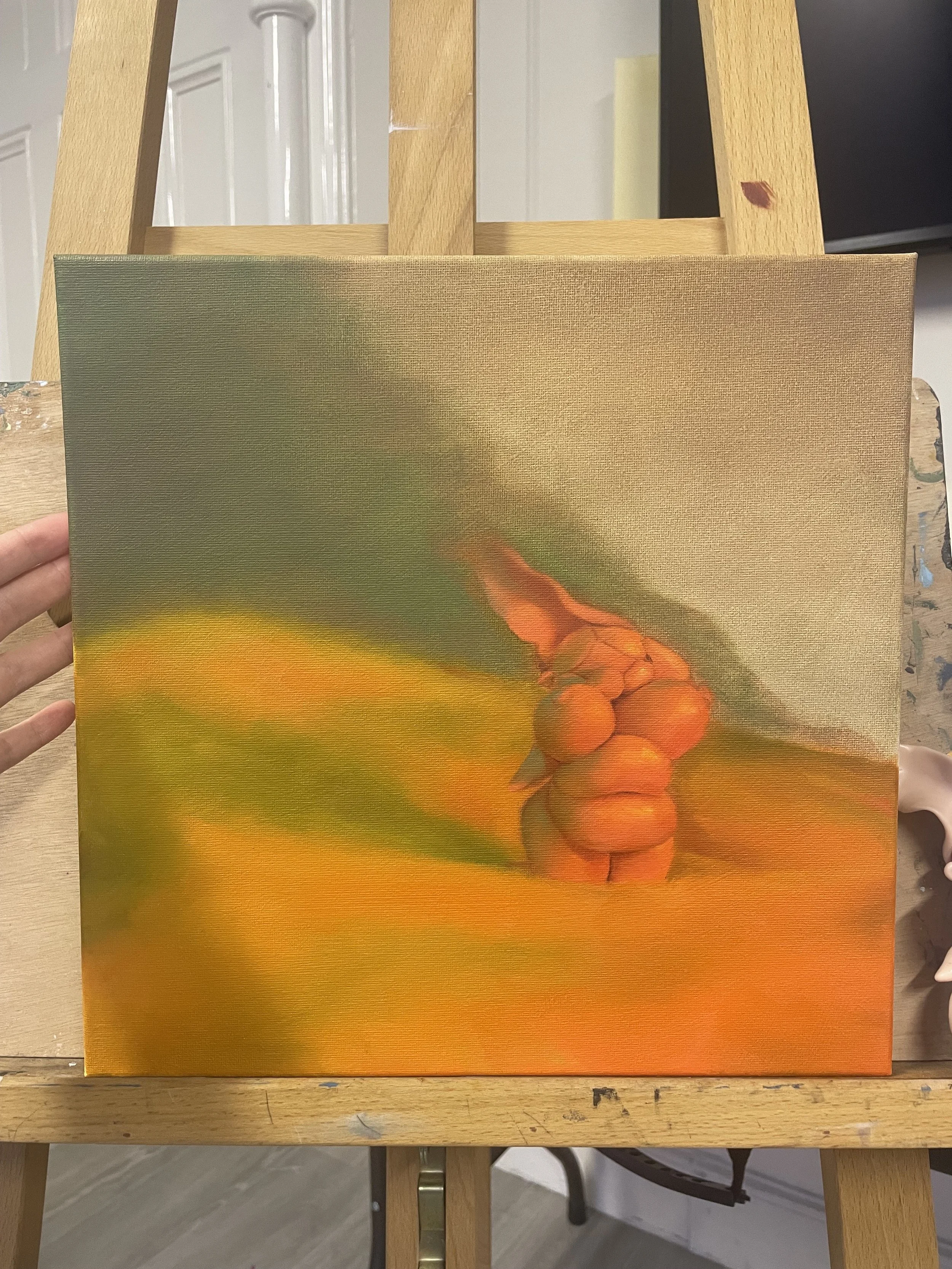
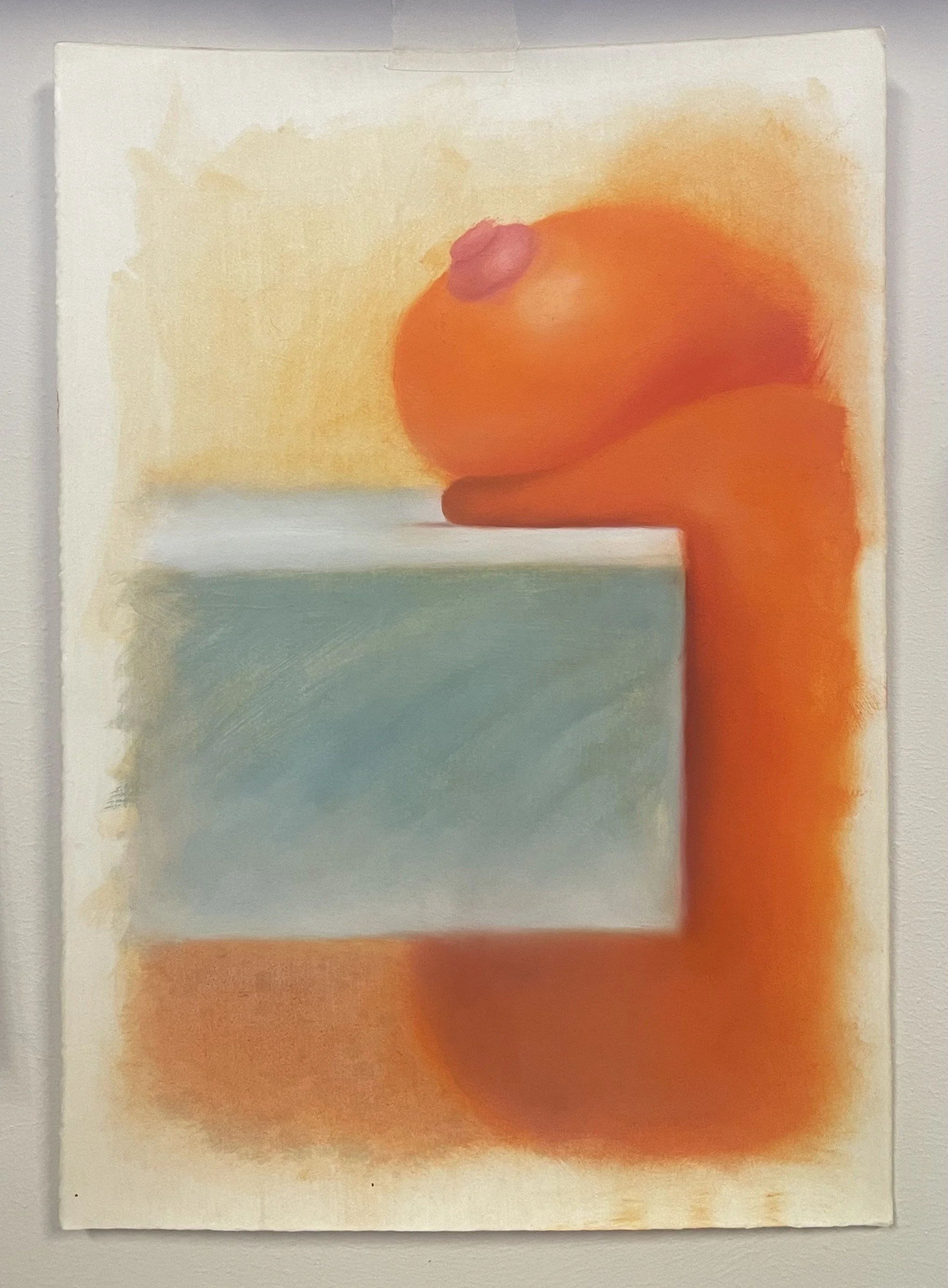
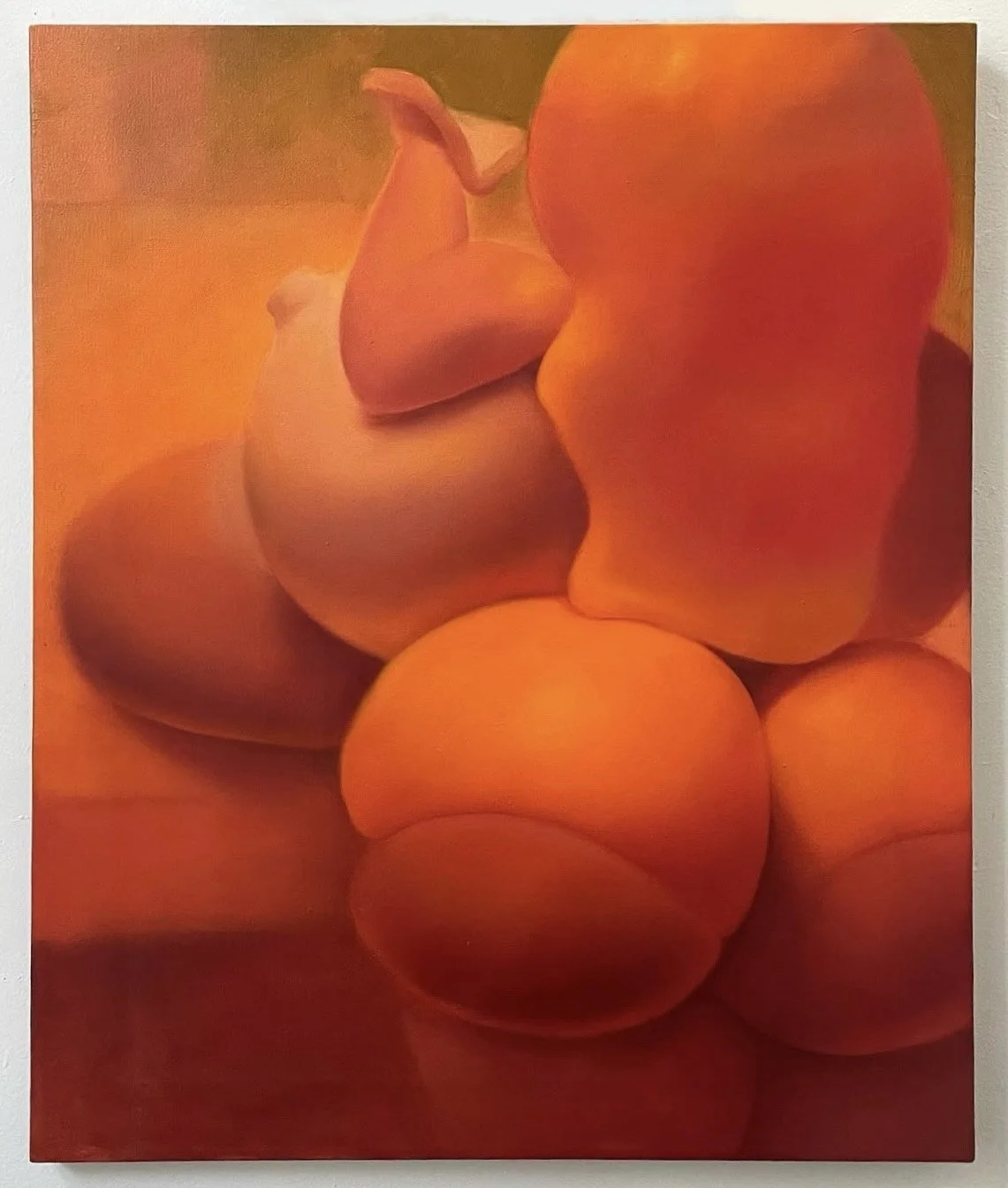
Ally Cotton is a New York based painter originally from Austin, Texas. Her work explores the space between figuration and abstraction through surreal, cartoon-like woman-creatures that are both endearing and unsettling. Rooted in visual excess, softness, and distortion, these paintings reflect personal experiences of desire, shame, and physical failure. Each piece begins with a sculpted clay maquette, allowing her to bypass anatomical logic in favor of intuition and sensation. These fleshy, exaggerated forms function as avatars—distant enough from the human body to become metaphors, yet intimate enough to evoke sympathy and discomfort.
Their inflated, rounded shapes act as a kind of soft armor; protective, absurd, and emotionally charged. Titles like Hooters, Whitewater, and Venus reference kitsch, eroticism, and mythology, pointing to the ways bodies are consumed and performed. Ultimately, my work asks how softness, both formal and emotional, can be a radical, subversive force.
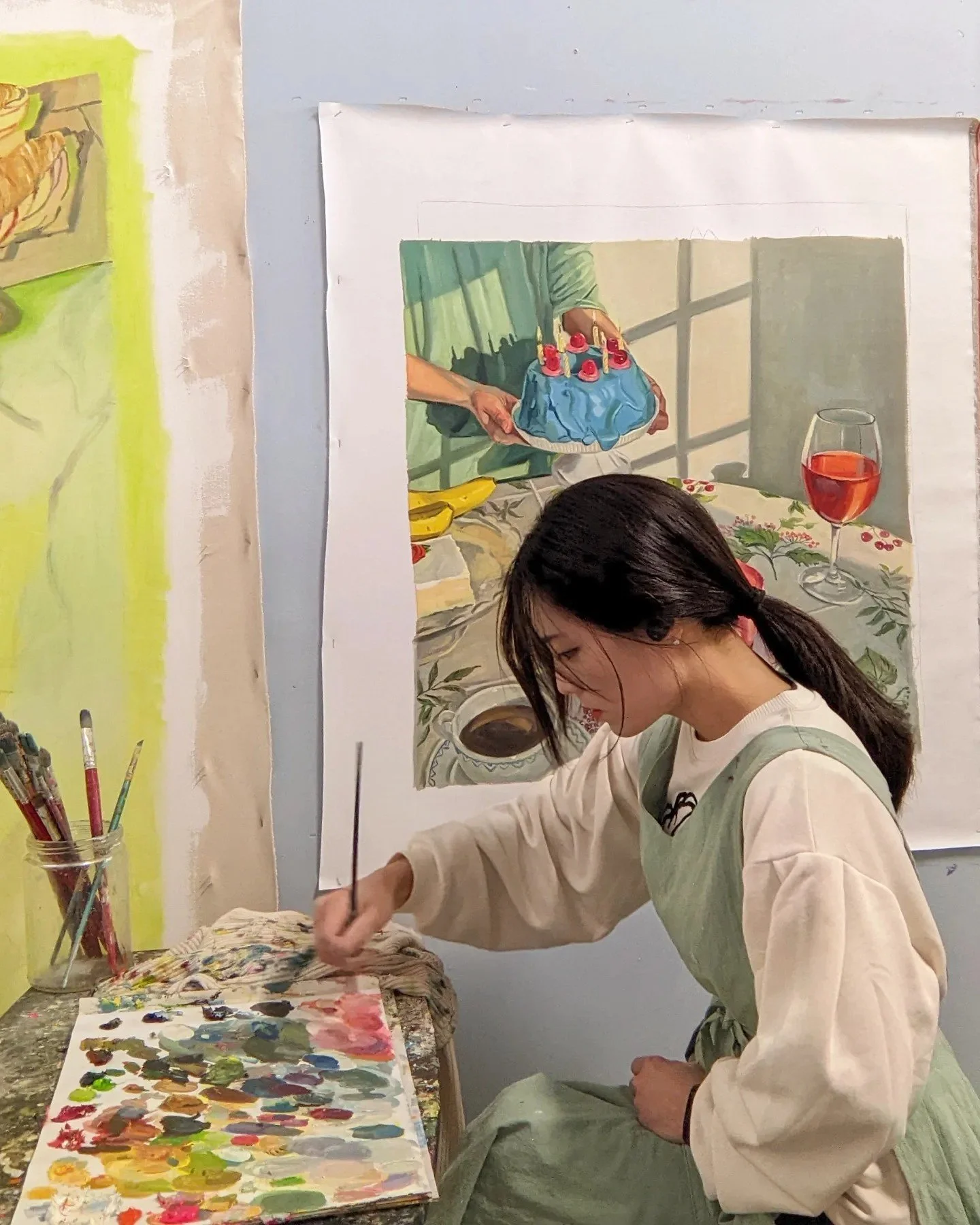
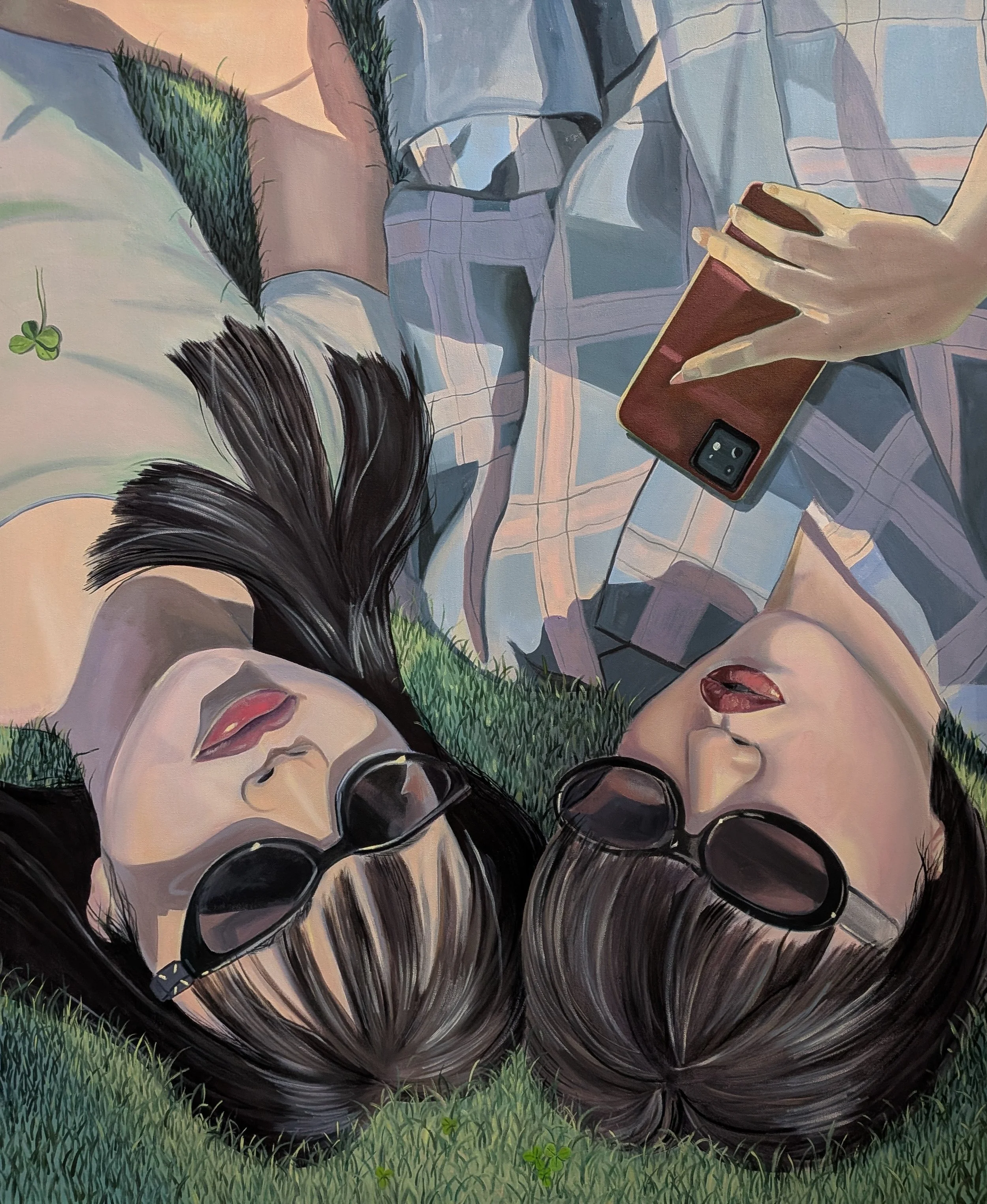
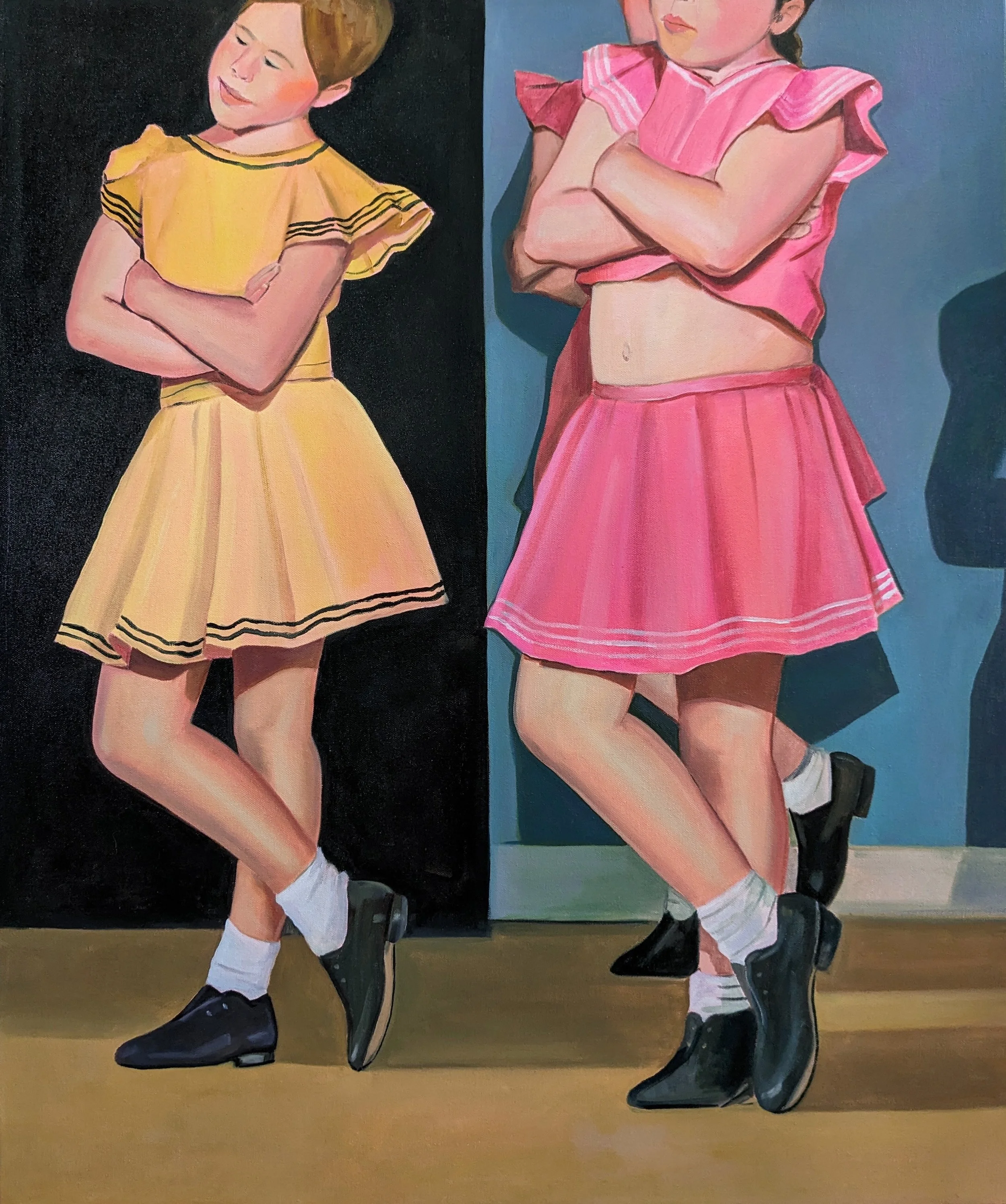
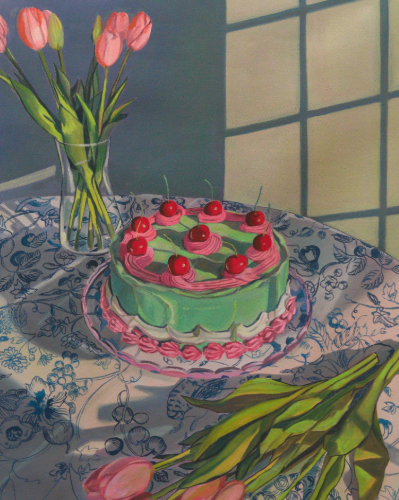
Debora Koo (b. 1990, Seoul, Korea) is an oil painter based in Charlotte, North Carolina whose work explores the emotional undercurrents of everyday life. Drawing from mundane moments, media imagery, and personal experience, Koo creates compositions that function as surrogate self portraits, reflecting on desire, identity, and memory. Her paintings shift between bright, saturated palettes and softer, faded tones, capturing the tension between longing and apathy, intimacy and distance. Whether through still life, depictions of food, or appropriated romantic imagery, Koo transforms the familiar into psychologically charged scenes that suggest both nostalgia and imagined futures.
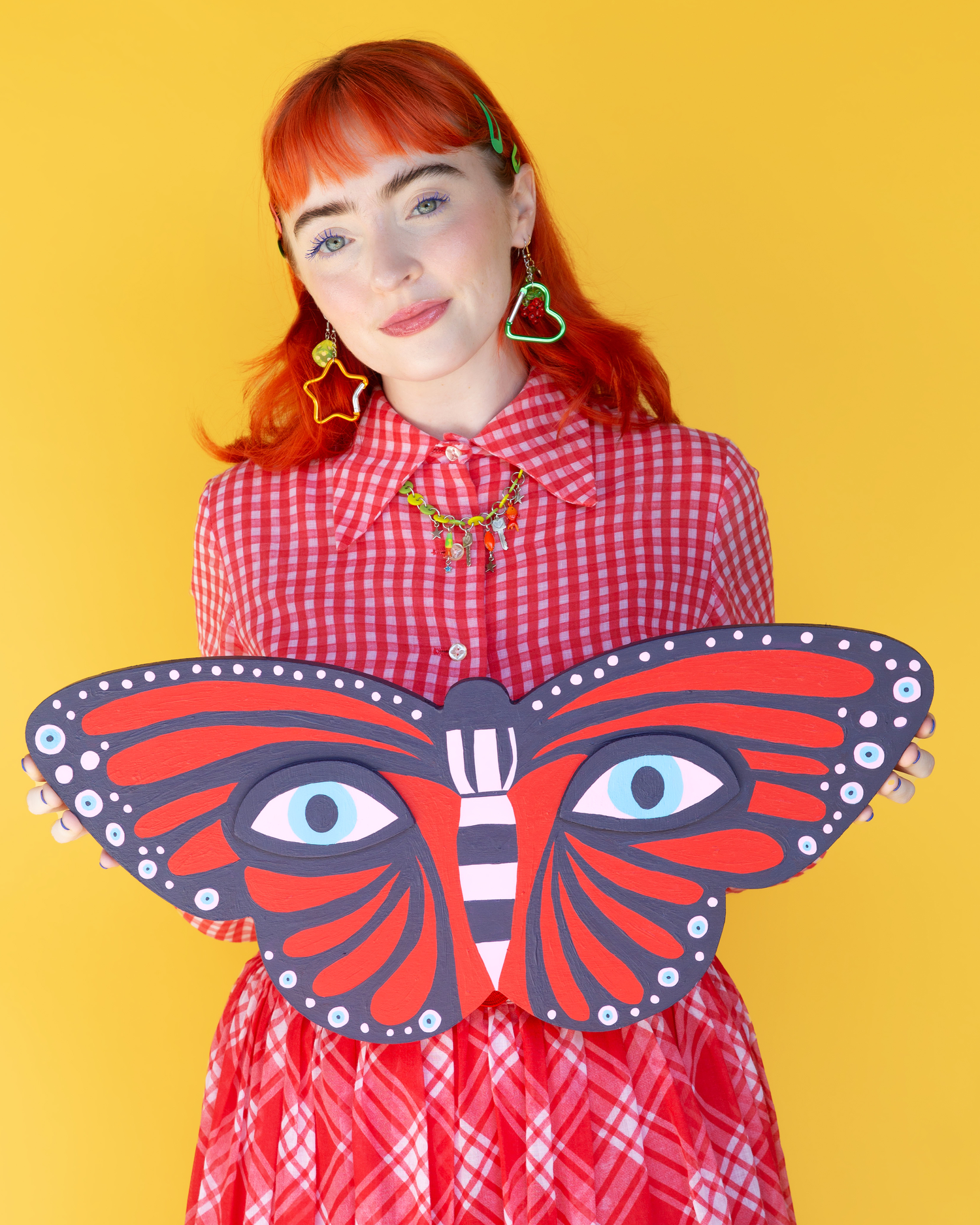
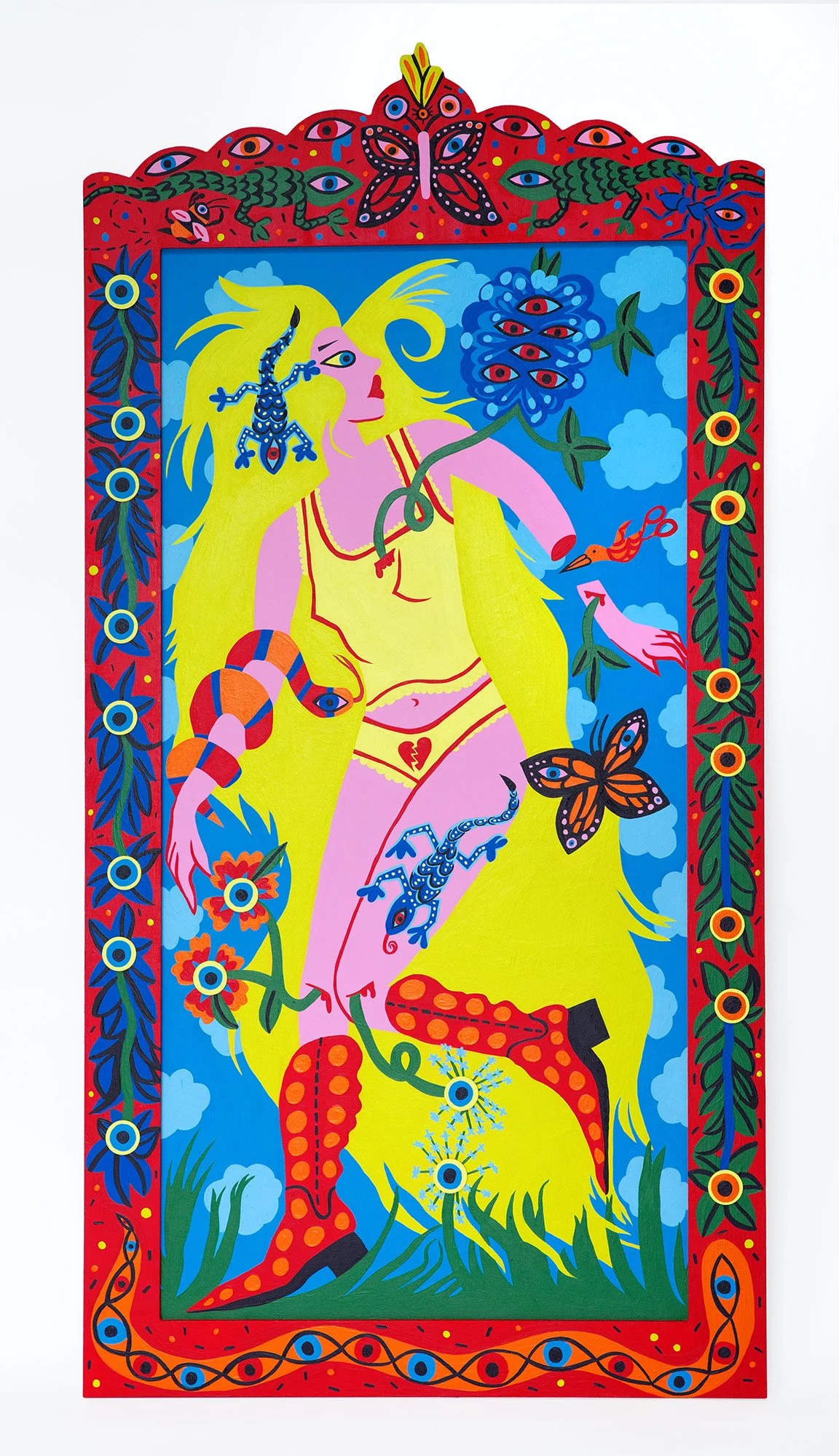
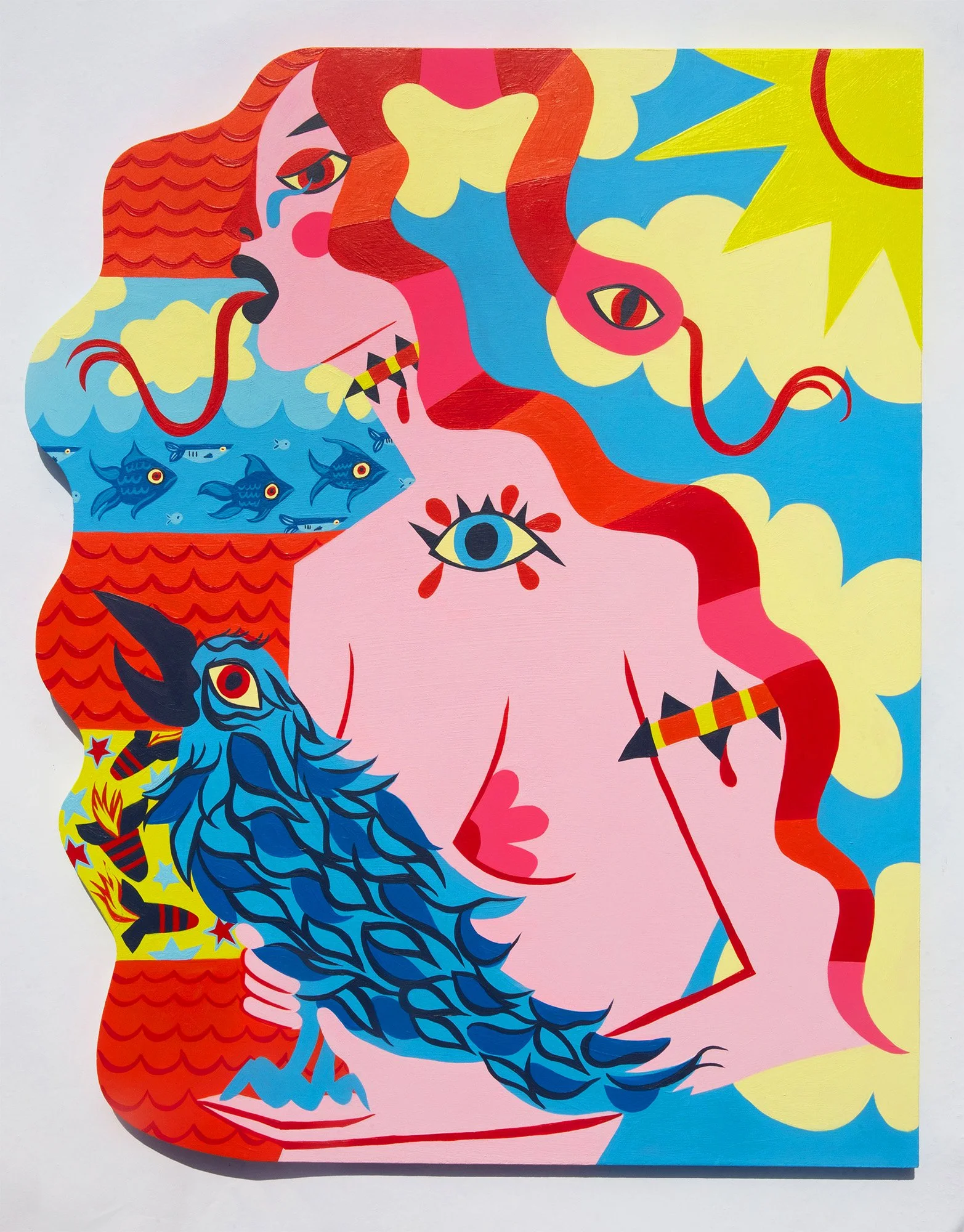
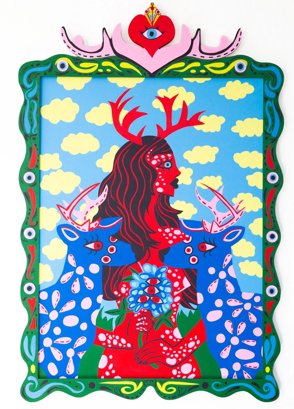
Mycha is a Texas-born, Brooklyn-based artist whose work is anchored in a distinct exploration of color. The novel vocabulary of her palettes ask viewers to reconsider the assumptions they bring to different hues—how memory, culture, and personal experience shape the way we interpret narrative.
This tension between surface and meaning mirrors the way Mycha constructs a contemporary folklore through form and composition. Drawing from Art Deco graphic design, the folk art of her Latine heritage, and Catholic iconography, she creates visual altars that enshrine memory and myth as inseparable parts of our histories.

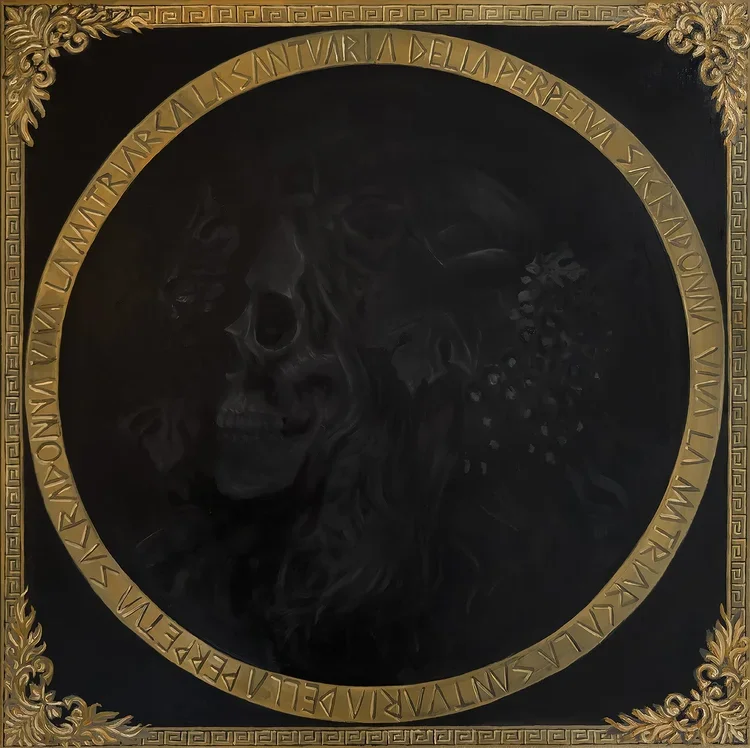
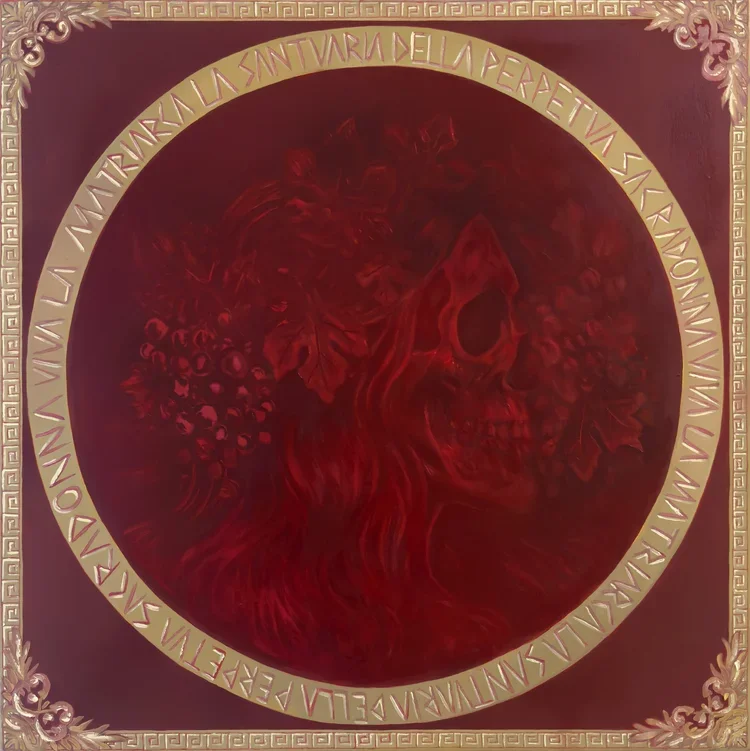
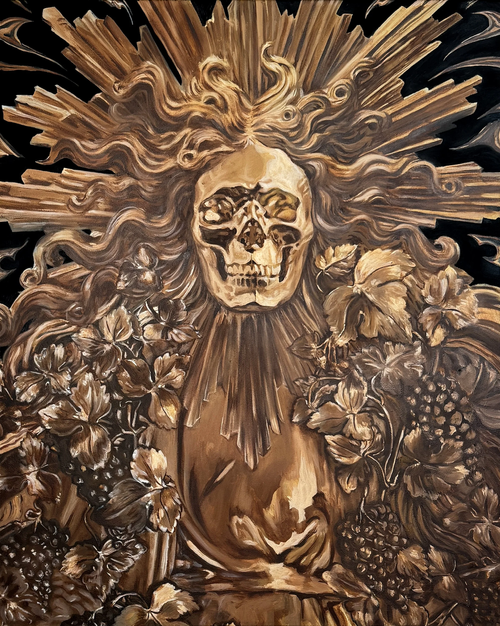
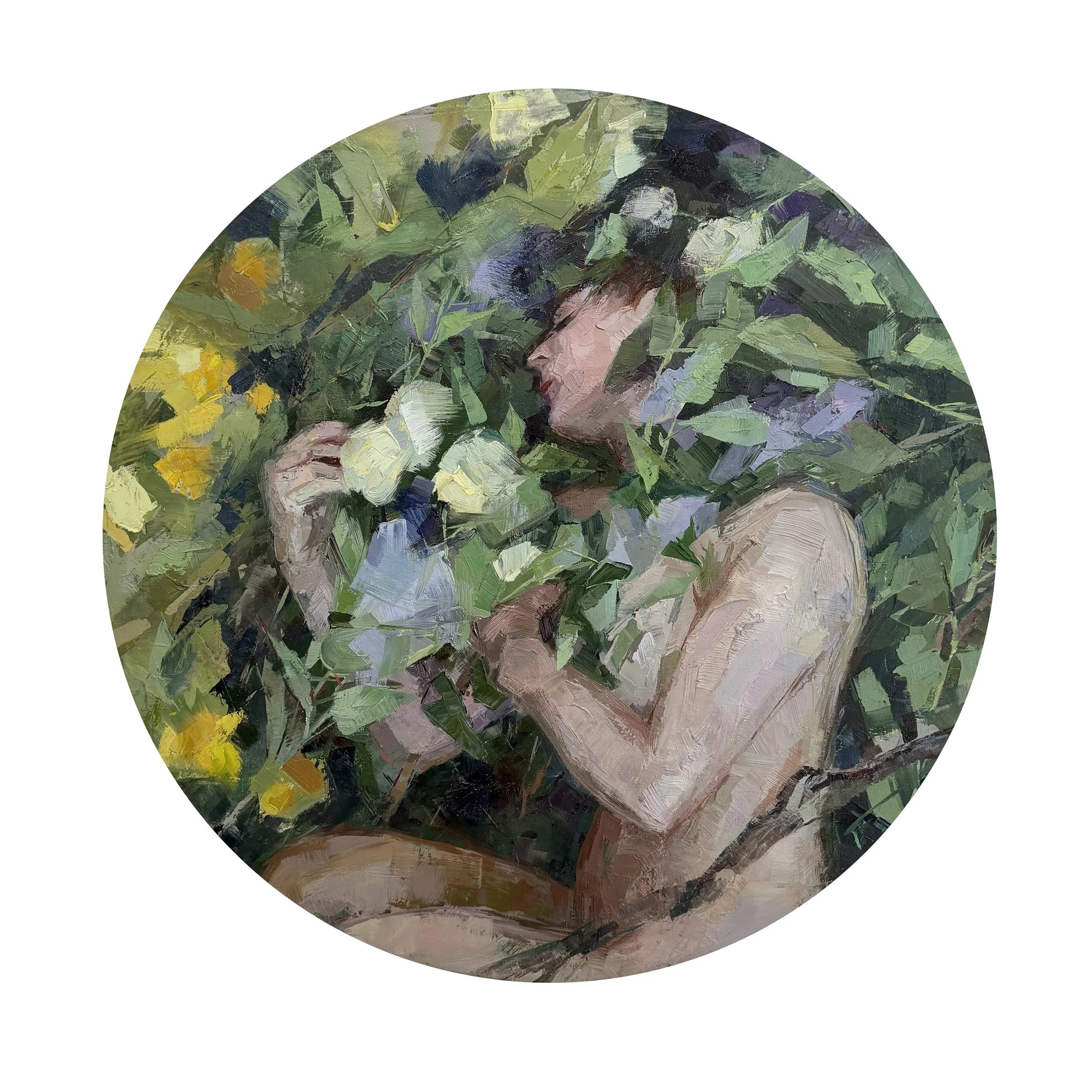
Jessica Violetta is an Italian American painter based in the New York City metro area. She received a BFA from California College of the Arts in San Francisco. Her oil paintings honor the complexity of modern feminine issues through immortalized figures in luxuriant nature.
Born in Northern California and raised in New Jersey, Jessica has always been inspired by the presence of nature as well as the energy of big cities and her Italian-American culture. In her paintings, Jessica honors the complexity of feminine narratives through figurative & nature surrealism. By weaving together organic forms that echo and embrace each other, Jessica creates haunting portraits of beauty addressing its own vulnerability.
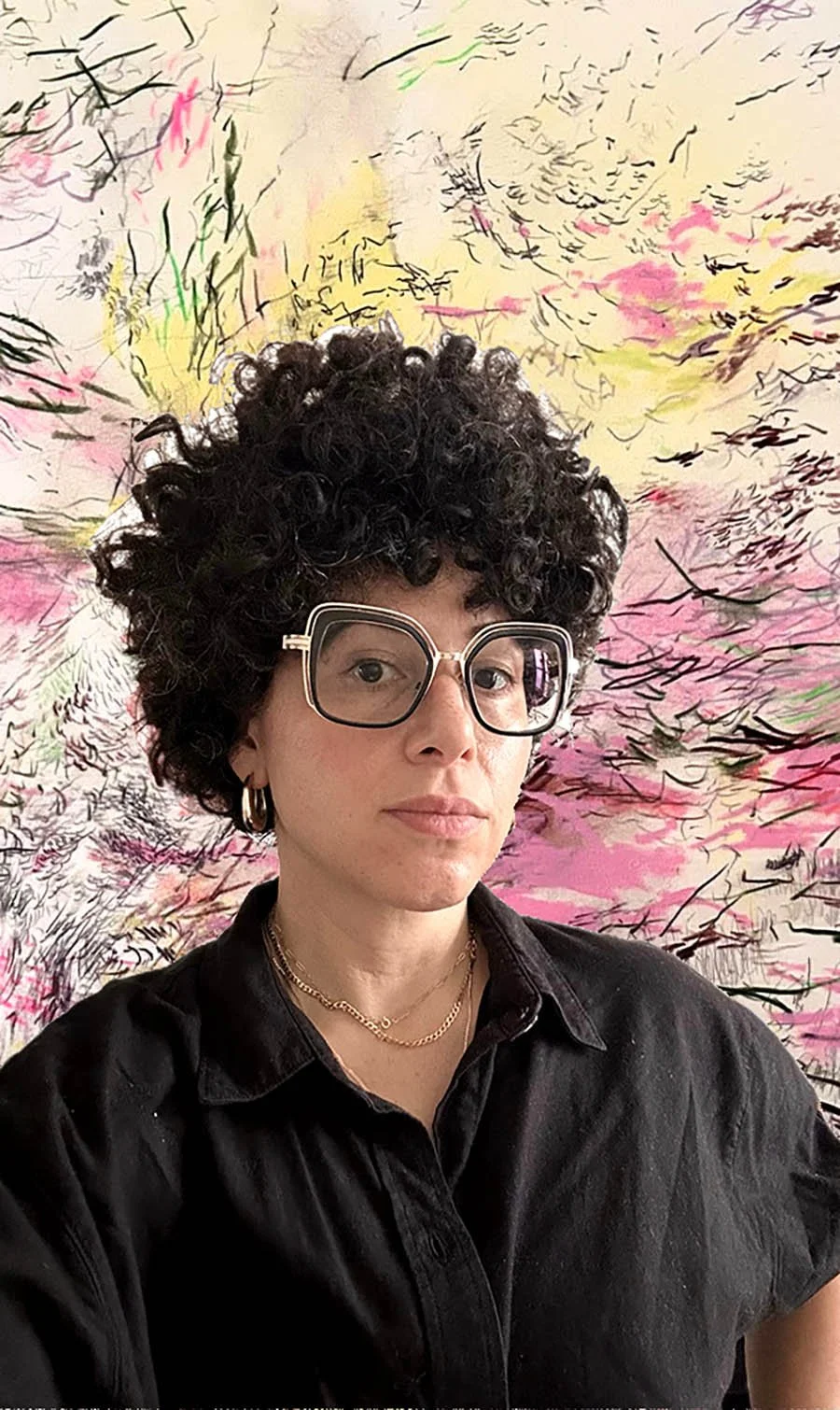


Jalena Hay is an abstract artist whose layered drawings function like palimpsests, surfaces where every mark remains visible and nothing is fully erased. Working primarily in pastel and colored pencil, she builds compositions through repetition, pressure, and duration, allowing each gesture to respond intuitively to the one before it. The resulting fields flicker between control and instability, holding multiple temporal moments within a single drawing.
She works without a predetermined plan. Drawing becomes a form of thinking through the hand, a way of staying with memory, presence, and transformation as they unfold. After being diagnosed with cancer, Jalena became acutely aware of impermanence and the fragility of the body, an awareness that continues to shape her sensitivity to time, resilience, and the traces we leave behind.
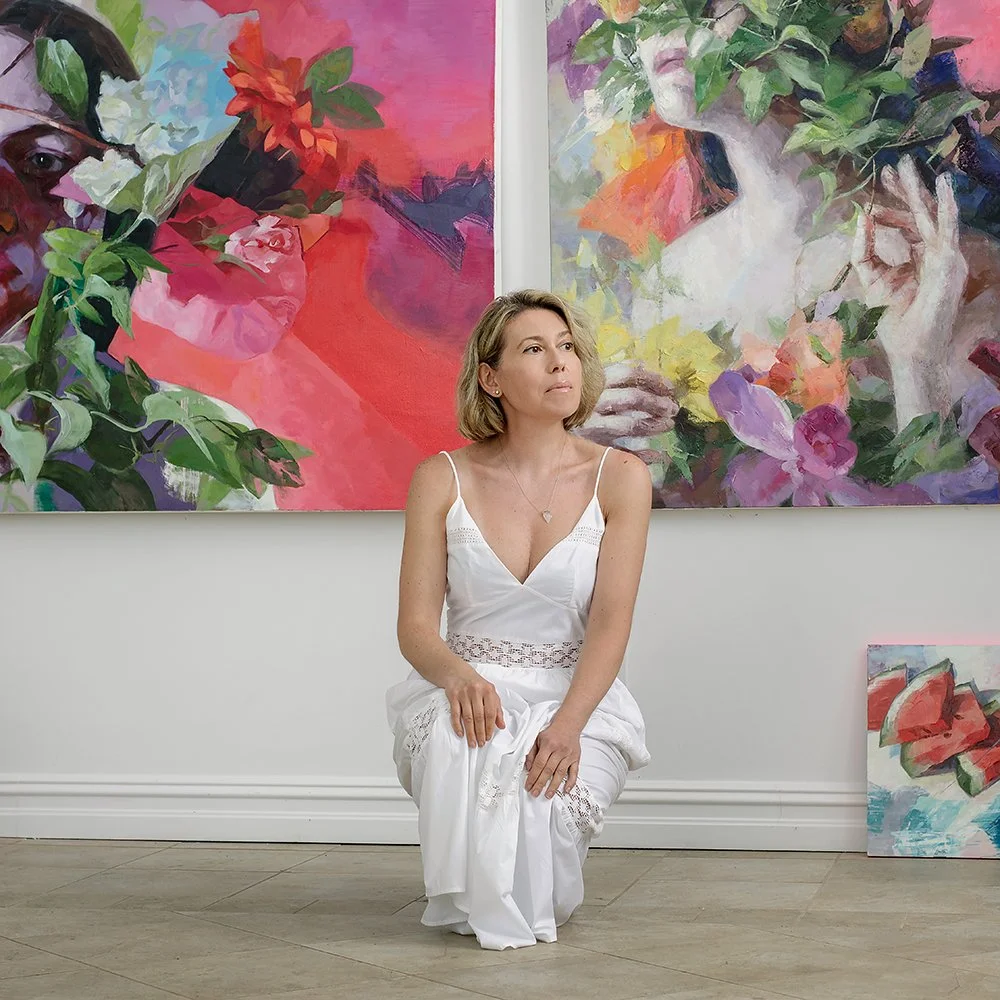
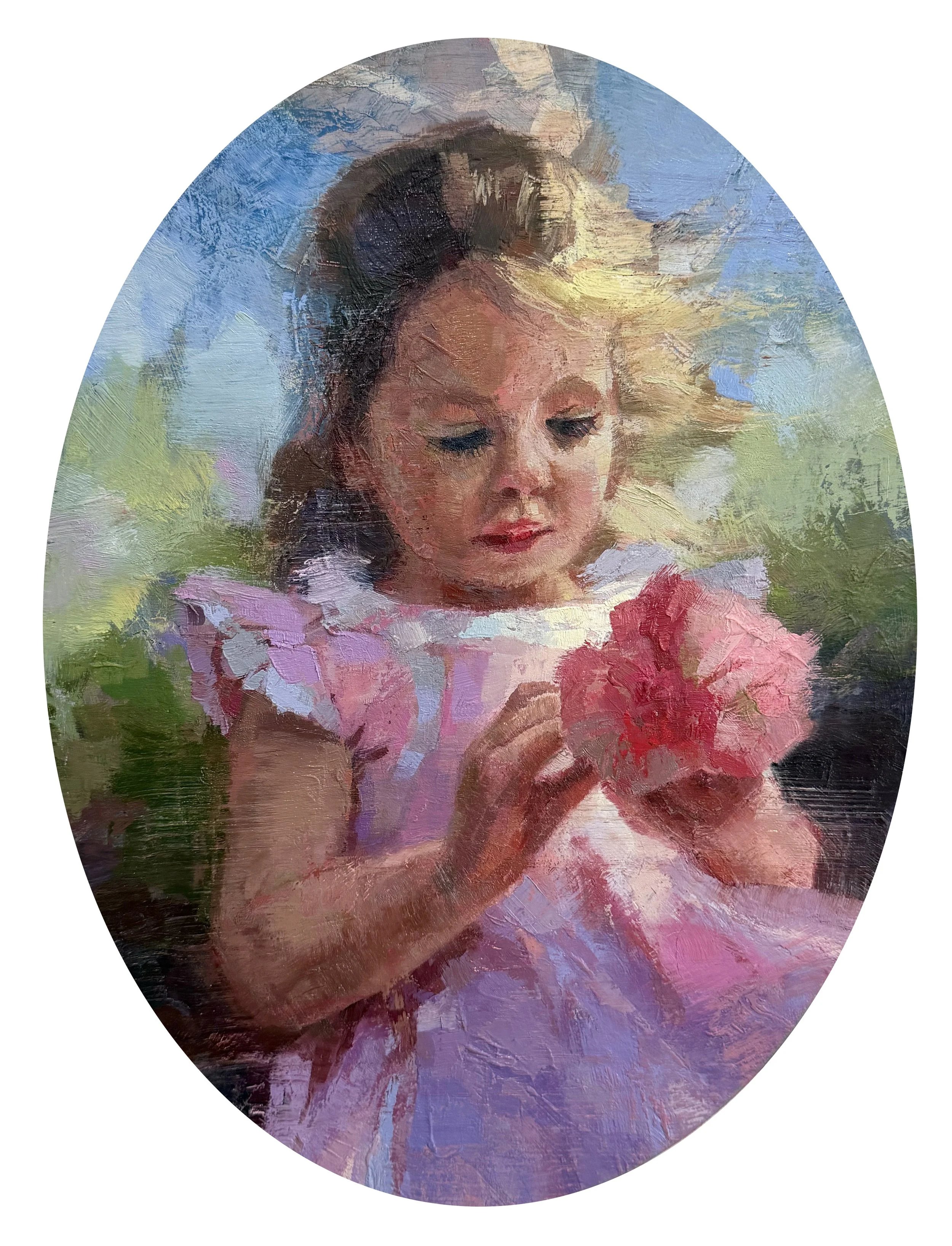
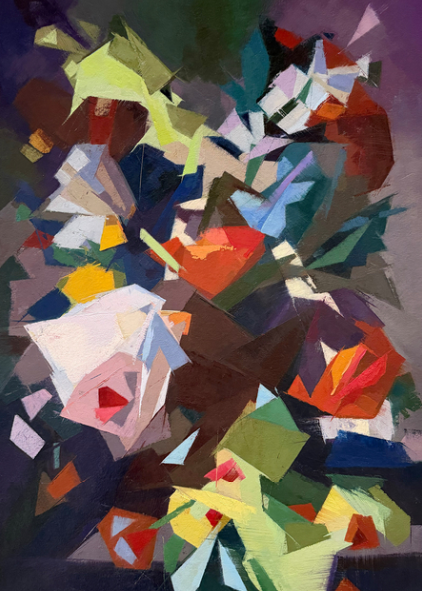
Yana Beylinson is a contemporary American painter based in Holmdel, New Jersey, near New York City.
Beylinson’s paintings explore the dynamic relationship between light and surfaces, opaque or translucent, with color taking the lead. Drawing inspiration from 17th-century Dutch master paintings, she reinterprets them in her original work, where colors and shapes take on lives of their own, becoming as essential as the physical subjects they represent. Her brushwork fuses Eastern and Western principles, emphasizing the energy of the stroke itself.
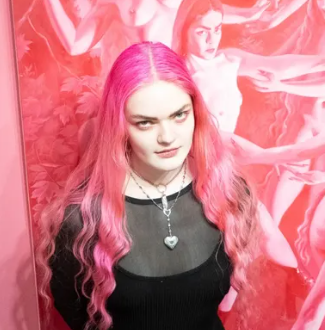

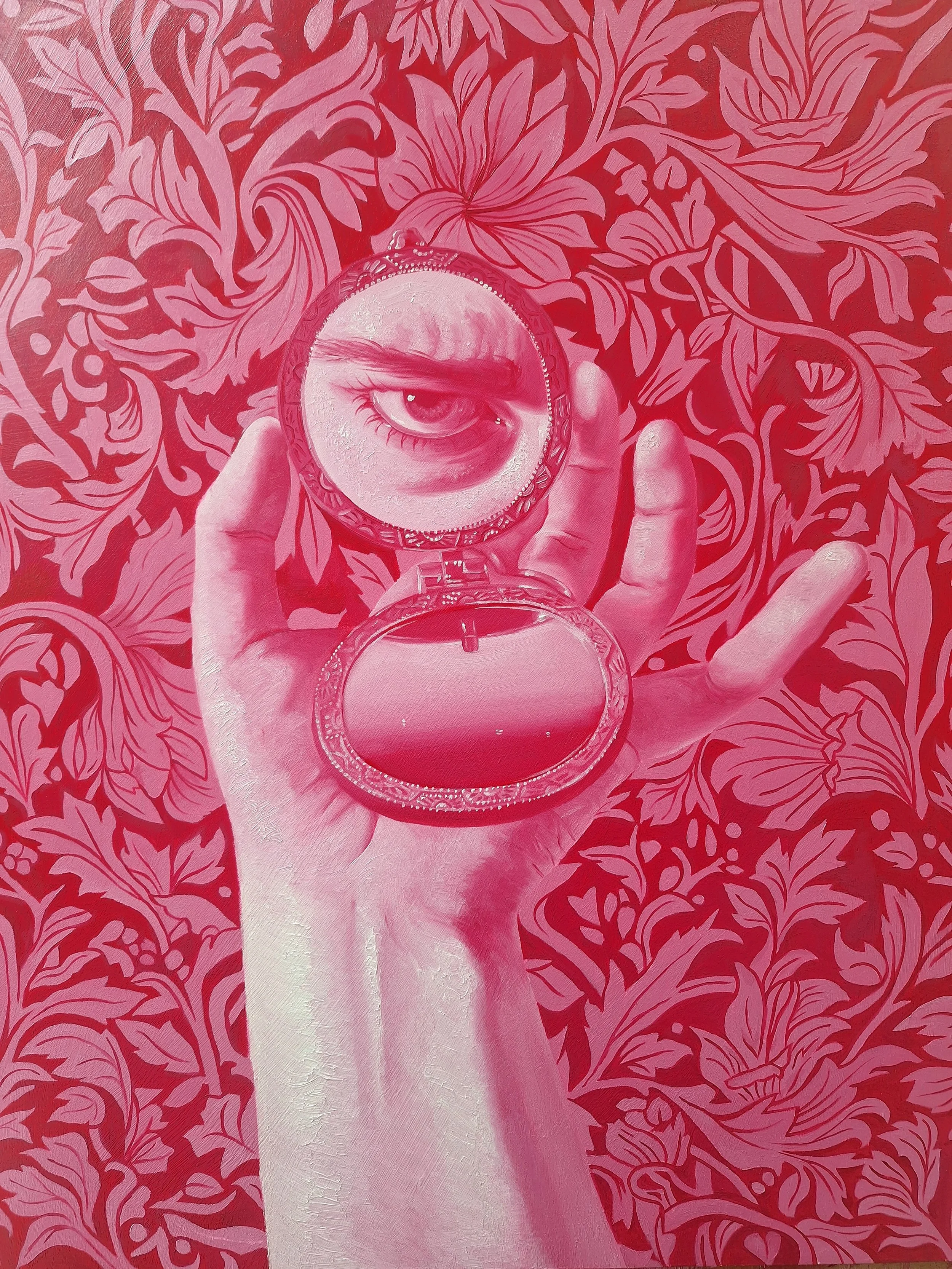

Emma Hapner (b. 1998) is a figurative oil painter based in New York City. She earned her Master of Fine Arts with a concentration in painting from the New York Academy of Art, after completing her Bachelor of Fine Arts at Ball State University in her home state of Indiana. Hapner primarily works in oil paint on canvas, creating figurative pieces that reclaim the language of classical painting through a contemporary feminine perspective.
In addition to her work as an artist, Hapner is an educator, art historian, and writer.
Featured:
Warnes Contemporary
@warnescontemporary
Website: www.warnescontemporary.com
Mycha Bueché
IG: @artbymycha
Website: www.artbymycha.com
Deb Koo
IG: @deb_koo
Website: www.debkoo.com
Ally Cotton
IG: @ally_cotton_art
IG: @jessica_violetta
Website: www.jessicavioletta.com
Yana Beylinson
IG: @yanabeylinson
Website: www.yanabeylinsonartist.com
Jalena Hay
IG: @jalena.hay
Website: www.jalenahay.com
Emma Hapner
IG: @emmagracehapner
Wensite: www.emmahapner.com